



Blue Transferware Ceramic Bowl
A blue transferware ceramic bowl brings crisp cobalt scenes and Georgian or Victorian character directly to a table.
Blue Transferware Ceramic Bowl
A blue transferware ceramic bowl is a piece of earthenware, pearlware, or porcelain decorated with a printed cobalt pattern transferred from a copperplate onto the clay body. Buyers searching this phrase encounter nineteenth-century pieces alongside eighteenth-century porcelain and pearlware examples.
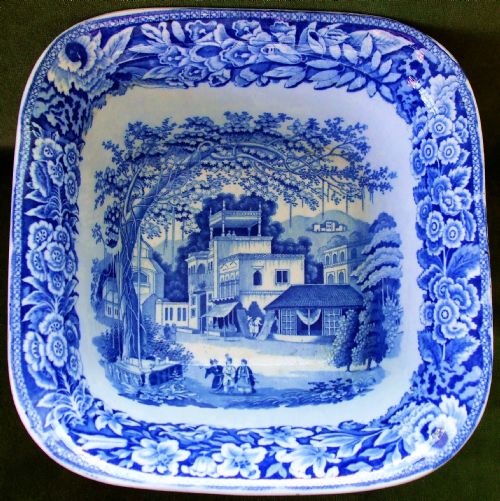
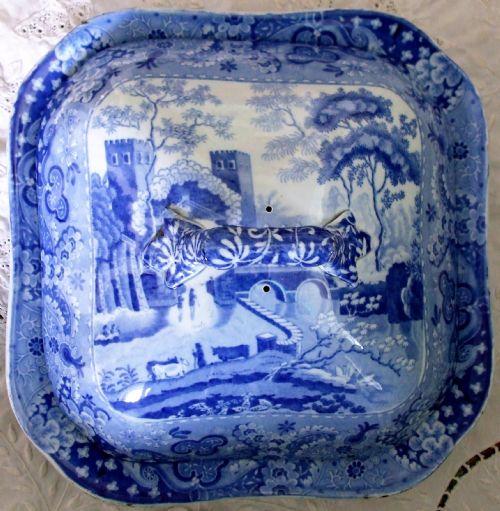
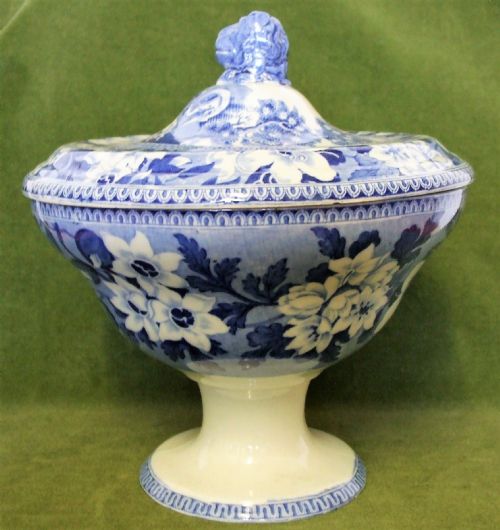
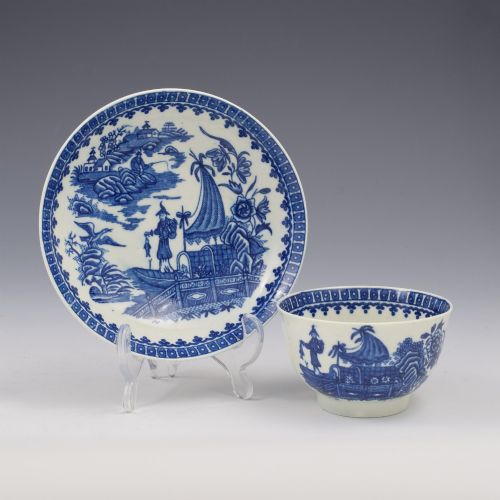
The selections span forms such as footed bowls, fruit bowls, tea bowls, and large decorative vessels. Most pieces originate from English factories operating during the Georgian and Victorian periods, carrying pastoral, architectural, or exotic scenes.
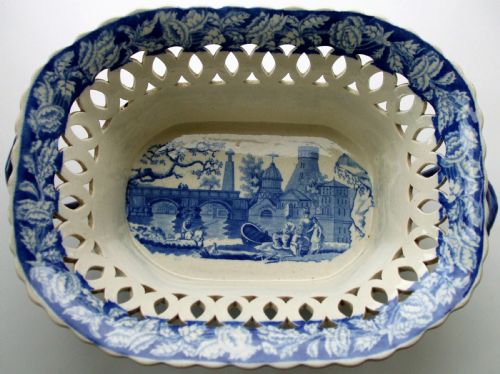
Makers stamp or pattern their wares with specific topographical and romantic titles like River Scene with Fort or Eastern Street Scene. The physical depth and clarity of the cobalt print define the immediate visual impact of each individual vessel.
Materials and manufacturing methods
Potters shaped earthenware, pearlware, or porcelain bodies before applying a fluid glaze to seal the porous clay. Early pieces relied on refined pearlware bodies that gave a slightly bluish tinge to the underlying white glaze.
Engraved copperplates transferred cobalt oxide ink onto thin tissue paper, which workers then pressed firmly against the bisqued ceramic surface. Firing in a kiln set the deep blue pigment permanently beneath a glossy protective coat.
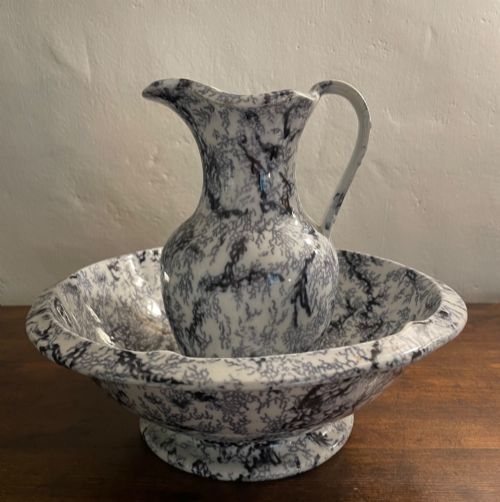
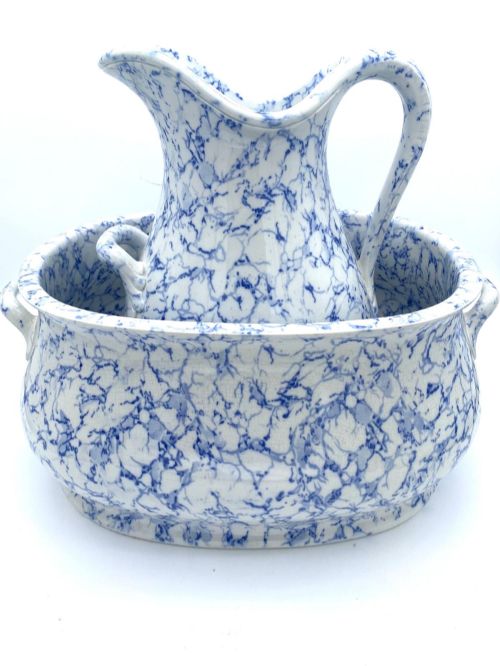
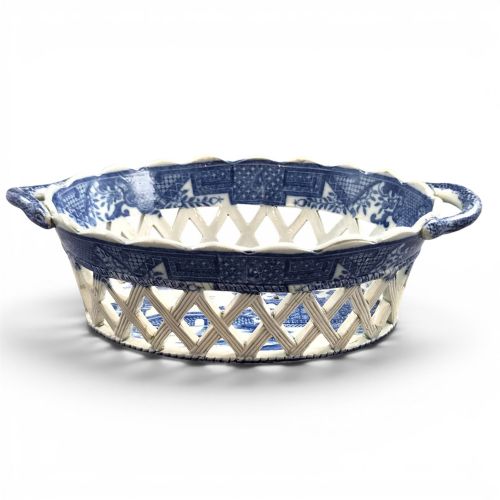
The selection includes utilitarian wash sets and large footed fruit bowls alongside delicate tea bowls and pierced chestnut baskets.
The markers of quality
Quality rests in the crispness of the transfer print and the registration where pattern edges meet. Blurred lines or heavy pooling of cobalt oxide indicate hurried production rather than careful execution.
The refinement of the ceramic body itself separates standard utilitarian pots from finer table wares. Smooth glazes free from excessive kiln pitting and well-balanced forms distinguish superior examples.
Minton·Spode·J. and R. Clews·J. and R. Riley·John Rogers and Son·Ridgway·Doulton Burslem·James Wallace and Co.·Copeland and Garrett
The Blue Transferware Ceramic Bowl Glossary
- Transferware
- Pottery decorated by transferring a printed design from an engraved copperplate onto paper and then onto the ceramic body. This technique allowed intricate pictorial scenes to be reproduced consistently across multiple vessels.
- Pearlware
- A refined earthenware developed by Josiah Wedgwood that featured a subtle bluish glaze to mimic the appearance of Chinese porcelain. It forms the basis of many late eighteenth-century and early nineteenth-century pieces.
- Flow Blue
- A style of Staffordshire pottery where cobalt blue intentionally bled into the surrounding white glaze during firing. This produced a misty, painterly effect popular in the mid-nineteenth century.
- Biscuit
- Fired unglazed ceramic pottery that awaits its first application of liquid glaze and subsequent final firing. It provides the absorbent surface required for receiving transfer-printed paper designs.
- Comport
- A decorative footed dish or bowl raised on a pedestal, used originally for serving fruit or sweetmeats at dessert. These pieces often feature pierced rims or moulded handles.
Blue Transferware Ceramic Bowl: Frequently Asked Questions
How do I date a blue transferware bowl?
Dating relies on examining the ceramic body, glaze characteristics, and maker marks stamped or printed underneath. Pearlware bodies and specific cobalt tones typically point to the Georgian era, while later Victorian pieces show heavier earthenware.
Shape and stylistic motifs also provide clues. Architectural ruins, pastoral subjects, and floral borders shifted in drawing style between the late eighteenth century and the end of the nineteenth century.
Are these bowls safe for daily use?
Most antique bowls are collected for display and gentle decorative service rather than rigorous modern dining. The fragile historic glaze can craze or stain over time with repeated exposure to acidic foods and automatic dishwashers.
Hand washing in lukewarm water with mild soap protects the glaze and preserves the cobalt transfer print. Extreme temperature changes should be avoided to prevent stress fractures in the aged ceramic body.
What is the difference between earthenware and pearlware?
Pearlware is an improved, whiter type of earthenware developed to look closer to expensive Chinese porcelain. It contains a small amount of cobalt in the clear glaze, giving the surface a faint bluish tint in recessed areas.
Standard earthenware used for later transferware is often warmer or creamier in tone without that distinct bluish pooling. Both materials serve as stable bases for detailed cobalt printing.
Why does the blue colour blur on some pieces?
Blurring often occurs intentionally in flow blue ceramics where lime or ammonia vapours were introduced into the kiln. This caused the cobalt pigment to bleed softly into the white glaze for a hazy, dramatic effect.
On standard transferware, slight blurring can also result from the tissue paper slipping during the transfer process or moisture trapped under the glaze during firing.