



Blue Thames River Painting
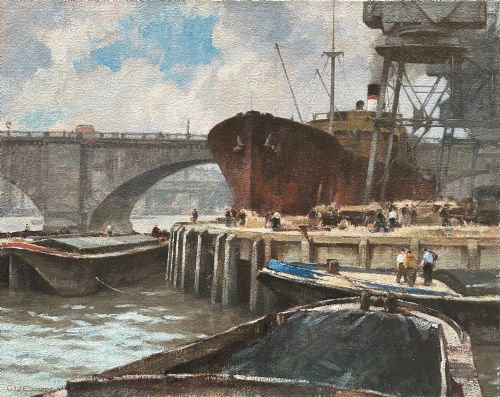
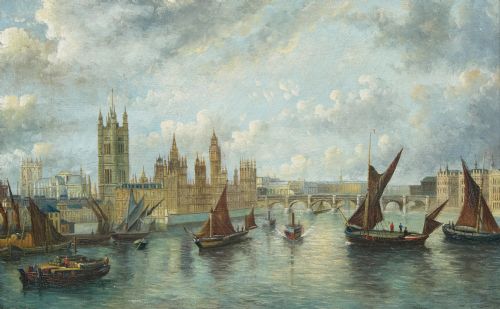
These blue thames river painting works capture London and its reaches through watercolour and oil, bringing historic waterways directly into your home.
Blue Thames River Painting
A blue thames river painting records the famous London waterway and its Berkshire or Surrey stretches through the eyes of artists working from the late seventeenth century onwards. You encounter scenes ranging from Windsor Castle and Eton College down to the Pool of London, St Paul's Cathedral and the Houses of Parliament.
The works appearing here span the Victorian era through British Impressionism and mid-century modernism, capturing the changing light on the water. Painters recorded bustling tug boats, quiet locks at Shiplake and Mapledurham, and iconic bridges like London Bridge and Richmond Bridge.
Watercolour on paper and oil on canvas form the core of these representations, executed by both named professionals and skilled observers of the British landscape. The pieces vary in scale from intimate topographical studies to large framed canvases intended for prominent wall display.
Materials and Technique
Artists deployed watercolour pigment upon paper to achieve translucent washes that mimic the shifting atmospheric effects and misty light peculiar to the river valley. Others utilised oil on canvas to build heavier, textured surfaces capable of rendering the deep tones of maritime activity and industrial smoke.
Framed behind glass where executed on paper, these works rely on the absorbent qualities of the sheet to hold fluid brushwork. Oil paintings on stretched canvas utilise linseed mediums and layered pigments to capture the dense blue and grey tones of the tidal water.
Several artists braved the London mists with portable watercolour boxes to sketch seagulls wheeling before the Houses of Parliament.
Factors of Quality
The strength of a blue thames river painting rests upon the artist's command of atmospheric perspective and tonal harmony in handling water and sky. Superior examples demonstrate confident handling of light, capturing the specific quality of the London fog or Berkshire sunshine without muddying the palette.
Compositional balance and the preservation of the original medium determine the standing of each piece. Works that retain their fresh pigment saturation and display a clear topographical or artistic provenance stand apart from routine topographical sketches.
Alfred Young Nutt·Cyril Walduck Edwards·Henry John Kinnaird·A. G. Hayward·Frederick George Coleridge·Pauline Boumphrey·Frank Wasley·Carleton Grant·Frances E Nesbitt·Herbert John Finn·Walter Duncan·Hubert Thornley
The Blue Thames River Painting Glossary
- Topographical watercolour
- A detailed painting depicting specific real-world locations with accurate architectural and geographical rendering. These works served to document towns, bridges and waterways before the widespread adoption of photography.
- British Impressionism
- An artistic approach focusing on light, loose brushwork and everyday scenes rather than rigid academic conventions. Practitioners of this style sought to capture the fleeting atmospheric conditions of the river.
- Oil on canvas
- A painting medium utilising pigments suspended in a drying oil, applied to a woven fabric stretched across a wooden frame. This method allows for rich colour depth and heavily textured impasto passages.
- Watercolour pigment
- Colouring material ground with a water-soluble binder, applied in translucent layers onto paper supports. It requires swift execution to maintain luminosity across the sky and water.
Blue Thames River Painting: Frequently Asked Questions
What subjects appear in these paintings?
Artists painted various stretches of the waterway, including rural locks, historic castles, London bridges, and industrial shipping traffic.
Views extend from Berkshire villages down to the Pool of London and St Paul's Cathedral.
How should I display watercolour works?
Watercolour paintings require protection behind glass to prevent atmospheric damage and airborne dust from settling directly onto the paper support.
Position these pieces away from direct sunlight to preserve the original pigment tones over time.
How do I identify the period of a piece?
Stylistic markers such as Victorian realism or mid-century impressionism help indicate the era in which the artist worked.
Signatures, framing materials, and inscribed titles on the reverse often provide further chronological clues.
What is the difference between oil and watercolour?
Oil paintings utilise heavy pigments on canvas, offering rich textures and deep colour saturation suitable for dramatic river scenes.
Watercolours employ fluid washes on paper, creating light, luminous effects prized for atmospheric topographical views.