


Blue Sky Coastal Artwork
These pieces of blue sky coastal artwork capture expansive marine views, breezy harbours, and open water through the eyes of painters across centuries.
Blue Sky Coastal Artwork
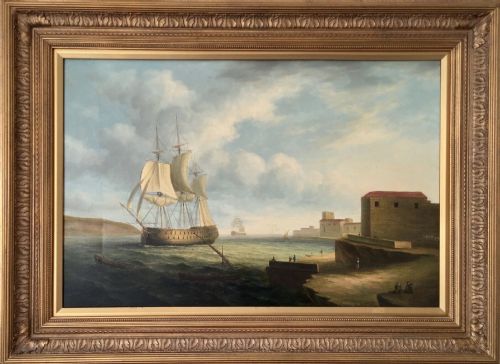
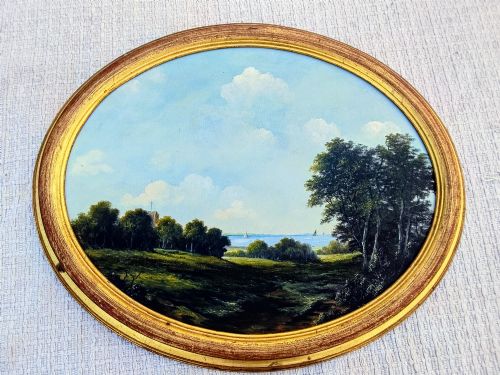
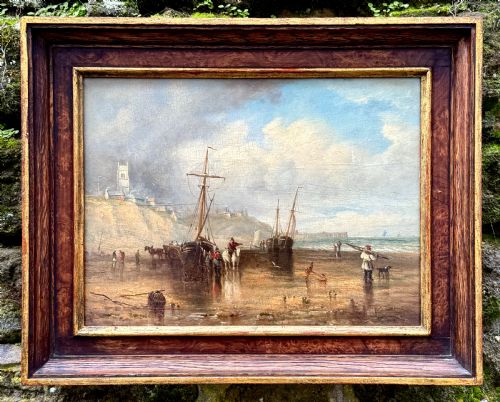
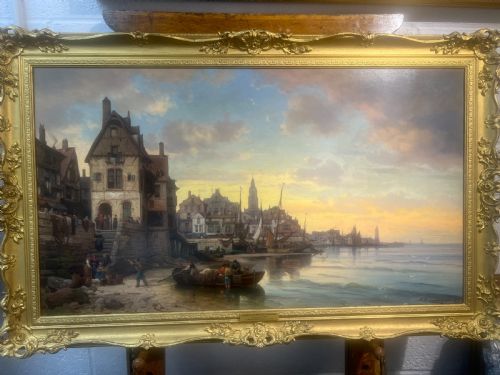
Collectors searching for blue sky coastal artwork encounter maritime paintings, marine watercolours, and open-air seascapes depicting harbours, estuaries, and shipping lanes. These works span from the eighteenth century through the mid-twentieth century, capturing shorelines from British coastal towns to Mediterranean ports.
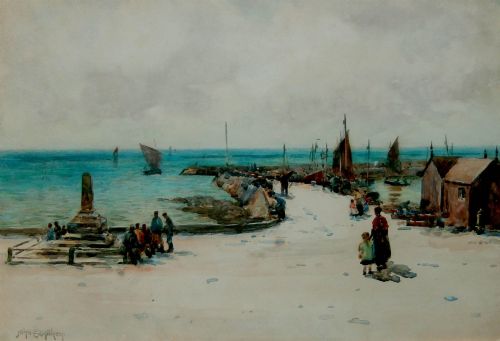
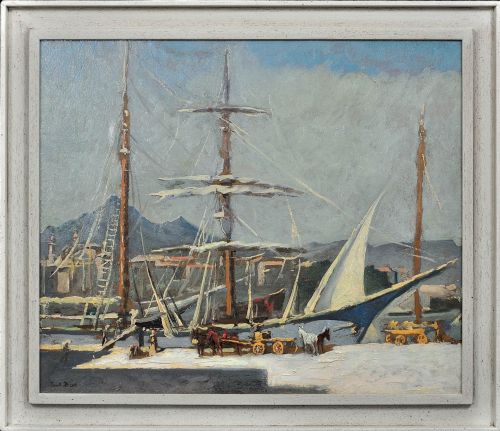
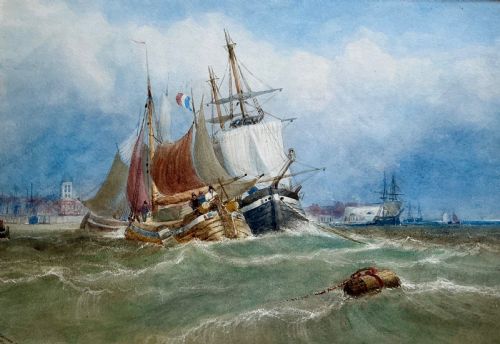
The most common pieces on this page are nineteenth-century watercolours and oils on canvas showing traditional fishing boats, sailing vessels, and coastal architecture under bright or shifting skies. Styles range from Victorian marine art and British Impressionism to early modernist interpretations of seaside light.
Subjects often focus on everyday maritime life, featuring harbour walls, sandy estuaries, and anchored barques rendered with close attention to atmospheric weather conditions and coastal topography.
Materials and Technique
Artists relied primarily on oil paint applied to canvas, wood panels, or board, as well as watercolour pigment and gouache worked onto heavy paper. Oil mediums allowed for textured impasto and deep tonal layering, particularly suited to capturing heavy seas and rolling clouds.
Watercolour works utilised transparent washes on paper to achieve luminous skies and reflective tidal waters, frequently finished with precise ink or pencil detailing for rigging and architecture.
Current listings feature watercolours, oils on canvas, and oils on panel created across the nineteenth and twentieth centuries.
Judging Quality
Quality rests upon the artist's command of natural light and atmospheric depth, distinguishing works that convincingly render the humidity of a sea breeze from stiff or formulaic topographical records. The handling of water and sky interplay determines the visual success of the composition.
The strength of provenance and the preservation of the original paper or canvas surface, free from heavy restoration or discoloration, separate standard decorative pieces from those with genuine art-historical significance.
James Hardy·John E. Aitken·Paul Bret·Thomas Creswick·Charles Euphraisie Kuasseg·Henry Barlow Carter·William Frederick Settle·Charles William Adderton·Helen Layfield Bradley·Gustave De Bréanski·Sir Thomas Newenham Dean·Herbert Royle·Thomas Bush Hardy·Stanley Leader·Hendrik Willebrord Jansen·George Gregory·Florence Hess·George Hamilton Constantine·Donald McIntyre·R.P. Noble·Frederick Williamson·Sam Bough·Albert Robert Quinton·Ernst Louizor·Denys Garle
The Blue Sky Coastal Artwork Glossary
- Impasto
- Paint applied thickly to a canvas, standing out from the surface to create texture and catch light.
- Provenance
- The documented history of ownership of an artwork, establishing its authenticity and origin.
- Wash
- A thin, fluid layer of watercolour pigment spread evenly across paper to create luminous skies or water.
- Estuary
- The tidal mouth of a large river, where the tide meets the stream, frequently featured in marine paintings.
Blue Sky Coastal Artwork: Frequently Asked Questions
What periods do these coastal artworks come from?
The selection includes works produced from the mid-eighteenth century through the mid-twentieth century, with a strong concentration of Victorian and early twentieth-century pieces.
Artists during these eras captured the changing industrial and leisure uses of the coastline, from working fishing ports to emerging seaside pleasure piers.
How should I care for antique watercolours?
Watercolour paintings on paper require protection from direct sunlight to prevent the pigments from fading over time.
Keep them framed behind glass in rooms with stable humidity to avoid paper degradation and foxing.
What is the difference between oil and watercolour marine art?
Oils offer rich textures and deep colour saturation on canvas or wood panels, making them durable and well-suited for dramatic, stormy seas.
Watercolours rely on paper supports and translucent washes to create bright, luminous skies and delicate coastal light.
Where were these maritime scenes usually painted?
Many depict British coastal locations such as Whitby, Scarborough, Lyme Bay, and the River Humber, reflecting local maritime industries.
Other works record continental and Mediterranean harbours in Italy, France, and Malta.