



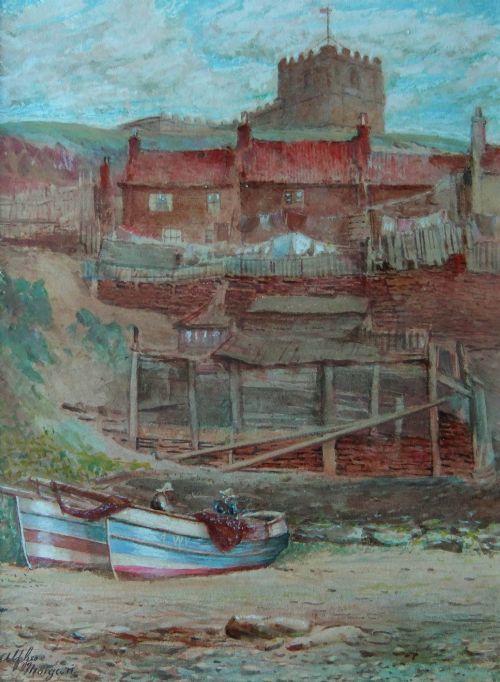
Blue Sea Painting
When you search for a blue sea painting, you are looking at maritime and coastal works that capture open water and harbour scenes.
Blue Sea Painting
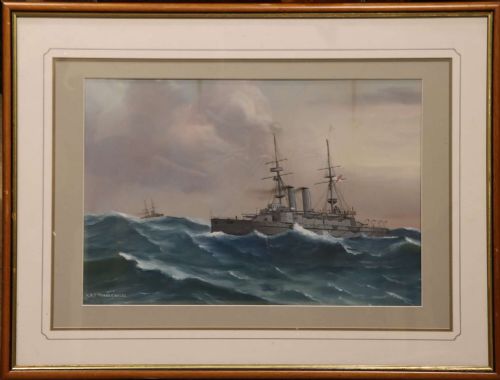
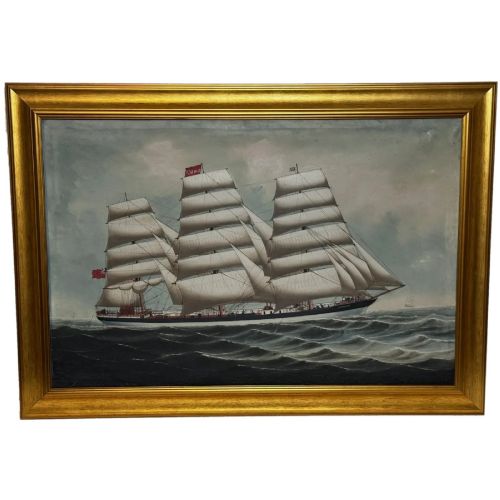
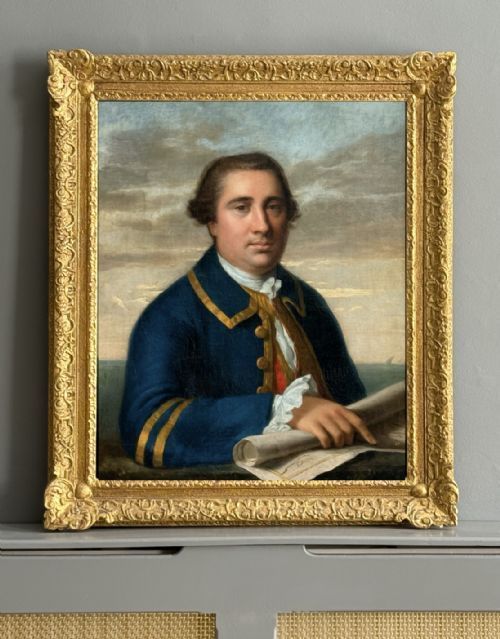
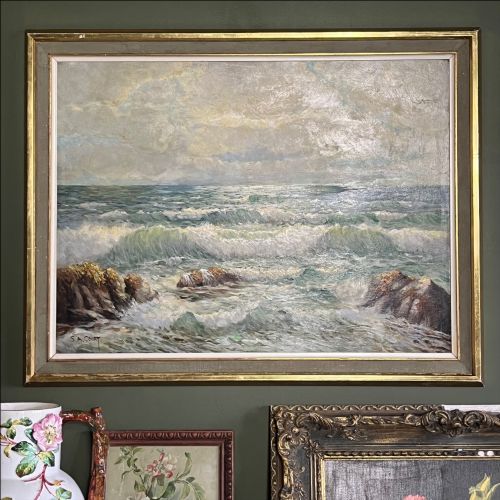
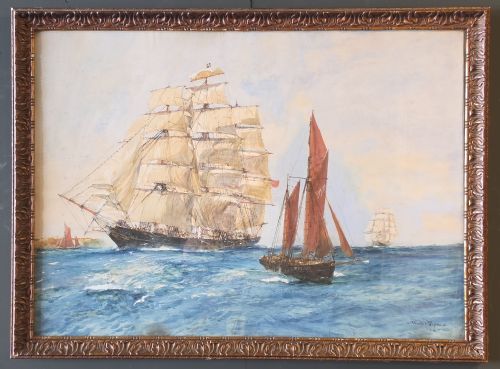
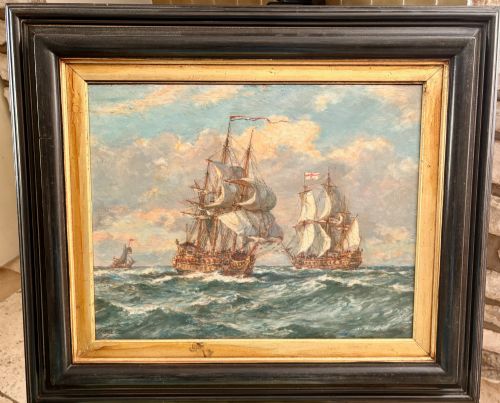
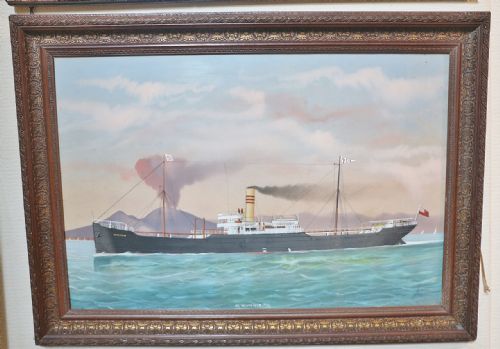
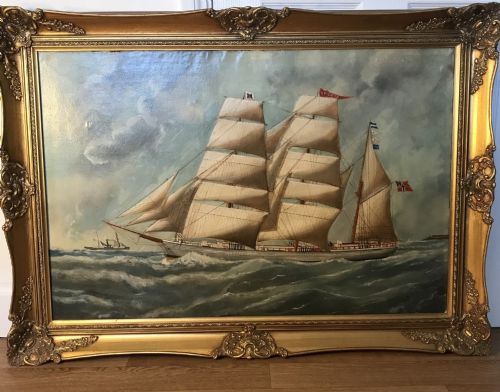
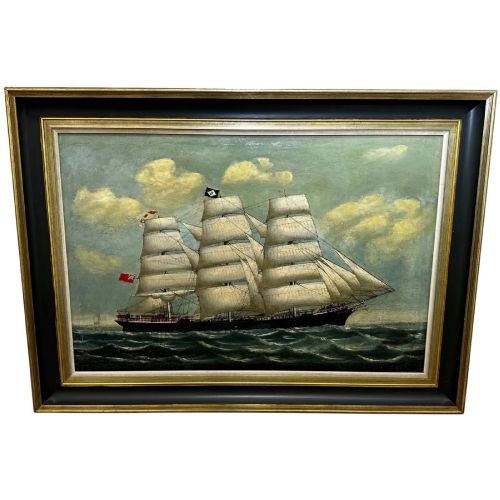
A blue sea painting encompasses works executed in oil paint, watercolour, and gouache, recording coastal views, shipping, and marine subjects. These pieces span the nineteenth century into the twentieth century, reflecting Victorian and Edwardian maritime traditions as well as later British and European movements.
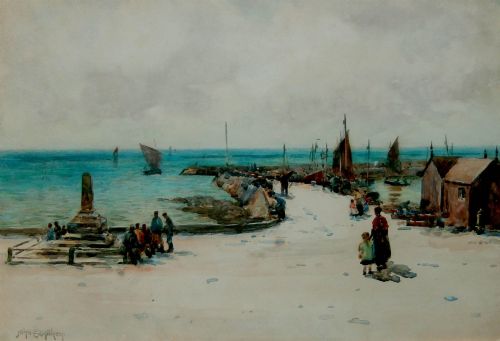
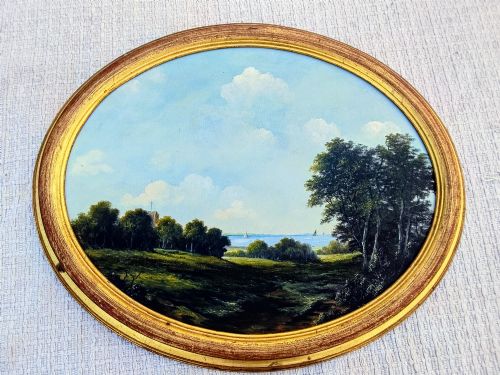
You will most frequently encounter nineteenth-century watercolours and oils depicting fishing boats, coastal towns such as St Ives and Scarborough, and historic sailing vessels. The selection also includes mid-twentieth-century coastal views and en plein air studies.
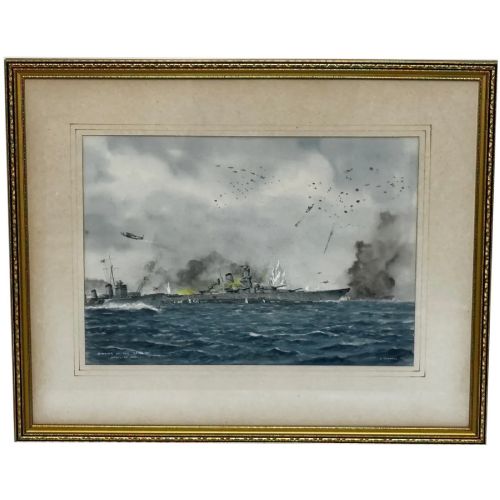
Subjects range from calm harbours and sunlit beaches to stormy seas and naval engagements. The artists represented include named painters of the British and continental schools alongside accomplished anonymous works.
How they were made
Works in this category are created using oil paint on canvas, card, or panel, and watercolour or gouache on paper and board. Oil painting allows for thick impasto and deep tonal layering, which artists use to render the weight of the water and stormy skies.
Watercolour and gouache are applied with fluid washes and fine brushwork on paper or board, capturing transient light conditions along the coast. Many pieces retain their original frames, occasionally executed in gilded wood.
En plein air techniques enabled artists to work directly on the coast, observing changing weather and sea conditions first-hand. This direct observation informs the brushwork and colour harmony of the finished canvas or paper.
Sailors occasionally passed long voyages by constructing detailed steam ships inside glass bottles.
What varies in quality
Quality in a blue sea painting is determined by the sureness of the brushwork and the artist's ability to convey movement, atmosphere, and light. Stronger works capture the physical weight of water and the specific conditions of sky and wind without relying on formulaic repetition.
Compositional balance and depth separate accomplished marine art from ordinary topographical record. The handling of medium, whether the transparency of watercolour or the rich texture of oil paint, dictates the lasting visual impact of the piece.
James Orrock·Reginald Arthur Borstel·Lemuel Francis Abbott·Charles Edward Dixon·John E Aitken·Eric Tufnell·William Banks Fortescue·Bernard Gribble·Bernard Benedict Hemy·Lai Fong·Alfred G Morgan·Carlo Ferranti·Richard B Spencer·William Henry Williamson·George Stanfield Walters·Henry Barlow Carter·George F Pennington·Charles Napier Hemy·Jean Baptiste Olive·William Lee Hankey·Daniel Sherrin·William Tuck·George Shaw
The Blue Sea Painting Glossary
- Gouache
- An opaque water-based medium that dries to a matte finish. It allows for dense highlights and strong colour application on paper or board.
- En plein air
- Painting outdoors in the open air. This approach captures natural light and atmospheric effects directly from the subject.
- Impasto
- Paint applied thickly to a canvas or panel, standing out from the surface. This technique adds literal texture to waves and clouds.
- Maritime realism
- An art style focused on the accurate depiction of ships, coastal scenes, and the sea. It requires precise knowledge of rigging, hull forms, and marine conditions.
- Provenance
- The documented history of ownership of a work of art. A clear record adds context to the piece.
Blue Sea Painting: Frequently Asked Questions
How do I date an antique marine painting?
Dating relies on the costume of figures, the type of vessels depicted, and the artist's active period. Framing and paper or canvas types also offer chronological clues.
Signatures, exhibition labels on the reverse, and stylistic traits typical of Victorian or Edwardian art help narrow the decade of creation.
What is the difference between oil and watercolour marine paintings?
Oil paintings utilise heavy pigments suspended in oil on canvas or panel, offering deep textures and durable surfaces. Watercolours use water-soluble pigments on paper, providing a transparent and luminous quality.
Oils were often chosen for dramatic storm scenes, while watercolours excelled at capturing light and coastal atmosphere.
How should I care for a antique watercolour painting?
Watercolours are sensitive to direct sunlight and high humidity, which can cause fading and foxing on the paper. Display them away from windows and maintain stable indoor conditions.
Ensure framing uses acid-free mounts and conservation glass to protect the paper and pigment over time.
Why do some marine paintings feature specific named ships?
Many nineteenth and early twentieth-century maritime works were commissioned to record specific vessels, naval battles, or commercial voyages. Ship portraits served as proud records for captains, owners, and shipping lines.
Artists researched vessel details meticulously to ensure accurate representation of masts, sails, and rigging.