
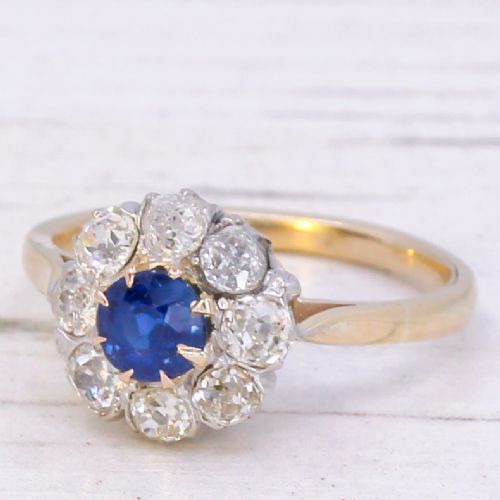


Blue Sapphire Target Ring
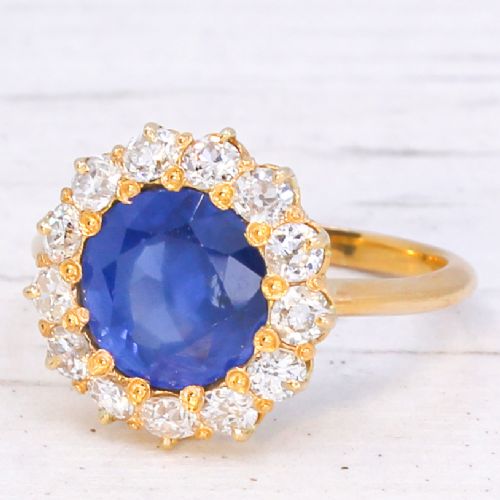
A blue sapphire target ring concentrates attention through concentric rings of gemstones, drawing the eye inward to a central sapphire.
Blue Sapphire Target Ring
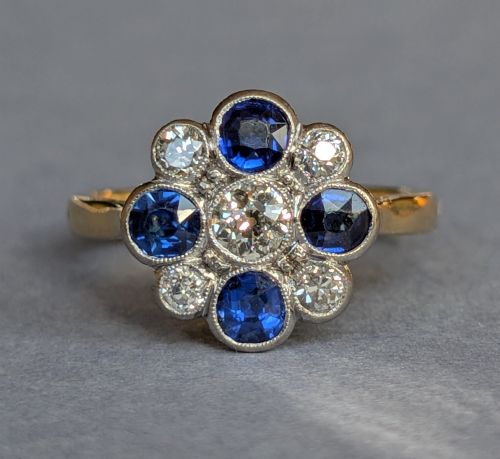
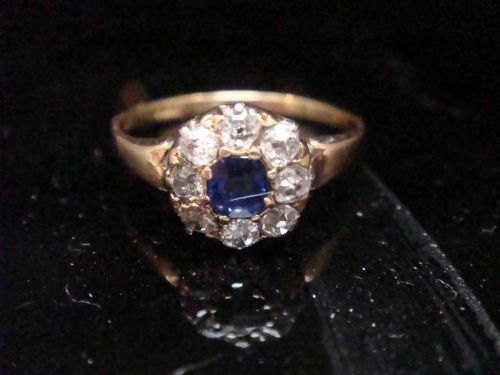
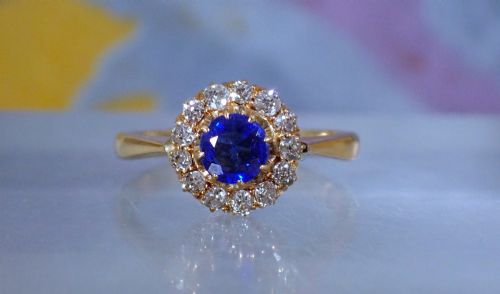
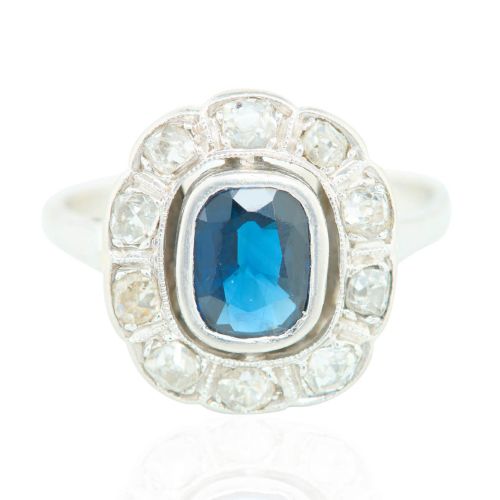
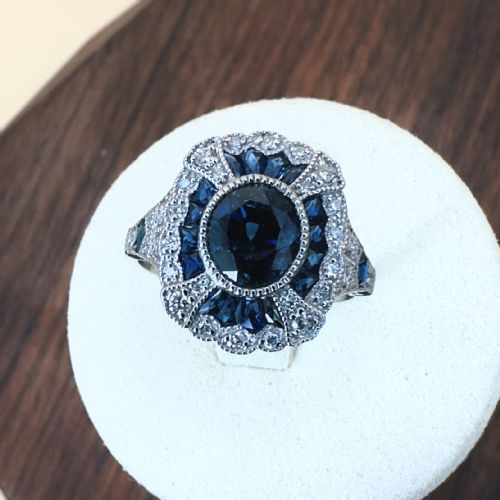
A blue sapphire target ring centres on a vibrant blue sapphire framed by geometric borders of diamonds, creating a distinct circular motif. Most examples encountered here originate from the Art Deco period, alongside Edwardian designs and mid-century revivals.
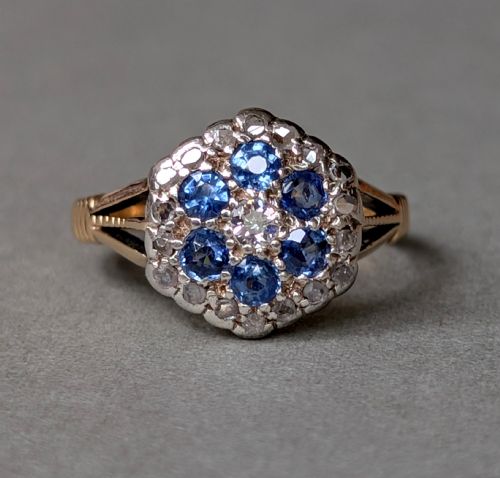
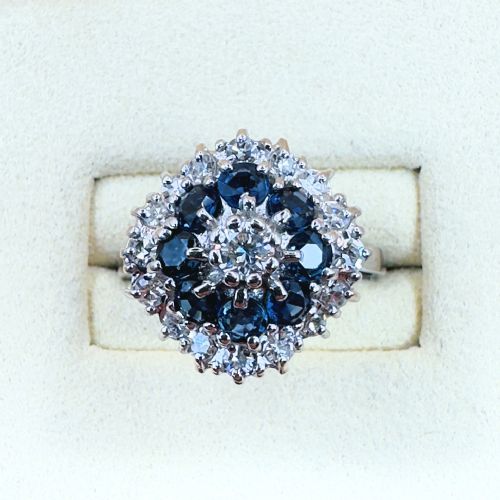
The form relies on balanced symmetry, often utilising calibration-cut sapphires or pavé diamonds to form concentric halos. These dress rings combine structured geometric lines with the deep blue tones characteristic of period stones.
How they were made
Master jewellers combined platinum and yellow gold, frequently pairing a durable platinum setting for the diamonds with an 18ct gold shank. This dual-metal technique maximised the structural strength required for intricate cluster and target arrangements.
Stones were cut by hand, resulting in old mine cuts, old European cuts, and precisely shaped calibré sapphires tailored to fit tight geometric channels.
Listings feature periods spanning from the late Victorian era through the Edwardian years, Art Deco decades, and mid-century revivals.
What varies in quality
Quality rests upon the precision of the stone geometry and the integration of the metalwork. Superior examples display perfectly matched calibré sapphires that follow the curve of the target frame without visible gaps.
The origin and saturation of the sapphire heavily influence the character of the piece, particularly where unheated Burmese stones or certified gems are present.
The Blue Sapphire Target Ring Glossary
- Target ring
- A ring style featuring a central stone encircled by one or more concentric rings of contrasting gemstones. This design achieved widespread popularity during the Art Deco era.
- Calibré cut
- Small gemstones specifically cut and faceted to fit a precise geometric channel or pattern within a mounting. This technique requires exceptional skill from the lapidary.
- Old cut diamond
- A hand-faceted diamond cut prior to the standardisation of the modern brilliant cut in the early twentieth century. These stones typically exhibit smaller tables and higher crowns.
- Cluster ring
- A ring arrangement where a central gemstone is surrounded by a group of smaller stones. The formation maximises overall visual presence and light reflection.
Blue Sapphire Target Ring: Frequently Asked Questions
What defines a target ring?
A target ring is characterised by concentric bands of gemstones surrounding a central focal stone, creating a bullseye visual effect. This geometry became a defining hallmark of 1920s and 1930s jewellery design.
Most pieces use a sapphire centre framed by diamonds, though proportions and halo counts vary between individual makers and periods.
How do I date these rings?
Dating relies on material combinations, such as platinum-topped yellow gold for Edwardian pieces, alongside distinct geometric motifs for Art Deco items. Hallmarks and stone-cutting styles further clarify the era of manufacture.
Mid-century and revival pieces often display heavier casting or different alloy standards compared to their antique counterparts.
Are sapphires treated in antique rings?
Many antique sapphires are completely unheated, while others show traditional treatment characteristics consistent with their mining origin. Certified stones often detail these specific geological traits.
Natural variations in colour, from deep basaltic blue to vivid Burmese tones, remain visible across different periods.
Can I wear a target ring daily?
These rings suit regular wear provided proper care is taken with the claw and bezel settings. Platinum and 18ct gold offer the durability needed for everyday use.
Consulting a jeweller periodically ensures the stone security within intricate cluster frameworks remains intact.