


1930s Sapphire Diamond Ring
A 1930s sapphire diamond ring brings geometric clarity and intense blue colour to the hand through enduring Art Deco design.
1930s Sapphire Diamond Ring
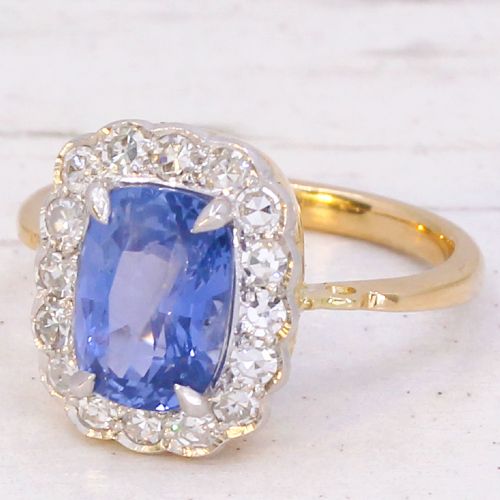
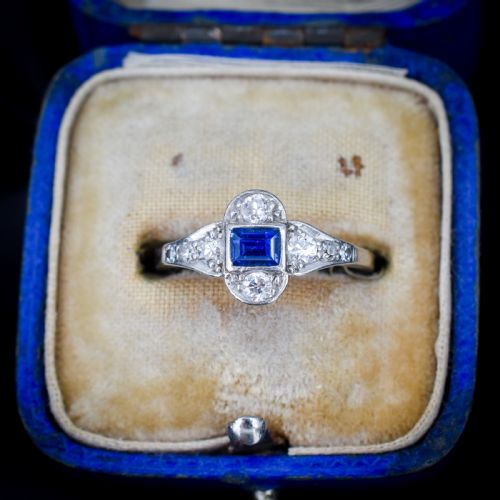
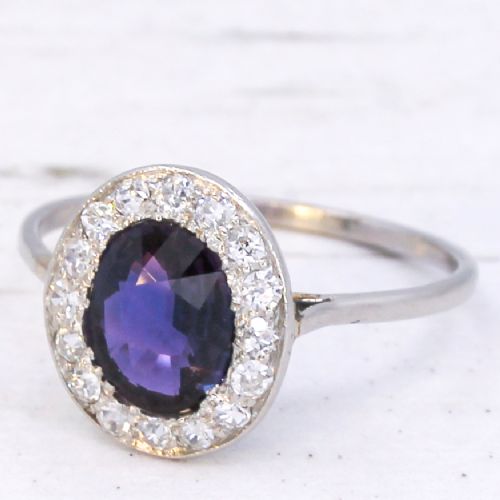
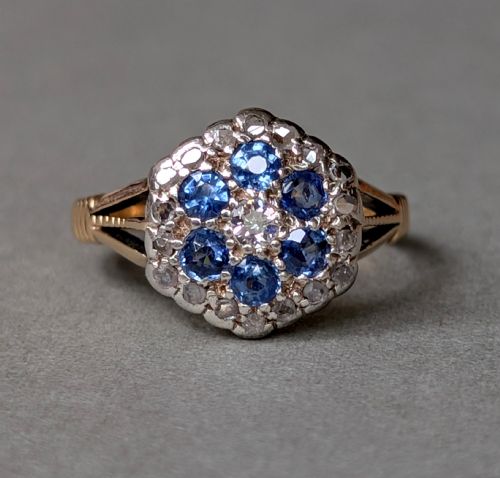
A 1930s sapphire diamond ring combines vibrant corundum with brilliant-cut diamonds within the geometric vocabulary of the Art Deco period. These pieces appear principally as dress rings, cocktail rings, and cluster configurations that showcase central blue stones.
Makers of the era utilised platinum alongside 18ct gold, 18ct white gold, and occasional yellow gold to construct substantial mountings. The surviving examples range from delicate halo designs to large cabochon pieces set with stones originating from Ceylon and Burma.
Materials and Construction
Goldsmiths of the decade mounted stones in heavy platinum or white gold settings, frequently combining these metals with yellow gold bases. Gemstones were secured using precise claw settings or flush techniques that emphasised linear geometry.
The sapphire varieties encompass unheated Ceylon and Burmese stones alongside basaltic origins, cut into faceted profiles or smooth cabochons. Diamonds accompanying these central gems include old cuts and baguette stones arranged symmetrically.
1930s Sapphire Diamond Ring Retail Price Guide 2026
Typical asking prices for 1930s sapphire diamond ring among the pieces listed under this phrase on Sellingantiques today, from the lower quarter to the upper quarter. They describe what is for sale here now, not the wider market.
Listings demonstrate a strong prevalence of platinum and 18ct white gold mountings paired with unheated Ceylon sapphires.
Evaluating Quality and Origin
Quality rests significantly upon the geographic origin and thermal history of the sapphire, with unheated stones from Ceylon or Burma commanding particular attention. The depth of the natural blue colour and the absence of artificial treatment dictate the standing of the piece.
Metalwork execution and diamond proportioning further divide the range, as heavier platinum mountings with crisp geometric lines demonstrate superior workshop standard. The integration of well-matched diamond accents completes the standard of construction.
W H Tandy
The 1930s Sapphire Diamond Ring Glossary
- Cabochon
- A gemstone cut with a smooth, rounded surface rather than facets. This style highlights the deep blue colour of sapphire without geometric reflection.
- Cluster Ring
- A ring featuring a prominent central stone surrounded by a border of smaller gems. This layout maximises visual impact on the finger.
- Trilogy Ring
- A ring set with three stones representing past, present, and future. In this period, such rings typically pair a central sapphire with flanking diamonds.
- Platinum
- A dense, durable white metal utilised extensively during the period for secure, fine-line gemstone settings. It allows for intricate openwork without sacrificing strength.
1930s Sapphire Diamond Ring: Frequently Asked Questions
How do I identify a genuine 1930s sapphire diamond ring?
Authentic pieces exhibit the characteristic geometric geometry of the Art Deco era, combining platinum or white gold with hand-cut diamonds and natural sapphires. Hallmarks, construction techniques, and stone cuts consistent with the 1930s provide reliable confirmation of age.
Examining the underside reveals openwork gallery construction typical of the period rather than modern casting methods. The integration of old-cut or transitional diamonds further supports the historical timeframe.
What is the difference between Ceylon and Burmese sapphires?
Ceylon sapphires typically display a bright, vivid blue hue with high clarity, whereas Burmese stones are often noted for a deeper, velvety saturation. Both origins are highly prized by collectors of vintage jewellery.
Gemmological certificates often accompany these pieces to verify the specific geographic source and to confirm whether the stone is unheated. This documentation influences the character and standing of the ring.
Can I wear a 1930s ring every day?
These rings were built to endure, and sapphire is an extremely hard gemstone well-suited for regular wear. However, platinum and gold settings benefit from routine checks by a jeweller to ensure stones remain secure.
Removing the ring during heavy manual tasks prevents unnecessary wear to the metal claws and delicate diamond settings. Proper care preserves the structural integrity of the mounting over decades of use.
What is an unheated sapphire?
An unheated sapphire is a natural gemstone that has undergone no artificial heat treatment to enhance its colour or clarity. Such stones occur less frequently and are valued for their natural formation.
Laboratory reports confirm the lack of thermal enhancement, distinguishing these untreated gems from standard commercial stones. This natural state is a key consideration for collectors.