




Baguette Diamond Sapphire Ring
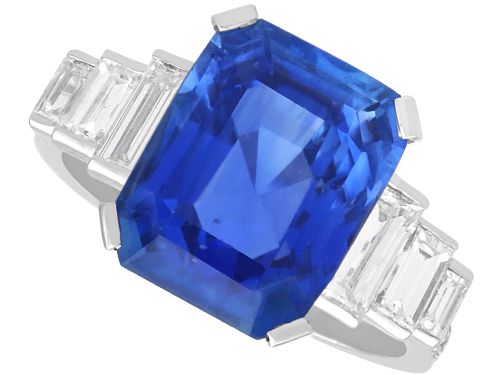
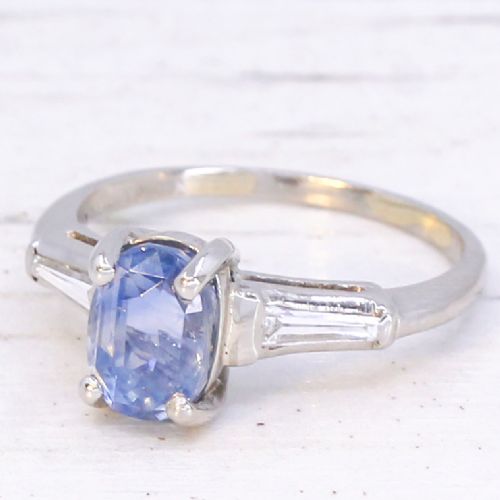
A baguette diamond sapphire ring combines linear stepped side stones with rich blue or fancy sapphire centres, most commonly found in platinum Art Deco settings.
Baguette Diamond Sapphire Ring
A baguette diamond sapphire ring brings together step-cut rectangular diamonds and corundum in configurations ranging from streamlined Art Deco panels to mid-century crossovers and nineteenth-century boat shapes. The phrase most frequently leads you to platinum mountings housing central Ceylon, Burma, Kashmir, or yellow sapphires flanked by crisp baguette diamonds.
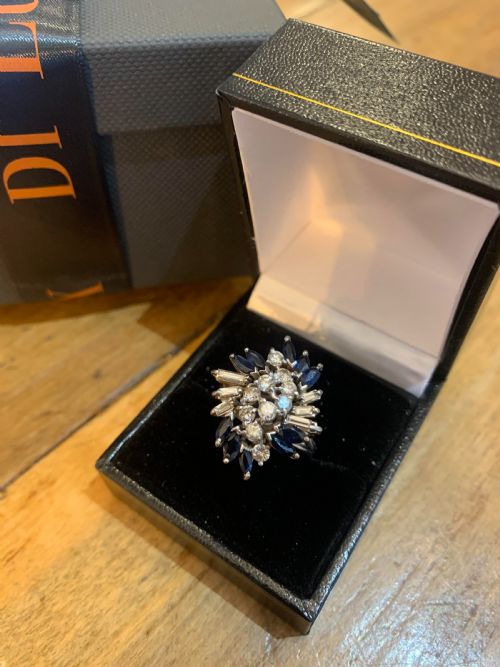
Art Deco examples from the nineteen-twenties and thirties dominate the selection, utilising geometric lines and stepped shoulders to frame the coloured stones. Later mid-century iterations introduce bolder cluster formations and asymmetrical crossover designs executed in white and yellow gold.
The sapphire centrepiece dictates the character of the piece, appearing in deep blue alongside padparadscha, pink, and yellow varieties. Flanked by sharp baguette cuts, these stones create a distinct architectural profile upon the finger.
Platinum work and diamond cutting
Platinum serves as the primary metal for the rigid geometric lines characteristic of the Art Deco period, providing the tensile strength required to hold channel-set baguette stones securely. Eighteen-carat white and yellow gold also appear, particularly in pieces originating from the mid-century era and the Victorian period.
Baguette cutting requires precise geometric faceting to produce long, rectangular stones with open tables that emphasise linear clarity over brilliant sparkle. These are paired with old-cut, round, or cluster diamonds surrounding central sapphires of unheated or treated origin.
Baguette Diamond Sapphire Ring Retail Price Guide 2026
Typical asking prices for baguette diamond sapphire ring among the pieces listed under this phrase on Sellingantiques today, from the lower quarter to the upper quarter. They describe what is for sale here now, not the wider market.
A genuine baguette diamond gets its name from the French word for a long loaf of bread.
Origin, weight, and geometric precision
Quality rests significantly on the geographical origin and treatment status of the sapphire, with unheated stones from sources such as Kashmir, Burma, and Ceylon commanding attention for their natural saturation. The carat weight and clarity of both the central gem and the surrounding baguette diamonds shift the value across the range.
The precision of the metalwork defines the superior examples, where channel and bezel settings hold the linear baguette stones flush without excess metal obscuring the corners. Balance between the central sapphire and the supporting diamond shoulders determines the overall visual harmony of the ring.
The Baguette Diamond Sapphire Ring Glossary
- Baguette cut
- A small, rectangular step-cut diamond or sapphire with straight or tapered edges. This cut prioritises linear geometry and transparency.
- Art Deco
- A design style spanning the nineteen-twenties and thirties characterised by symmetry, geometric motifs, and streamlined forms. Platinum mountings are typical of this period.
- Cluster ring
- A ring design featuring a prominent central stone encircled by a group of smaller gems. This configuration maximises visual impact on the hand.
- Crossover ring
- A style where the shank sweeps up to display two stones resting side by side or overlapping. This form gains popularity in mid-century pieces.
Baguette Diamond Sapphire Ring: Frequently Asked Questions
How do I wear a baguette diamond sapphire ring daily?
Platinum settings withstand daily wear well, though the step-cut facets of baguette diamonds require periodic checks to ensure the channel or claw settings remain tight.
Take the ring off during heavy manual tasks to protect the softer sapphire surface from scratching against hard materials.
What periods do these rings come from?
The selection spans the Victorian era through the Art Deco nineteen-twenties and thirties, extending into mid-century and late twentieth-century designs.
Art Deco platinum mountings represent the most prevalent style within this group of jewellery.
How can I tell a Ceylon sapphire from other origins?
Ceylon sapphires often exhibit a vibrant, luminous blue tone, though laboratory certificates provide definitive confirmation of geographical origin and heat treatment.
Stones from Burma and Kashmir also appear alongside basaltic and yellow variations.
Are these rings suitable for engagement?
The durability of sapphire and diamond set in platinum makes these pieces practical choices for everyday engagement wear.
Their distinct geometric profiles offer an alternative to standard modern solitaire rings.