
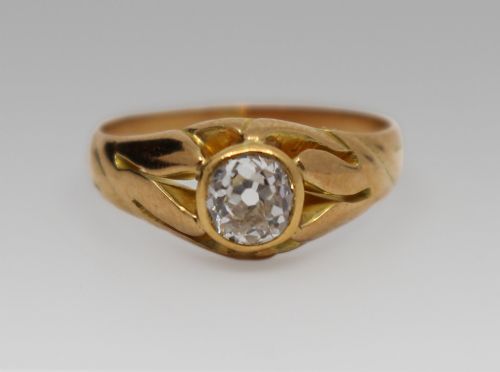

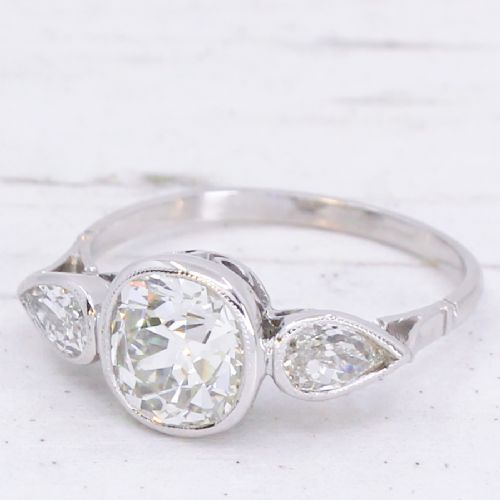
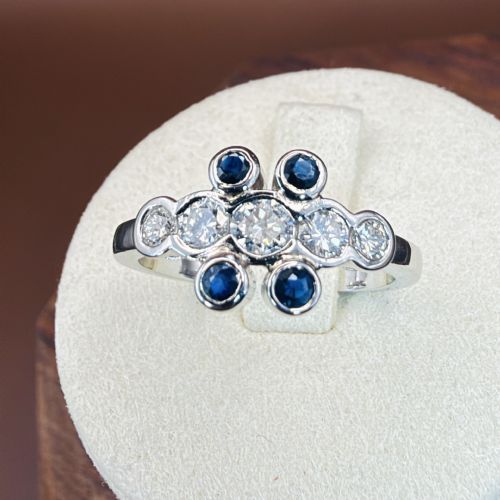
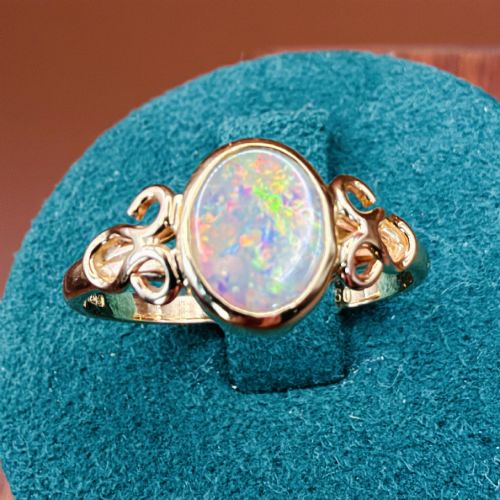
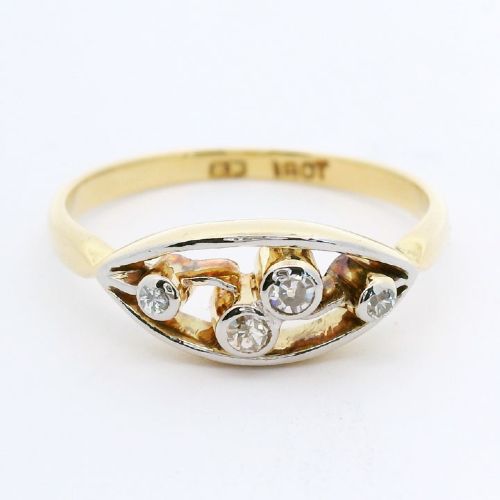
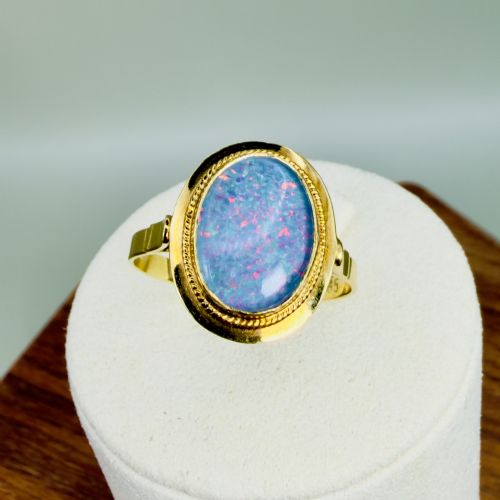
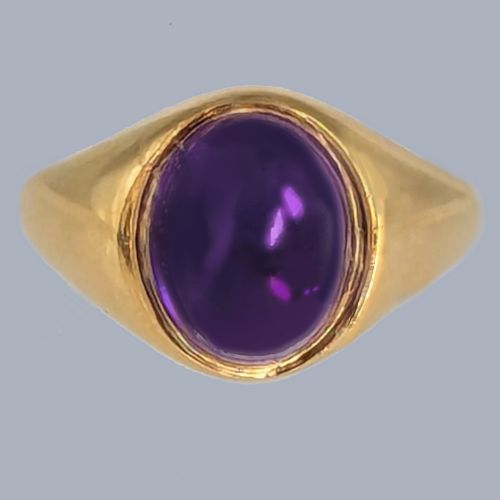
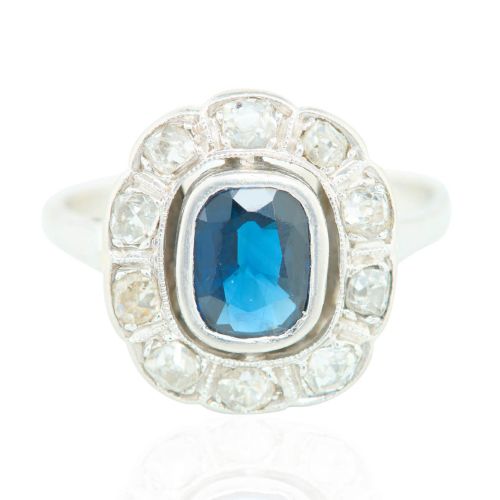
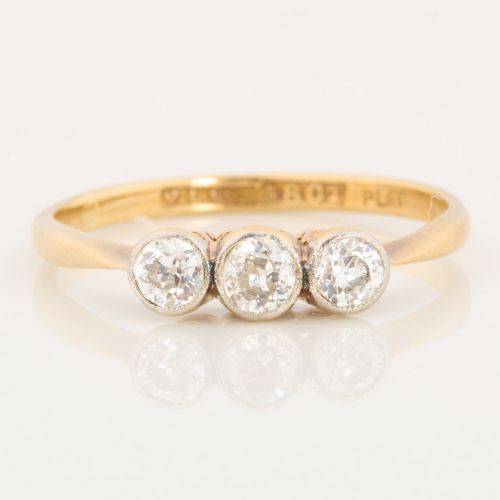
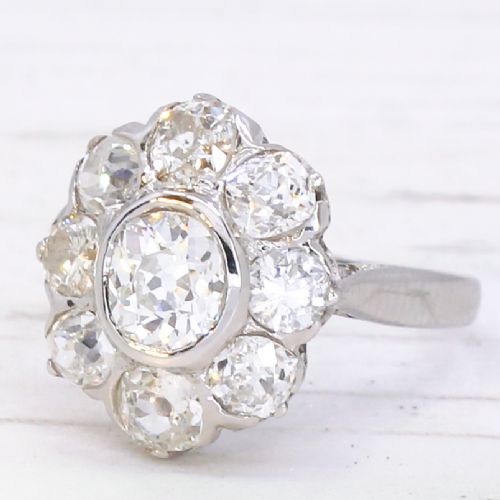
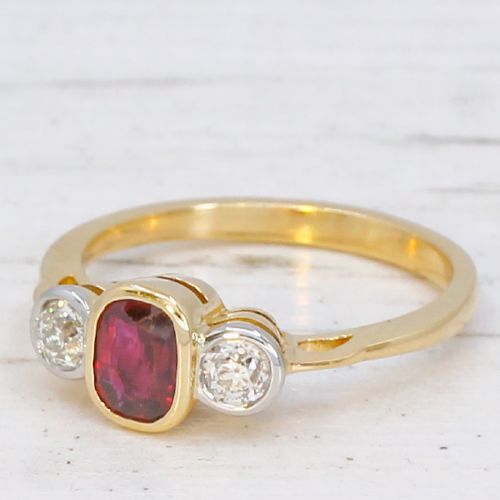


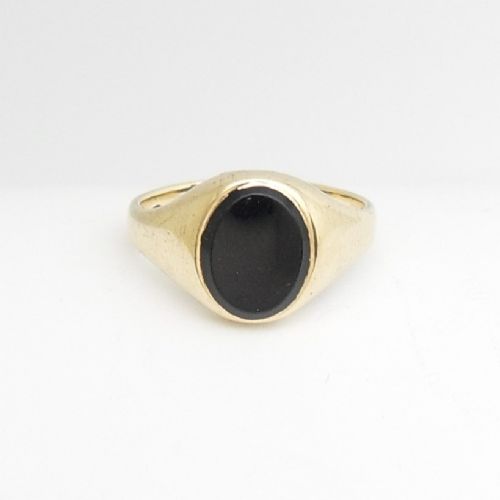
Vintage Bezel Set Ring
A vintage bezel set ring secures its stones with a continuous metal rim that frames the gem cleanly for daily wear.
Vintage Bezel Set Ring
A vintage bezel set ring holds diamonds, sapphires, opals, or emeralds within a encircling collar of metal rather than relying on protruding claws.
The selections span Edwardian, Art Deco, and Mid-Century periods, running from the early twentieth century through to the nineteen sixties and beyond.
Solitaires, clusters, and multi-stone trilogy forms predominate, shaped in yellow gold, white gold, platinum, and rose gold.
How they were made
Goldsmiths shaped platinum and various carats of gold, including eighteen carat and fourteen carat varieties, to construct secure settings by hand.
Stones such as old cut diamonds, cabochon amethysts, and black opals were dropped into precise metal collars and hand-rubbed or burnished into place.
Some stones come with a star, because unheated Ceylon sapphires possess tiny needle inclusions that catch the light to display a glowing six-rayed star.
What varies in quality
The standard of execution depends on the precision of the metal collar where it meets the girdle of the gemstone.
Heavier metal weights and substantial stone carats, from substantial star sapphires to large old cut diamonds, elevate the piece.
The Vintage Bezel Set Ring Glossary
- Bezel setting
- A method of securing a gemstone by surrounding its girdle with a thin strip of metal that is pushed over the edge of the stone. This technique protects the stone edges and offers a smooth profile.
- Old cut
- A term for diamond cuts executed before modern machine proportions, typically featuring high crowns and small tables. These cuts catch candle or gas light with distinctive soft patterns.
- Solitaire
- A ring designed to showcase a single central gemstone, most commonly a diamond. It focuses attention entirely on the main stone.
- Trilogy ring
- A ring set with three stones, often interpreted to represent past, present, and future. They frequently combine diamonds with sapphires or other precious gems.
- Cabochon
- A gemstone shaped and polished with a smooth, convex domed surface rather than faceted. This cut is common for opals, amethysts, and star sapphires.
Vintage Bezel Set Ring: Frequently Asked Questions
What is a bezel set ring?
A bezel set ring uses a continuous band of metal soldered to the gallery to hold the gemstone securely in place. The upper edge of this metal rim is pressed tightly over the stone.
This technique creates a smooth outer edge that prevents snagging on clothing. It represents a practical choice for individuals who wear their jewellery constantly.
How do I identify an Art Deco bezel ring?
Art Deco rings from the nineteen twenties and nineteen thirties often feature geometric motifs, platinum settings, and precise symmetrical arrangements. They frequently utilise calibre cut stones alongside old cut diamonds.
The metalwork in these pieces is crisp and architectural, reflecting the design sensibilities of the period between the wars.
Are these rings suitable for daily wear?
The enclosed metal rim protects the girdle of the stone from accidental knocks and impacts. This makes them remarkably durable for everyday use compared to prong-set alternatives.
Heavier shank weights, such as those found in many mid-century and Edwardian examples, also contribute to long-term structural resilience.
What metals were commonly used?
Platinum became highly fashionable during the Edwardian and Art Deco eras due to its strength and bright white finish. Yellow gold, white gold in eighteen carat and fourteen carat, and rose gold also appear frequently across the decades.
Jewellers often combined platinum tops with yellow gold shanks during specific periods to balance visual contrast with durability.