

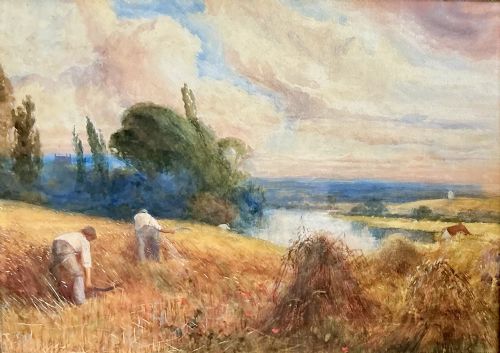


Blue River Watercolour
Blue river watercolour works capture flowing water and aquatic landscapes through pigment on paper, offering direct contact with historic topographies.
Blue River Watercolour
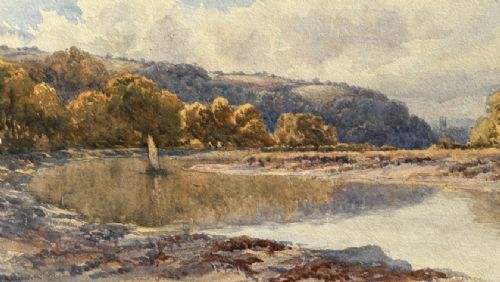
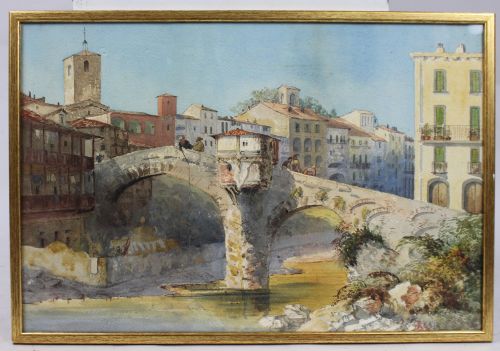
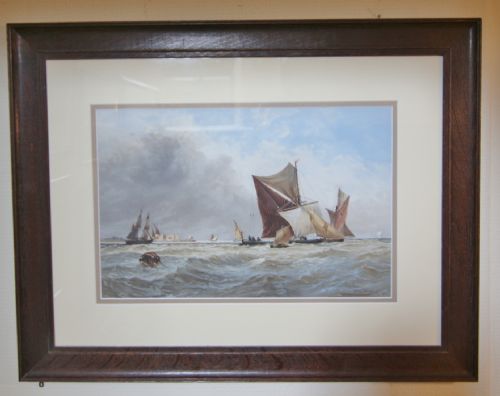
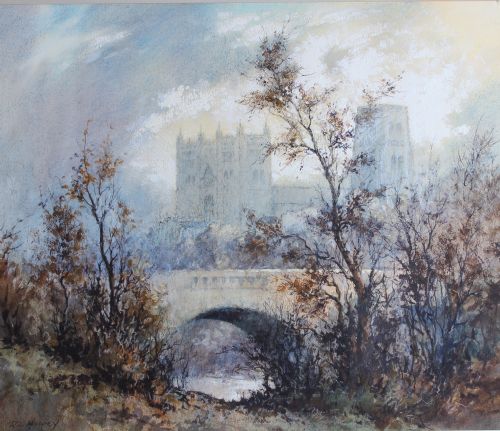
A blue river watercolour presents aquatic scenery, ranging from quiet rural streams and pastoral riverbanks to bustling industrial estuaries and maritime shipping channels. These works capture specific topographical locations across Britain and continental Europe, recorded by artists who sat by the water with pigment and paper.
The selections span from the nineteenth century into the twentieth century, encompassing Victorian romanticism, early twentieth-century British landscape traditions, and Edwardian views. Most examples meet the buyer as framed paintings under glass, preserving the delicate water-soluble mediums from atmospheric moisture and handling.
Makers on this page range from accomplished regional painters documenting local waterways to nationally exhibited members of artistic societies. Their subjects focus on identifiable rivers, bridges, and coastal harbours, translating fluid natural elements into permanent visual records.
Materials and Technique
Artists apply watercolour pigment suspended in water directly onto paper substrates, sometimes incorporating ink for definition or gouache for opaque highlights. The absorbency of the paper dictates how the wet colour spreads, requiring rapid execution and secure brushwork.
Framed works utilise glass protection over wooden frames, safeguarding the paper support and water-soluble pigments from airborne dirt and physical damage. The interaction between translucent washes and the white of the paper creates the luminous quality characteristic of these paintings.
The listings span from the 1870s through the 1960s, capturing shifting British and European landscape styles on paper.
Factors of Artistic Quality
Quality rests upon the artist's ability to control fluid washes and capture atmospheric light, distinguishing masterly topographical precision from stiff or formulaic sketching. Superior compositions demonstrate confident handling of reflections on water and convincing spatial depth.
The retention of pigment vibrancy and the clarity of the paper support influence the visual success of each piece. Works that avoid excessive fading maintain the intended contrast between deep river tones and pale skies.
David Law·Alfred Young Nutt·TB Hardy·Robert Leslie Howey·Frederick Hines·William Frederick Settle·Cornelius Pearson·Arthur Reginald Smith·Henry John Kinnaird·Thomas Bush Hardy·John Syer·William Joseph Boyes·Charles Harmony Harrison·Frederick Williamson·Noel Harry Leaver·Frederick George Coleridge·Robert Winchester Fraser·Charles Edward Holloway·Robert Anderson·Fred Lawson·Frank Wasley·Sir Ernest Albert Waterlow·Walter John Bayes·Carleton Grant·Frances E Nesbitt
The Blue River Watercolour Glossary
- Watercolour pigment
- Finely ground colour particles mixed with a water-soluble binder, used for painting on paper.
- Topographical watercolour
- A detailed landscape painting recording an actual geographical location, bridge, or river view with precision.
- Wash
- A thin, transparent layer of diluted watercolour paint spread evenly across the paper to represent skies or water surfaces.
- Gouache
- An opaque watercolour paint containing added white pigment, utilised by artists to create highlights on river waves or architectural stonework.
Blue River Watercolour: Frequently Asked Questions
What periods do these watercolours cover?
The available works primarily date from the nineteenth and early twentieth centuries, spanning Victorian, Edwardian, and later periods.
Artists during these eras frequently travelled along major rivers and coastal ports to record expanding towns and rural bridges.
How should I frame and hang a watercolour?
Watercolours require framing behind glass with a mount that prevents the paper surface from touching the glazing directly.
Keep them away from direct sunlight to prevent the watercolour pigments from fading over time.
Are these paintings signed by the artists?
Many of the listed watercolours feature signatures, initials, or inscriptions identifying the creator and the specific river location.
Documentation on the reverse of the frames often provides further provenance regarding past exhibitions.
What subjects appear besides rivers?
Alongside inland riverbanks and locks, the selections include maritime shipping scenes, coastal harbours, and urban Thames views.
Topographical accuracy remains a common thread across rural countryside and semi-industrial riverside subjects alike.