




Blue River Painting
A blue river painting captures flowing water and open banks across centuries of British and European landscape art.
Blue River Painting
When you search for a blue river painting, you encounter framed watercolours, oil paintings on canvas, and wood panels depicting waterways, estuaries, and maritime scenes. These works span the nineteenth and twentieth centuries, taking in Victorian detail, Edwardian observation, and mid-century impressionism.
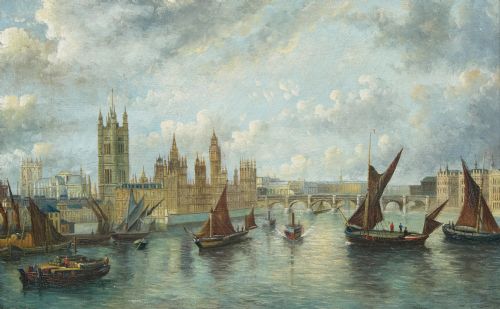
The versions you meet most frequently on this page are nineteenth-century watercolours and twentieth-century oil paintings portraying British and continental rivers. They range from quiet backwaters and rural marshes to busy shipping estuaries.
Makers recorded in the evidence include named artists such as Thomas Bush Hardy, Cornelius Pearson, and Frederick Hines alongside regional British and Scottish schools. The subjects focus closely on rivers, from the Thames and Medway to the Seine and Pearl River.
Materials and Technique
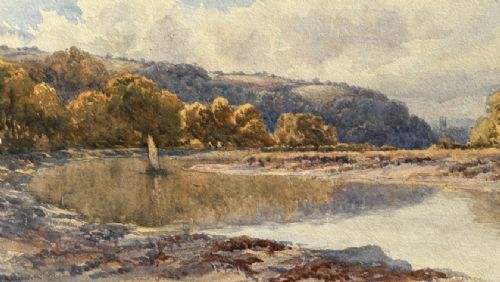
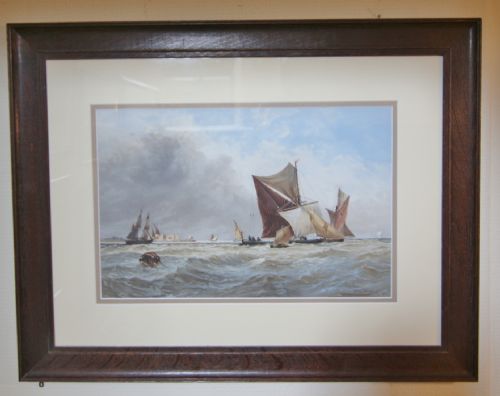
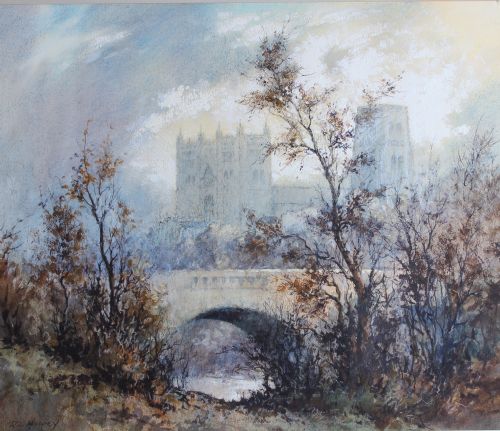
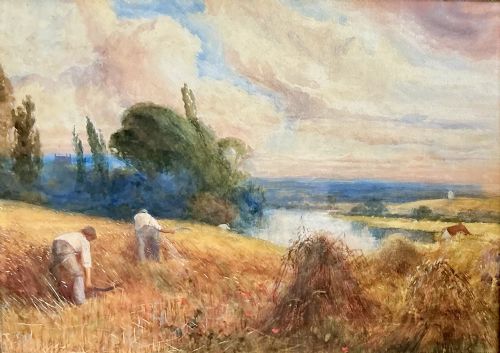
The physical support consists chiefly of paper, canvas, and wood panels. Watercolours utilise pigment suspended in water applied to paper sheets, often capturing transparent washes of light along riverbanks.
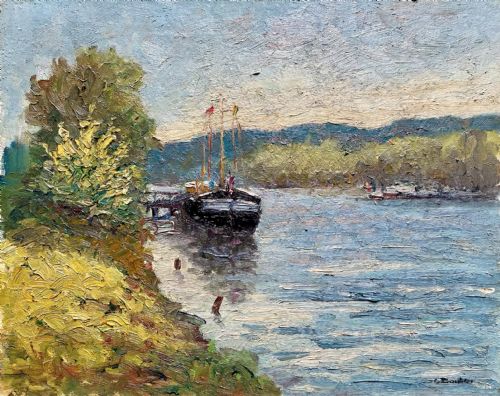
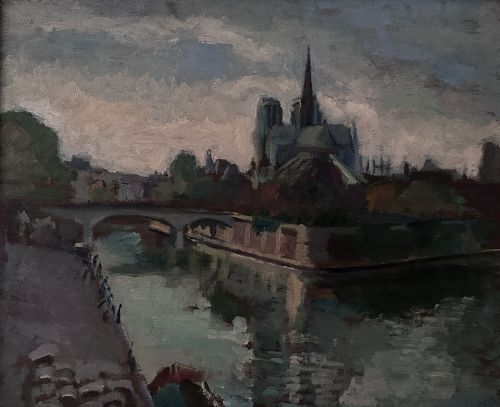
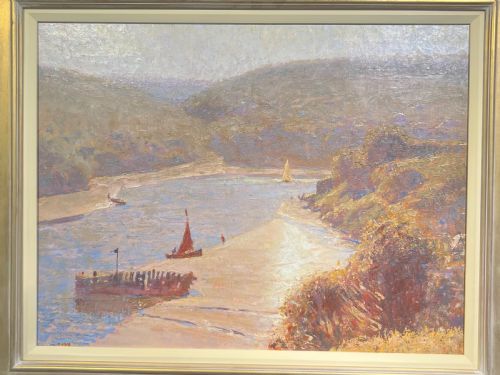
Oil paintings employ oil paint laid onto woven canvas or rigid wood panels, allowing for heavier impasto and textured brushwork as seen in mid-century impressionist river landscapes.
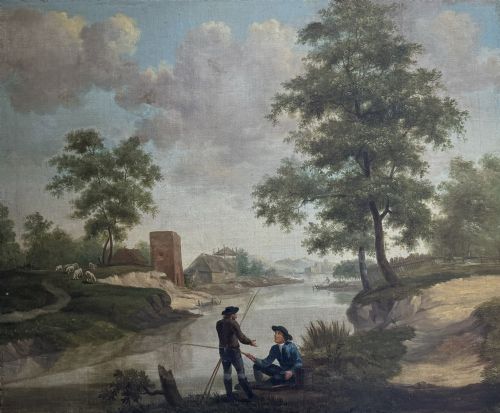
Several watercolours carefully record quiet backwaters where artists watched fishermen cast lines while seagulls drifted overhead.
Evaluating the Range
The top of the range is distinguished by confident handling of light and atmospheric depth, where water, sky, and atmosphere interact harmoniously. Weaker examples show hesitant brushwork and static compositions that fail to capture the movement of water.
Material preservation also sets works apart. Original framing, stable pigments without fading, and clean paper or undamaged canvas distinguish superior survivals from pieces requiring conservation.
Alfred Young Nutt·Thomas Bush Hardy·Frederick Hines·Cornelius Pearson·Florence Adelina Hess
The Blue River Painting Glossary
- Watercolour
- A painting method where fine pigment is mixed with water-soluble binders and applied to paper. It relies on the white of the paper to show through translucent washes.
- Oil on Canvas
- A traditional technique using pigments bound in a drying oil, spread across a stretched fabric support. This allows for rich blending and textured impasto.
- Impasto
- Paint applied thickly to a canvas or panel, leaving visible brush or palette knife marks that stand proud of the surface. It adds tactile depth to water and foliage.
- Post-Impressionism
- An art movement following impressionism that extended its use of vivid colours and thick application while exploring broader structural and emotional themes.
Blue River Painting: Frequently Asked Questions
What is a blue river painting?
A blue river painting is an artwork depicting a waterway, estuary, or river landscape created in oil or watercolour. These pieces document aquatic scenery from the nineteenth and twentieth centuries.
The category encompasses detailed Victorian watercolours of British rivers alongside looser mid-century impressionist views of European waterways.
How were these paintings displayed?
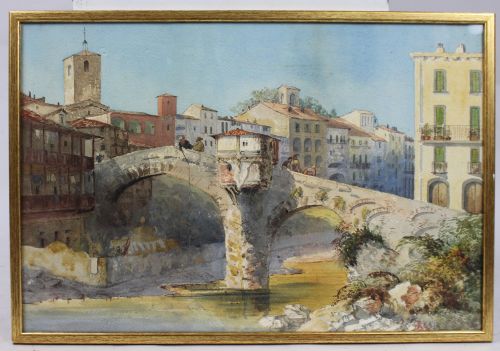
These works were traditionally framed in timber, often with gilt moulding, designed to hang in domestic parlours and drawing rooms. The frame protected the delicate paper surfaces of watercolours or the heavy canvas of oil paintings.
Today, they suit similar traditional or eclectic interior settings where landscape art provides a focal point on a wall.
How do I care for a watercolour painting?
Watercolour paintings require protection from direct sunlight to prevent the fading of pigments and the yellowing of paper supports. Framing behind glass with acid-free mounts ensures proper preservation.
Keeping these works in rooms with stable humidity prevents the paper from warping or developing foxing spots over time.
How can I tell a watercolour from an oil painting?
Watercolours are painted on paper, typically displayed under glass, showing translucent washes where the white paper illuminates the pigment. Oil paintings use heavier paint on canvas or wood panel with an opaque, textured finish.
Under close inspection, oil paint reveals raised brushstrokes and a dense surface, whereas watercolour sinks into the absorbent fibres of the paper.