

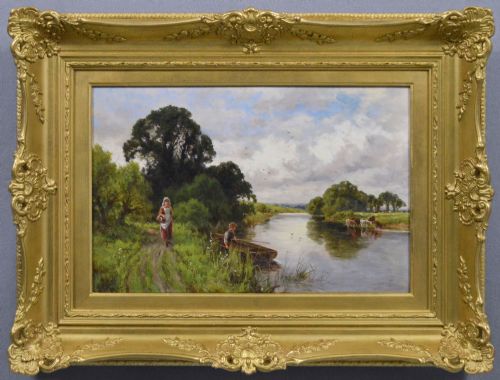


Thames River Landscape
Thames river landscape paintings and watercolours capture the changing light and commerce along London's historic waterway from Georgian times onwards.
Thames River Landscape
A Thames river landscape records the evolving architecture, shipping and scenery along London's famous waterway and its upper reaches. Buyers seek these depictions for their combination of topographical history and painterly skill.
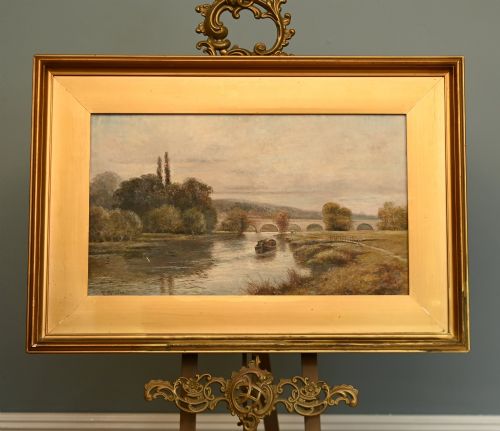
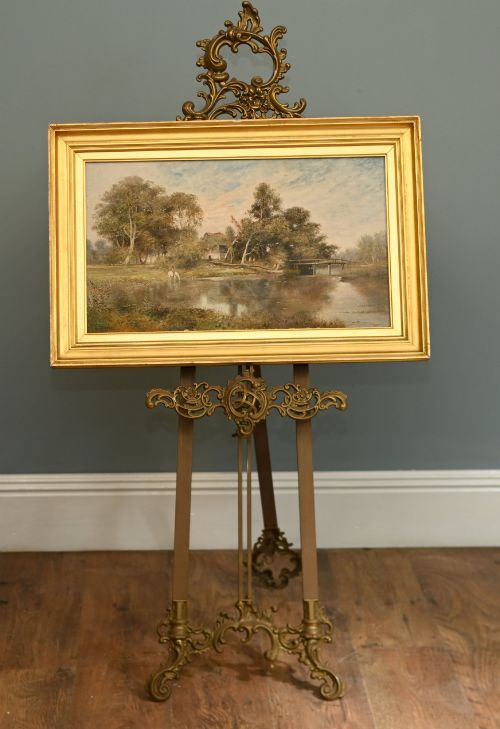
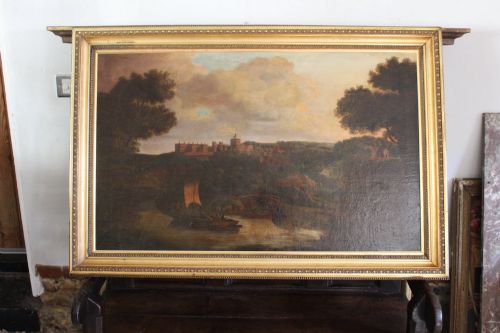
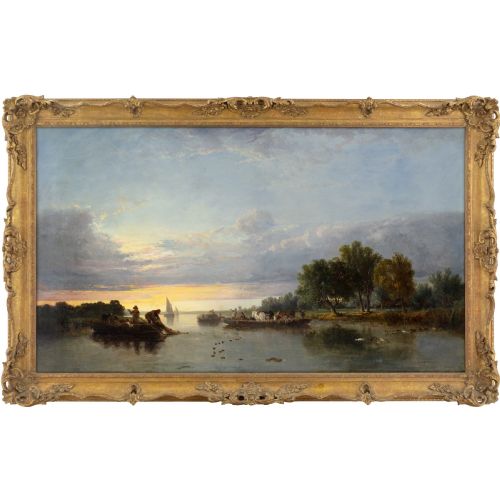
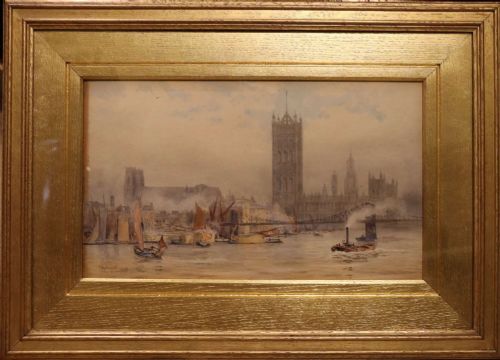
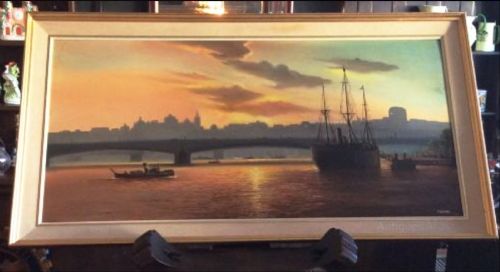
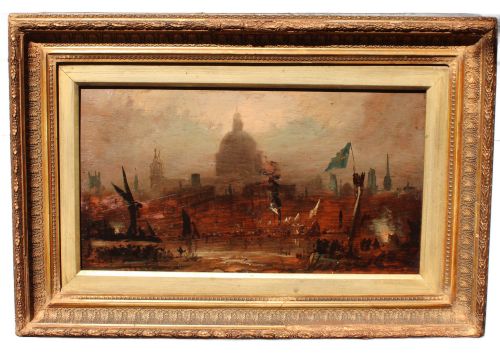
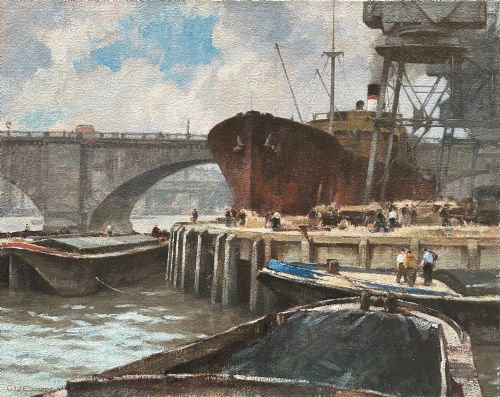
The selections available here span from Georgian watercolours to mid-twentieth-century oils. Watercolour on paper and oil on canvas or board dominate the inventory, capturing rural riverbanks as well as bustling urban bridges.
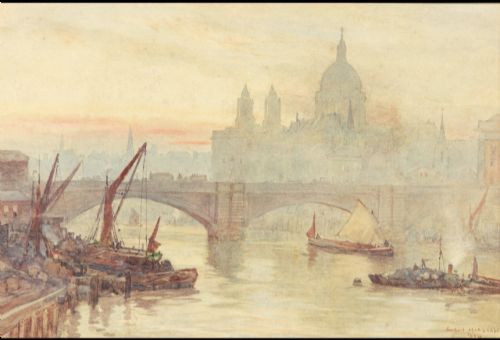
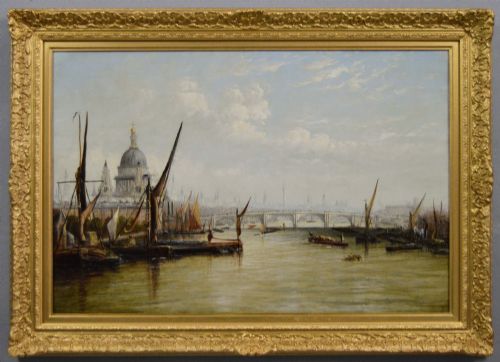
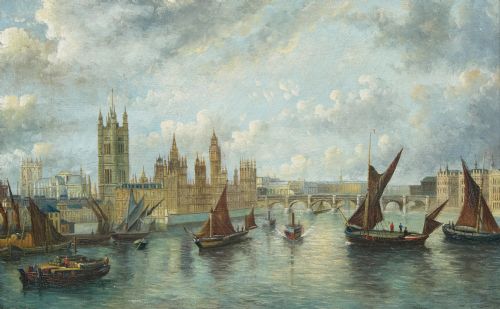
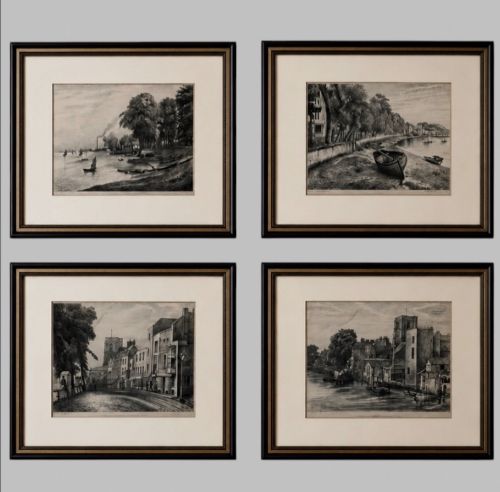
Urban scenes frequently feature landmarks such as St Paul's Cathedral, the Houses of Parliament and Tower Bridge. Rural views shift the focus toward Berkshire and Surrey, showing locks, mills and village churches along the water.
Materials and Technique
Artists relied primarily on watercolour on paper for delicate atmospheric effects, utilising fluid washes to render misty mornings and river haze. Bodycolour and pencil were often added to highlight architectural details in these works.
Oil painters worked on canvas, board or panel, applying pigment to build textured depictions of river water, shipping and masonry. Ground layers and varnishes preserved these oil works, allowing rich tones of grey, blue and ochre to endure.
Several Victorian watercolours capture anglers and children fishing patiently in misty Thameside villages long before modern embankments.
Assessing Quality
Quality rests upon the artist's command of atmospheric perspective and handling of light upon water. Stronger works convey a convincing sense of movement in the river traffic and depth in the London skyline.
Composition and draughtsmanship dictate distinction, separating hastily executed souvenir sketches from carefully observed topographical records. Frame preservation and original period mounting further influence the standing of each piece.
Francis Moltino·Charles William Wyllie·Henry John Kinnaird·Frank W Scarborough·Robert Winchester Fraser
The Thames River Landscape Glossary
- Aquatint
- A printmaking technique that produces tonal areas resembling watercolour washes. It was frequently used in Georgian publications to reproduce topographical views.
- Watercolour
- A paint consisting of water-soluble pigments suspended in a gum arabic binder. It forms the primary medium for many nineteenth-century river views.
- Impressionism
- A style of painting emphasising a spontaneous capture of light and atmosphere. British variants applied these principles to maritime and urban scenes.
- Topography
- The detailed mapping or description of specific places. Topographical works prioritize accurate architectural and geographical representation.
- Lithography
- A planographic printing method using stone or metal plates. It enabled the mass production of detailed nineteenth-century prints.
Thames River Landscape: Frequently Asked Questions
How do I date a Thames landscape?
Dating relies on visible architectural landmarks, costume of any figures depicted, and artist signatures or exhibition records. Changes in London bridges and skyline additions provide clear chronological markers.
Paper quality, framing style and handwritten inscriptions on the reverse offer further clues to the decade of creation.
What is the difference between rural and urban scenes?
Urban views concentrate on London commerce, bridges, shipping and civic monuments such as St Paul's. They often employ a more industrial palette of greys and ochres.
Rural compositions depict locks, sailing barges, weeping willows and village churches in quieter Berkshire or Surrey reaches.
How should I frame and display these works?
Watercolours require conservation mounting with acid-free materials and protection from direct sunlight to prevent fading. Glazing shields the delicate paper surface from atmospheric pollutants.
Oil paintings on canvas or panel benefit from traditional wood frames that support the edges without restricting natural expansion.
Are these works signed by the artists?
Many pieces feature artist signatures, monograms or contemporary inscriptions on the front or reverse. Archival records and exhibition labels often confirm attribution when signatures are absent.