
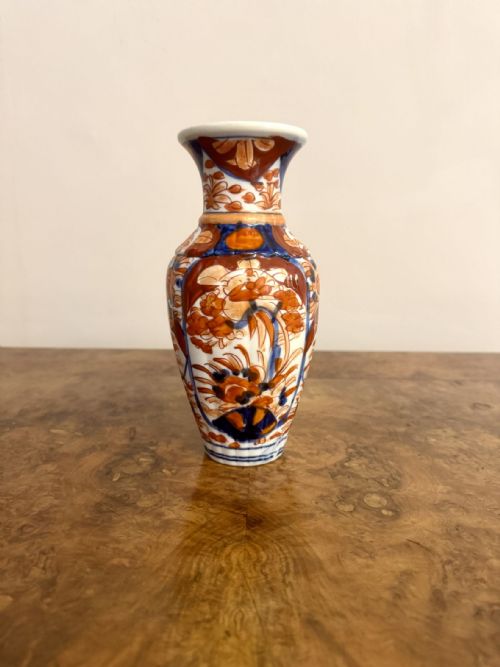
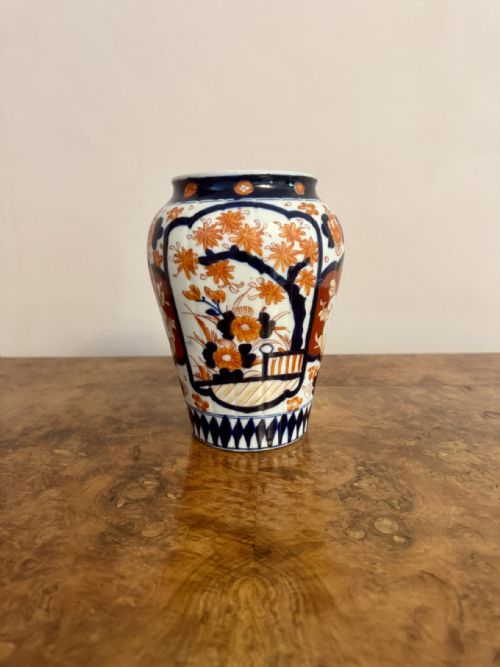
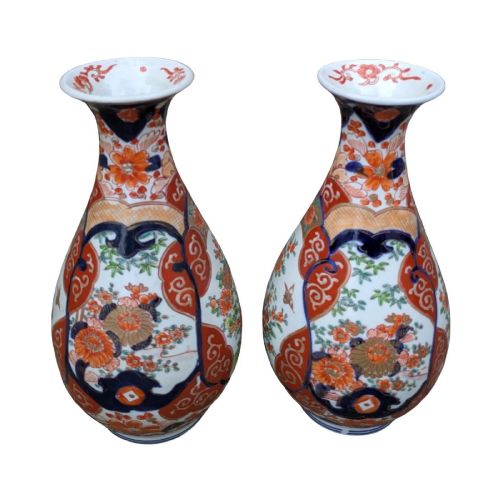
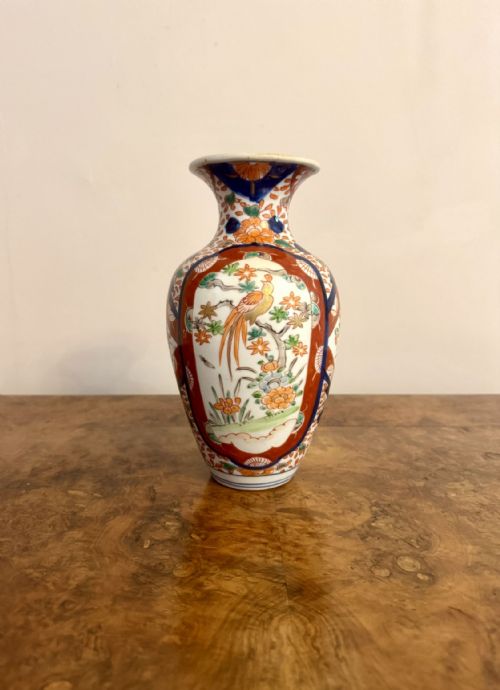
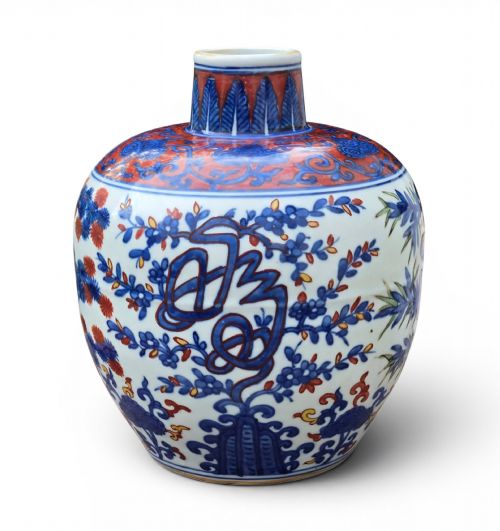


Blue Red Porcelain Urn
A blue red porcelain urn brings together contrasting cobalt and iron-red tones on ceramic bodies created for display.
Blue Red Porcelain Urn
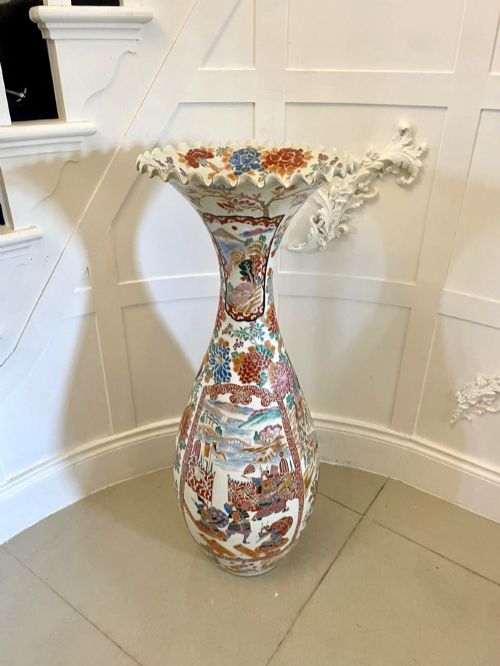
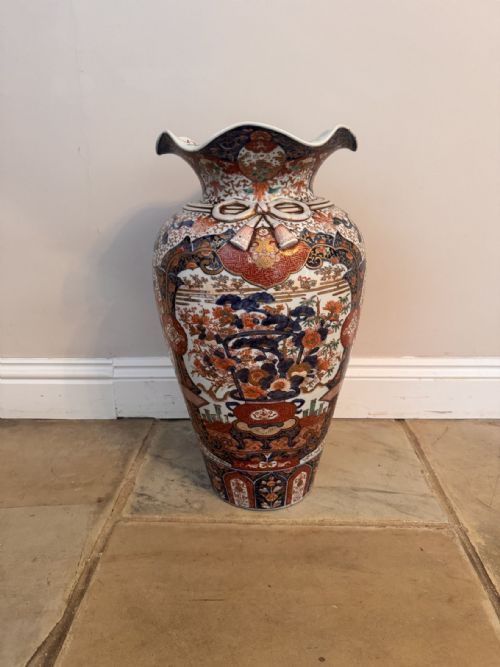
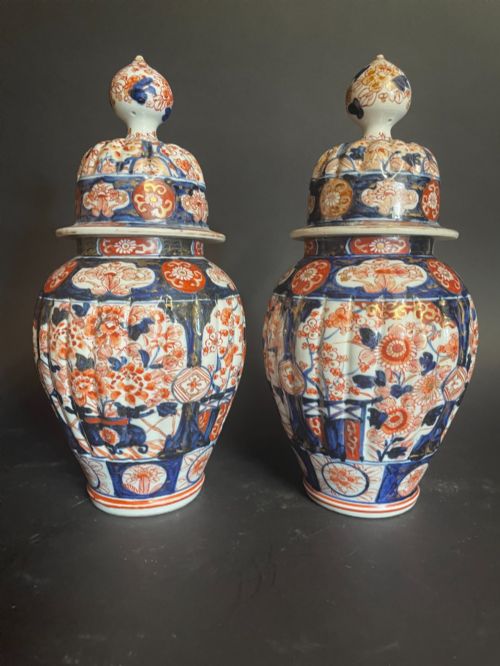
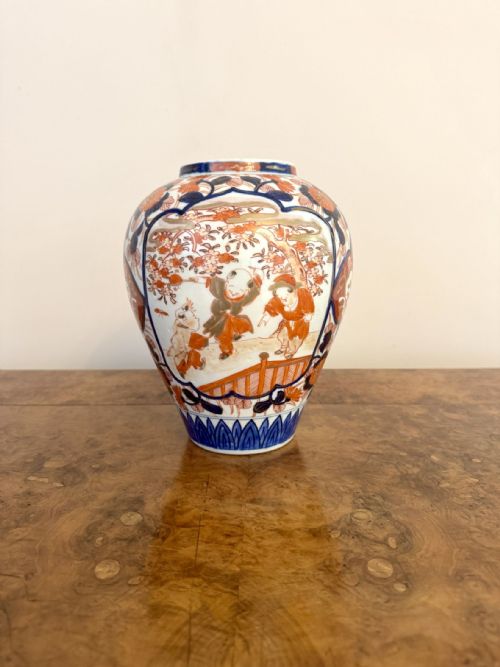
A blue red porcelain urn typically draws from Japanese Imari traditions, spanning periods from the Edo and Meiji eras through to Edwardian interpretations. These vessels appear primarily as floor-standing vases, covered ginger jars, lidded urns, and rounded koro designed for incense.
The selection ranges from substantial nineteenth-century Japanese production to earlier eighteenth-century examples and twentieth-century decorative pieces. Buyers frequently encounter shaped vases, double gourd forms, and pairs intended for mantel or cabinet garnitures.
Materials and technique
Potters built these vessels using hard-paste porcelain clay bodies fired at high temperatures to achieve a vitrified finish. Artisans applied cobalt blue underglaze decoration directly to the clay before the primary glaze firing.
Overglaze enamel decoration followed, integrating iron-red pigments alongside supplementary details in gold leaf, gilding, and enamel paint. Certain workshops utilised moulded or fluted body shapes before executing the hand-painted motifs.
Listings span periods from the sixteenth century through the Edwardian era, featuring porcelain materials decorated with cobalt glaze and iron-red enamel.
Assessing quality
The success of a piece rests on the precision of the hand-painted brushwork and the clarity of the cobalt glaze against the iron-red enamel. Superior examples display balanced composition across complex floral or geometric panels without crowding the ceramic surface.
Weight, potting thickness, and the crispness of moulded details such as handles or covers distinguish high-grade workshops from standard commercial production. Preservation of the applied gold leaf and overglaze colours also influences the standing of individual vessels.
The Blue Red Porcelain Urn Glossary
- Imari
- A style of Japanese porcelain originating from the port of Arita, traditionally decorated in underglaze blue, iron-red enamel, and gold. This palette became widely copied in Europe during later centuries.
- Koro
- A traditional Japanese incense burner featuring a perforated cover and supported on feet. These incense vessels frequently share the decorative palette of contemporary vases.
- Garniture
- A matched set of three or more vases or jars designed to be displayed together on a mantelpiece or cabinet. These sets often combine central jars with flanking vases.
- Ginger Jar
- A broad-shouldered ceramic storage vessel with a fitted lid, originally intended for spices or preserved ginger. They form a staple category among lidded decorative jars.
Blue Red Porcelain Urn: Frequently Asked Questions
How do I date an Imari vase?
Dating relies on stylistic clues, potting characteristics, and the depth of the underglaze cobalt against the iron-red pigments. Earlier Edo period pieces exhibit different potting weights compared to mass-produced Meiji or Edwardian items.
Examining the base for kiln marks or stylistic adherence to Arita traditions helps narrow the period of manufacture.
What is an Imari koro used for?
A koro functioned as an incense burner in traditional settings, utilising a pierced lid to release fragrance into a room. Today, collectors display them as decorative lidded vessels.
Their smaller scale and intricate handles set them apart from standard floor vases or ginger jars.
Are these pieces made in Japan?
Many of these vessels originate from Japanese kilns in Arita during the Edo and Meiji periods. European potteries also produced Imari-style wares.
Makers such as Masons and Samson created imitative European versions during the eighteenth and nineteenth centuries.
How should I clean a porcelain urn?
Dust the surface gently with a soft, dry brush to remove particles without disturbing delicate overglaze enamels or gold leaf. Avoid liquid cleaners or harsh chemicals that might degrade old pigments.
Handle lidded pieces separately by lifting the body rather than the lid to prevent accidental drops.