



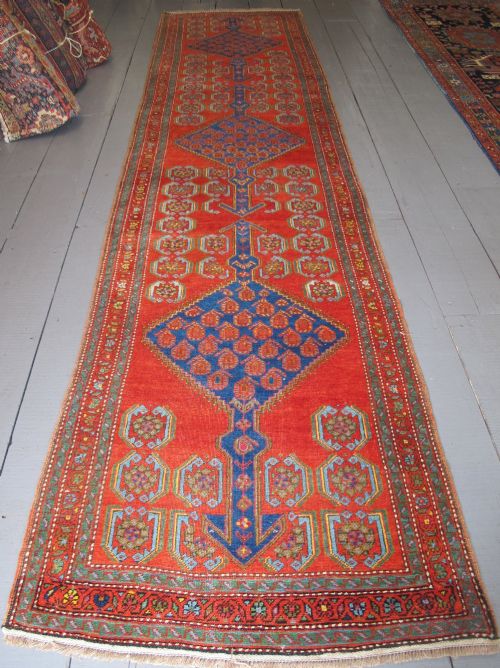
Blue Red Heriz Carpet
When you search for a blue red heriz carpet, you are stepping into a tradition of bold, geometric Persian weaving designed to anchor a room.
Blue Red Heriz Carpet
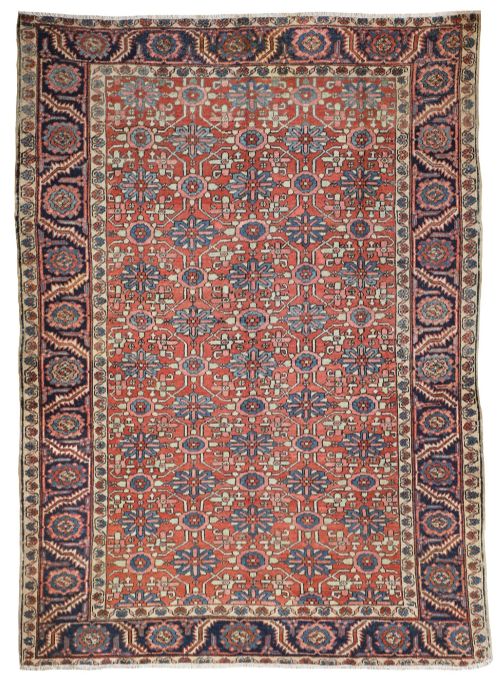
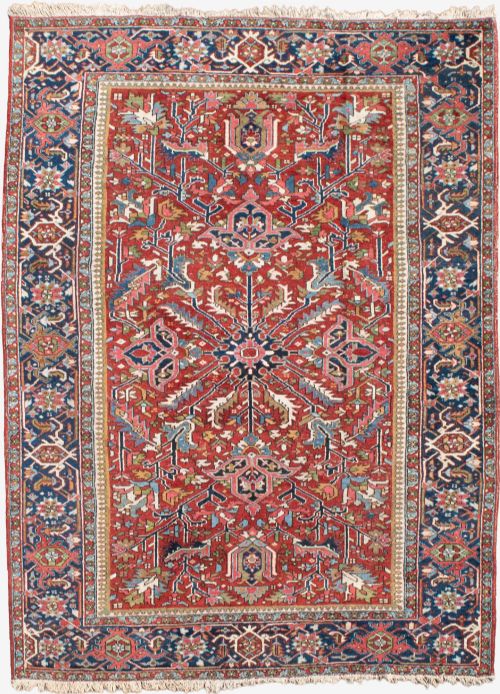
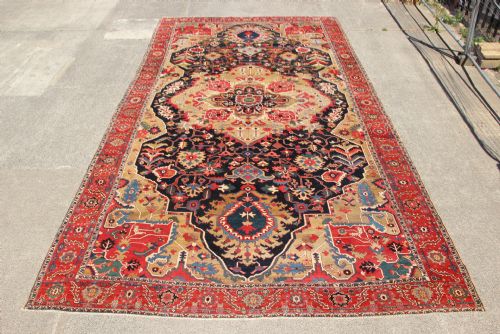
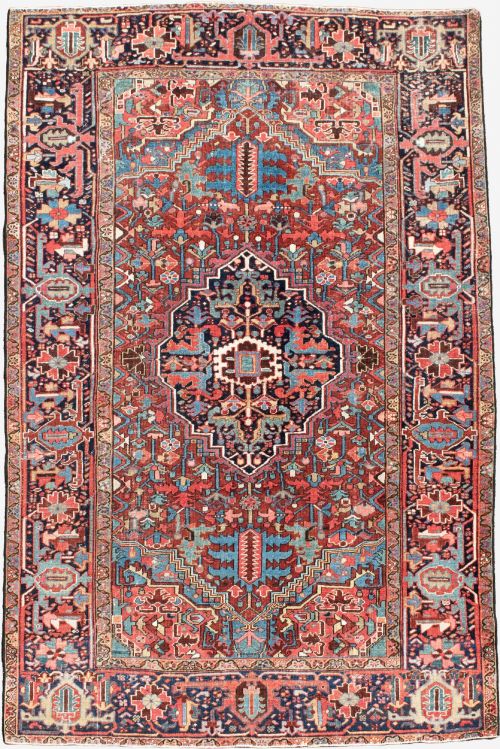
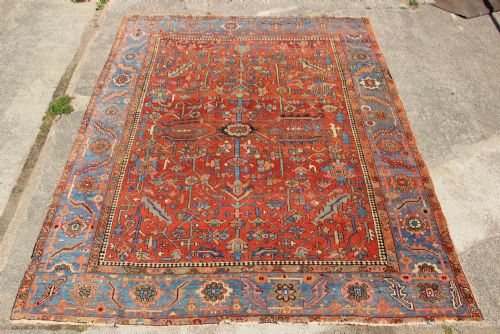
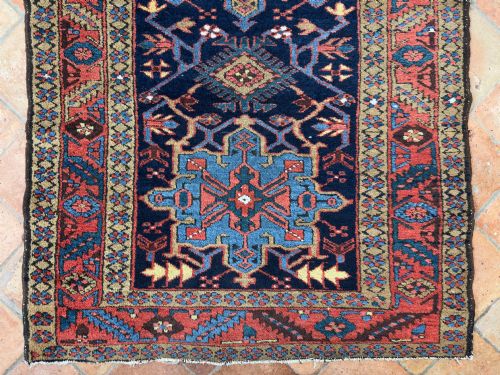
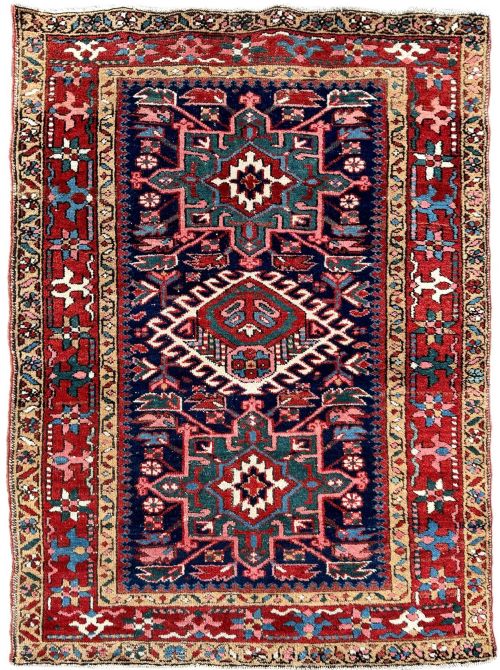
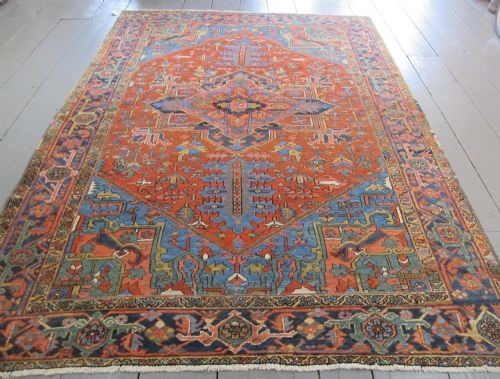
A blue red heriz carpet belongs to a distinguished group of large floor coverings and rugs originating from north-west Persia. These pieces emerge from regional weaving centres and village workshops, displaying robust structures suited for heavy use.
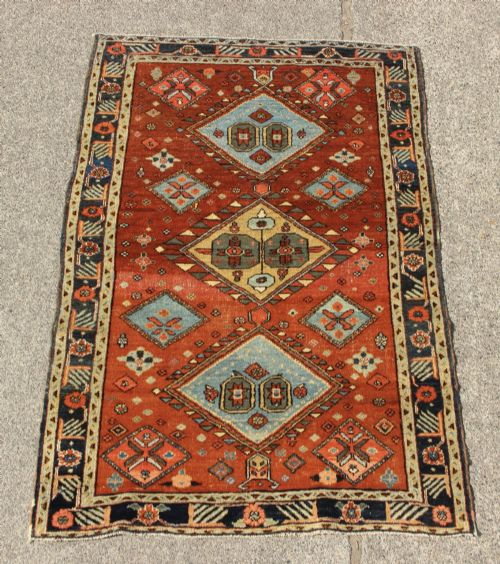
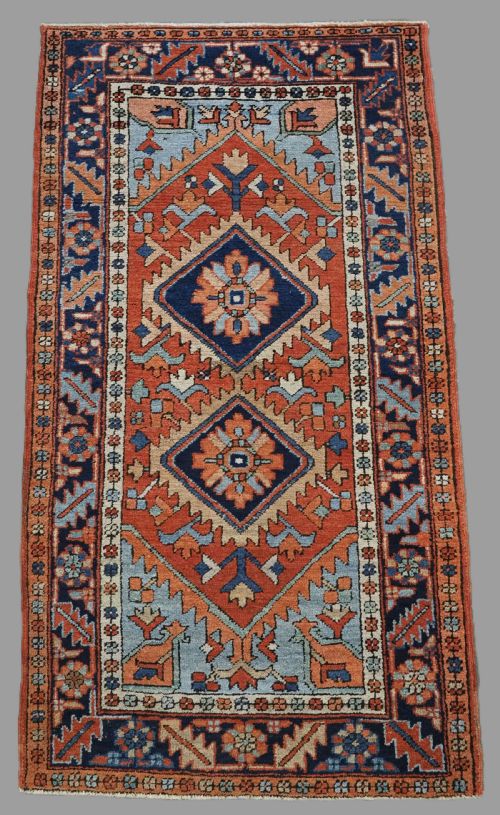
The most common examples encountered on this page date from the late nineteenth century through the early decades of the twentieth century. They typically present traditional Persian designs featuring central geometric medallions balanced by corner spandrels and patterned borders.
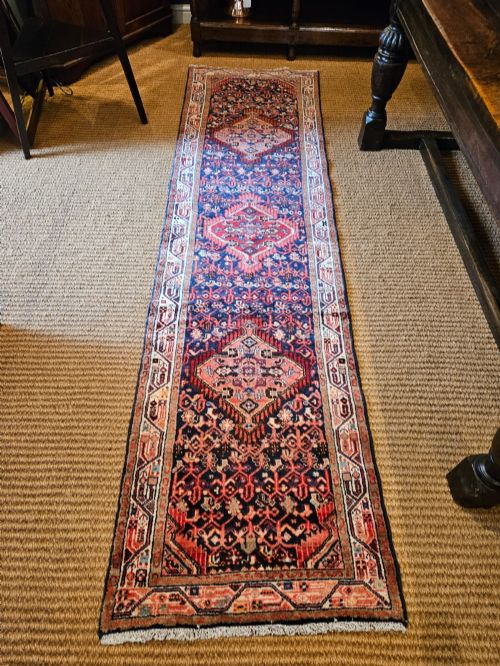
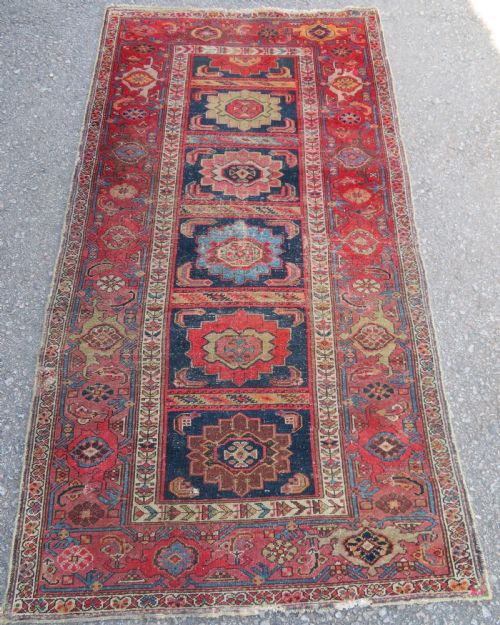
Beyond standard room-sized carpets, the selection includes smaller rugs, long runners for hallways, and related regional types such as Serapi, Bakshiash, and Karaja pieces. Each format shares a characteristic palette dominated by deep blues and rich reds.
Materials and Construction
The foundation of these floor coverings relies on durable cotton warps and wefts, providing the structural grid necessary for dense weaving. Hand-spun wool pile is then knotted onto this cotton base, yielding a thick, resilient surface.
Weavers utilised local wool fleeces rich in natural lanolin, which absorbed traditional vegetable and natural dyes with deep saturation. This combination of sturdy cotton foundations and heavy wool pile explains the enduring physical stability of these textiles.
The listings span production dates from the 1850s through the 1930s, constructed primarily from wool and cotton.
Variations in Quality
Quality in these carpets rests upon the fineness of the knotting and the precision of the geometric drawing within the field. Tighter knots allow for sharper definition in the intricate medallions and floral motifs.
The visual harmony and depth of the dye palette further distinguish superior examples. Variations in wool quality and the richness of the blue and red tones separate standard village work from finer workshop productions.
The Blue Red Heriz Carpet Glossary
- Medallion
- The central ornamental motif dominating the field of the carpet. It typically takes a geometric or hexagonal shape in these north-west Persian pieces.
- Spandrels
- The triangular decorative corners situated in the four angles of the main field outside the central medallion. They balance the composition of the carpet design.
- Warp
- The vertical foundation threads stretched lengthwise on the loom before knotting begins. Cotton warps provide the structural backbone for these heavy floor coverings.
- Runner
- A long, narrow format of carpet specifically woven for hallways, corridors, or staircases. These pieces maintain the same regional motifs in an elongated proportion.
Blue Red Heriz Carpet: Frequently Asked Questions
Where were these carpets made?
These textiles originate from the town of Heriz and the surrounding villages in the north-west region of Persia. The area encompasses related production centres including Serapi, Bakshiash, and Karaja.
Local weavers developed distinct geometric interpretations of classical Persian designs, utilising materials and colour palettes specific to the region's high plateau environment.
How do I care for an old rug?
Regular vacuuming without a rotating power brush helps remove grit that settles deep within the wool pile. Professional cleaning tailored to antique textiles should occur periodically to preserve the integrity of the natural dyes and fibres.
Placing a breathable underlay beneath the carpet prevents sliding and reduces friction against the floorboards during daily use.
How are different regional types distinguished?
Pieces attributed to Serapi generally display a slightly earlier aesthetic with wider, more open geometric fields and softer, more nuanced colour distributions. Standard Heriz productions tend to feature bolder, denser patterning with heavier outlines.
Bakshiash and Karaja formats often introduce alternative medallion arrangements or smaller dimensions while retaining the characteristic north-west Persian structural DNA.
Can these rugs withstand high foot traffic?
The sturdy cotton foundations and dense hand-spun wool piles make these floor coverings exceptionally durable for domestic environments. Their original purpose was functional domestic flooring designed to endure generations of daily use.
Placing them in hallways, living rooms, or dining spaces remains entirely appropriate provided heavy furniture weight is distributed evenly.