

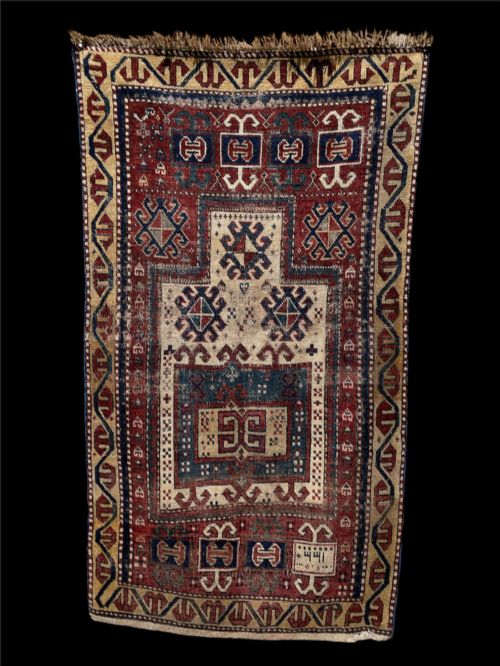


Blue Prayer Rug
When choosing a blue prayer rug, you examine woven floor coverings featuring regional motifs from Persian, Caucasian, and Anatolian traditions.
Blue Prayer Rug
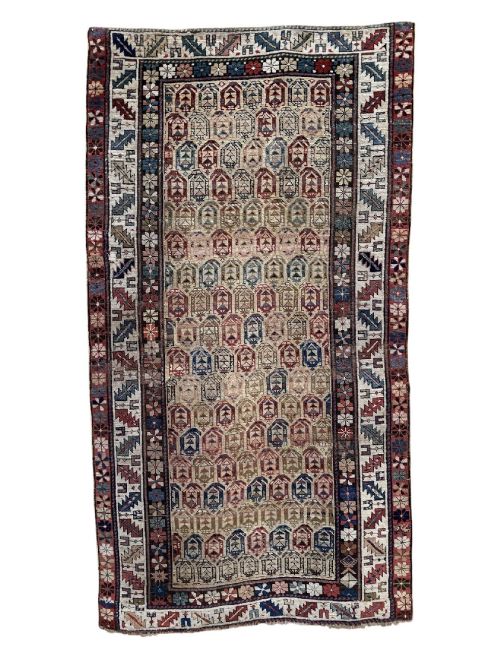
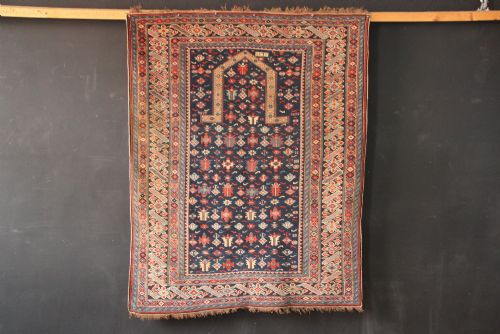
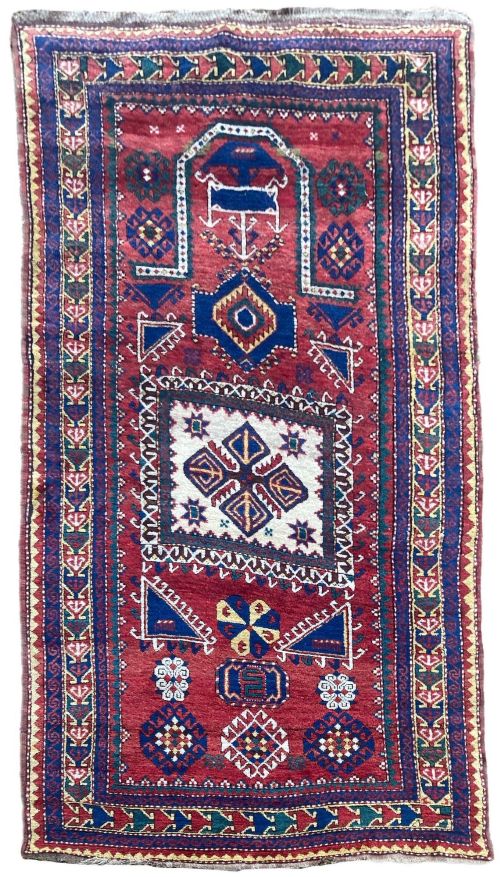
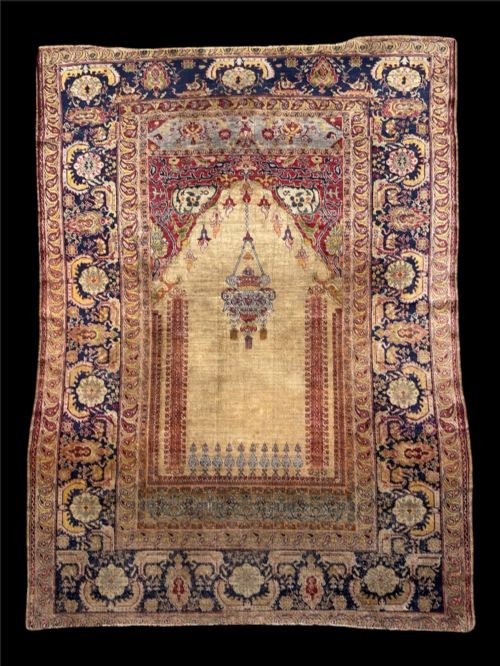
A blue prayer rug is a woven textile featuring a distinct architectural niche or mihrab design designed for devotional use. These pieces originate from traditional weaving centres across the Caucasus, Anatolia, Persia, and Afghanistan.
The selections available include tribal pieces from Baluch, Taimani, and Kazak makers alongside town-woven workshop carpets. Production dates span from the eighteenth century through to the early twentieth century.
Geometrical medallions, floral sprays, and columns frequently define the field of the rug. Regional variations reveal specific knotting techniques and colour palettes tied to their distinct geographical origins.
How they were made
Weavers utilised natural materials including hand-spun wool, cotton foundations, angora wool, and occasional goat hair for pile and structural warps. These fibres were dyed using natural organic substances to achieve deep indigo blue grounds and contrasting secondary hues.
Hand-knotting techniques varied by region, with nomadic tribes employing flexible structures and village workshops producing denser, tightly packed foundations.
Blue Prayer Rug Retail Price Guide 2026
Typical asking prices for blue prayer rug among the pieces listed under this phrase on Sellingantiques today, from the lower quarter to the upper quarter. They describe what is for sale here now, not the wider market.
Listings feature nineteenth and early twentieth-century examples utilising hand-spun wool, cotton, and angora across Caucasian, Persian, and Anatolian styles.
What varies in quality
The standard of a blue prayer rug depends upon the handle of the wool and the crispness of the woven design. Finer hand-spun fleece yields a supple pile that wears evenly over generations.
Colour saturation and the complexity of the natural dye palette separate standard regional examples from exceptional collector pieces. Precision in the execution of tribal motifs and structural symmetry further distinguish the grade.
Tuduc
The Blue Prayer Rug Glossary
- Mihrab
- The arched niche depicted on a prayer rug, symbolising the direction of prayer. Its shape often helps identify the specific weaving origin.
- Kazak
- A style of geometric rug woven by tribal groups in the Caucasus. These pieces typically display bold primary colours and strong rectilinear patterns.
- Baluch
- A designation for rugs produced by nomadic and semi-nomadic tribes residing along the borders of Iran and Afghanistan. They frequently incorporate dark wools and repeated leaf motifs.
- Warp
- The vertical threads stretched across the loom that form the foundational skeleton of the rug. Weft threads are inserted across these to secure the knots.
- Boteh
- A stylised floral or almond-shaped motif representing a sprouting bush or cypress tree. This symbol appears frequently across Caucasian and Persian designs.
Blue Prayer Rug: Frequently Asked Questions
What is a blue prayer rug?
A blue prayer rug is a traditional hand-knotted textile featuring a mihrab arch, historically utilised for daily devotions. The indigo and sapphire grounds distinguish these specific regional examples from standard decorative carpets.
These floor coverings were woven by nomadic tribes and village communities across the Caucasus, Turkey, and Persia. Each piece reflects the specific cultural geometry of its makers.
How do I date an antique rug?
Dating requires examining the wool quality, the complexity of the natural dyes, and the structural construction of the foundation. Stylistic shifts in borders and tribal motifs offer further chronological clues.
Comparing the weave density and regional drawing style against documented examples helps narrow down the century of production.
Where were these rugs made?
The pieces originate from traditional weaving regions including Anatolia, the Caucasus, and parts of Persia and Afghanistan. Specific towns and tribal groups like Kazak, Ladik, and Baluch developed distinct local styles.
Geography dictates the materials and dyes utilised, separating town workshops from nomadic tent production.
How should I care for antique wool?
Maintain antique wool by vacuuming gently without a rotating brush and keeping the textile away from direct sunlight. Professional specialist cleaning ensures the natural lanolin remains protected.
Allowing air circulation beneath the rug prevents moisture accumulation in the cotton and wool fibres.