

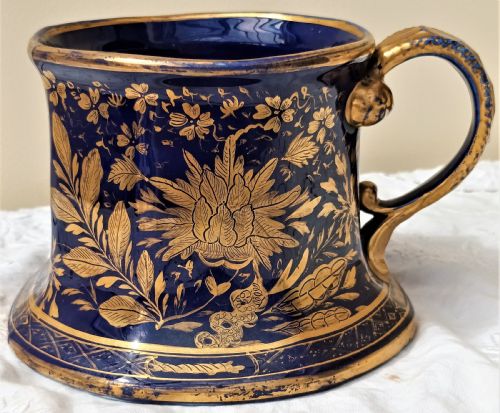


Blue Porcelain Mug
A blue porcelain mug brings a crisp, painted palette and durable body to the table, uniting centuries of kiln craft.
Blue Porcelain Mug
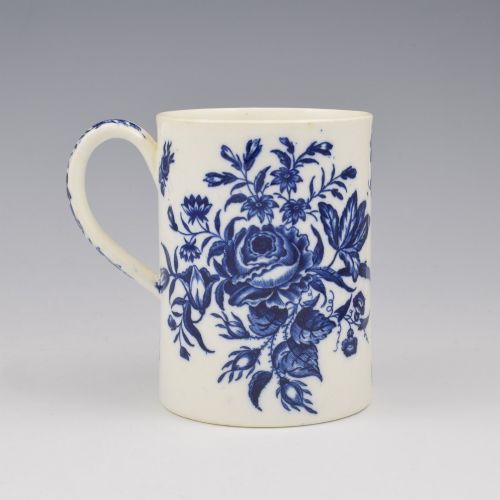
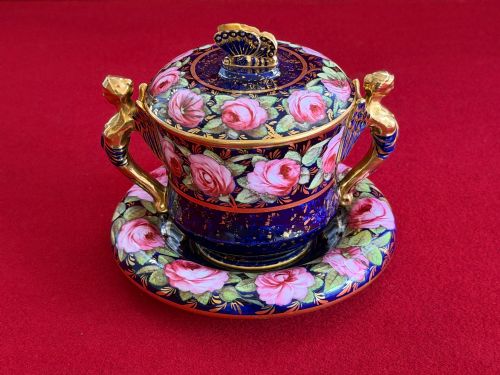
A blue porcelain mug spans domestic vessels and display pieces created across the eighteenth and nineteenth centuries. These items range from Chinese export tankards to English factory wares influenced by Eastern motifs.
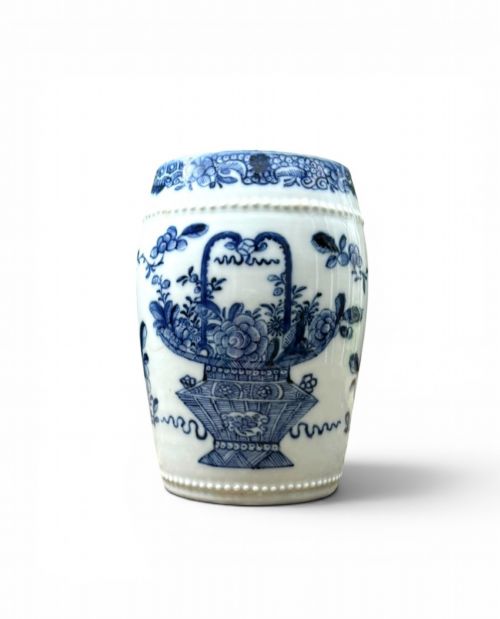
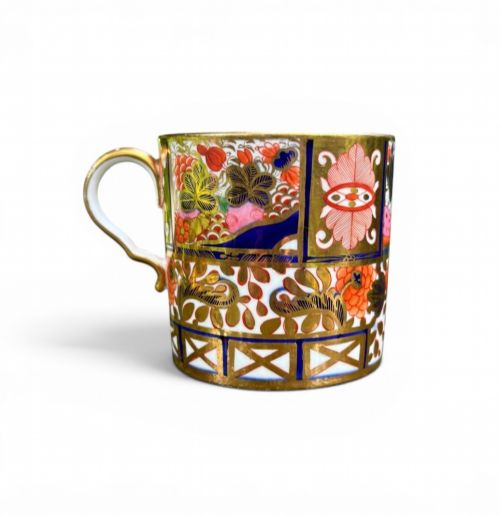
The most frequent examples on this page are eighteenth-century Chinese export pieces and early English factory productions. Buyers encounter barrel-shaped tankards alongside cylindrical coffee cups and larger handled drinking vessels.
The style moves between strict neoclassical revival forms and whimsical chinoiserie scenes rendered in cobalt underglaze. Hand-painted figures, floral sprays and landscape vignettes dominate the surviving inventory.
Materials and Manufacture
Makers shaped these vessels from fine porcelain, ironstone and bone china before applying cobalt underglaze pigments. Artisans often enhanced the glazed surfaces with gold leaf, enamel highlights and gilt detailing.
Firing techniques required steady kiln temperatures to fix the cobalt blue beneath a clear protective glaze. Painters executed intricate figures and botanical sprays by hand directly onto the unfired or biscuit body.
Blue Porcelain Mug Retail Price Guide 2026
Typical asking prices for blue porcelain mug among the pieces listed under this phrase on Sellingantiques today, from the lower quarter to the upper quarter. They describe what is for sale here now, not the wider market.
The inventory spans the eighteenth and nineteenth centuries, including Georgian, Regency, and Victorian periods.
Judging Quality and Execution
The distinction between ordinary production and superior work rests on the clarity and precision of the hand-painted decoration. Finer pieces display crisp lines in the cobalt underglaze and delicate brushwork without smudging.
The weight of the body and the uniformity of the glaze reveal the skill of the potter and the purity of the clay. Superior examples integrate the handle cleanly and maintain structural balance across barrel and cylindrical forms.
Coalport·Spode·Mason·Royal Vienna·Stevenson and Hancock Derby·Kangxi
The Blue Porcelain Mug Glossary
- Cobalt Underglaze
- A metallic oxide pigment applied to pottery before glazing, capable of withstanding high kiln temperatures without losing its deep blue colour. This technique ensures the painted design remains protected beneath a glassy surface.
- Chinoiserie
- European artistic interpretations of Chinese and East Asian decorative styles, popular on ceramics throughout the eighteenth century. Designers utilised whimsical figures, pavilions and imaginary landscapes.
- Coffee Can
- A straight-sided cylindrical drinking vessel produced without a handle during the Georgian and Regency periods. These small pieces formed part of elite tea and coffee services.
- Ironstone
- A heavy, durable type of earthenware patented in the nineteenth century to imitate true porcelain. It offered high resistance to chipping while accommodating rich enamel and gilt decoration.
- Imari
- A decorative style originating in Japan and copied by European factories, defined by a palette of underglaze blue, iron red and gilt. Potters used this scheme to create rich, patterned surfaces.
Blue Porcelain Mug: Frequently Asked Questions
How are these mugs dated?
Dating relies on stylistic markers, paste composition and factory marks stamped or painted on the base. Comparing the potting technique and cobalt shade against documented factory output helps narrow the timeframe.
Early eighteenth-century pieces often exhibit thicker potting and distinct foot rings, while nineteenth-century items show refined porcelain bodies and standardised transfer or enamel methods.
Can I use an antique mug daily?
Using antique porcelain for daily dining requires careful handling due to the fragile nature of historic glazes and aged ceramic bodies. Hand washing is essential to preserve delicate enamel and gilt decorations.
Thermal shock from boiling liquids can crack eighteenth-century porcelain, so collectors generally reserve these items for display or gentle occasional use.
What defines Chinese export porcelain?
Chinese export porcelain refers to wares made in China specifically for European and Western markets from the seventeenth through the nineteenth centuries. These pieces combined traditional Eastern potting methods with shapes and patterns requested by Western buyers.
Tankards and mugs from this trade often feature armorial bearings, European figures or adapted landscape motifs painted in vibrant cobalt underglaze.
What is the difference between porcelain and ironstone?
True porcelain is a vitrified ceramic fired at high temperatures from kaolin and petuntse, resulting in a dense, semi-translucent body. It rings when struck and absorbs no moisture.
Ironstone is a heavy, opaque earthenware developed in the nineteenth century to provide the strength of stoneware with the refined appearance of porcelain.