


Blue Pattern Armchair
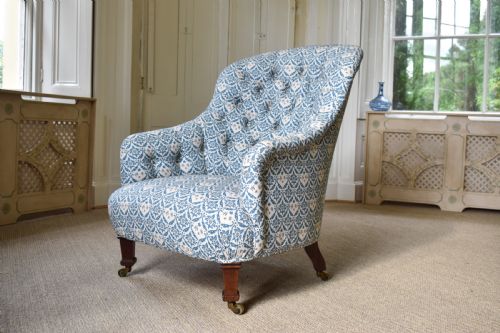
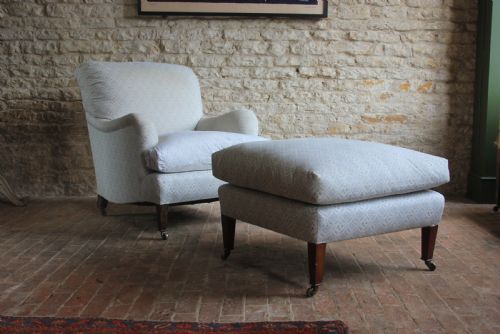
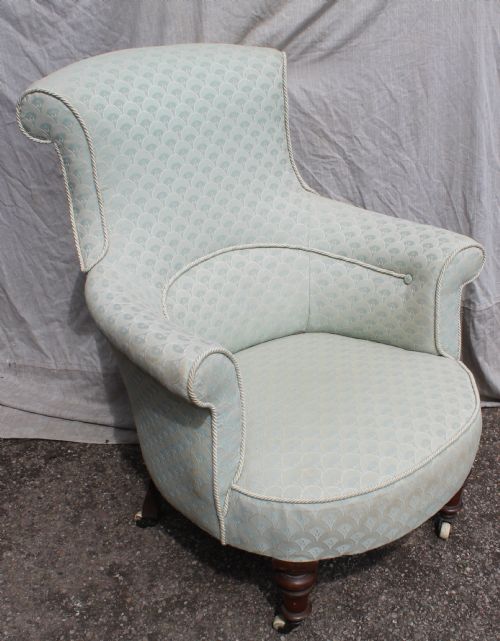
A blue pattern armchair brings comfort and character to a room, drawing on Victorian and Edwardian forms upholstered in textile and fabric.
Blue Pattern Armchair
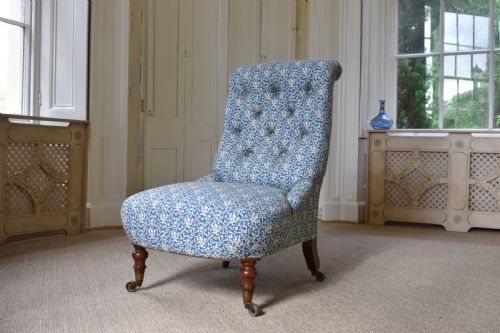
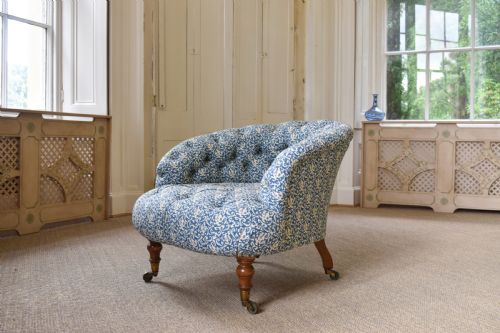
A blue pattern armchair covers a range of seating from the nineteenth century into the twentieth century, appearing in forms such as club armchairs, wing armchairs, slipper chairs, and bedroom chairs. These pieces originate across Victorian and Edwardian periods, alongside English country house and revival styles.
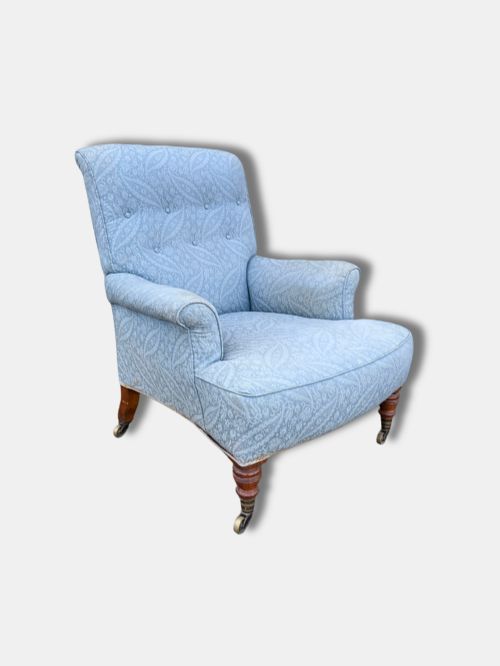
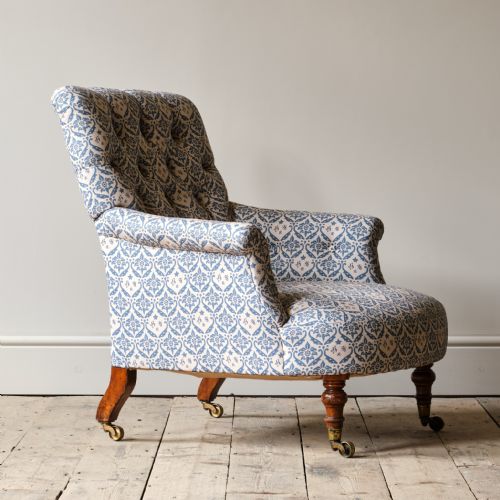
The version most commonly met on this page is the upholstered armchair originating from the nineteenth century, often associated with makers like Howard and Sons. Such pieces combine sturdy frames in mahogany, walnut, or general wood with patterned fabric upholstery.
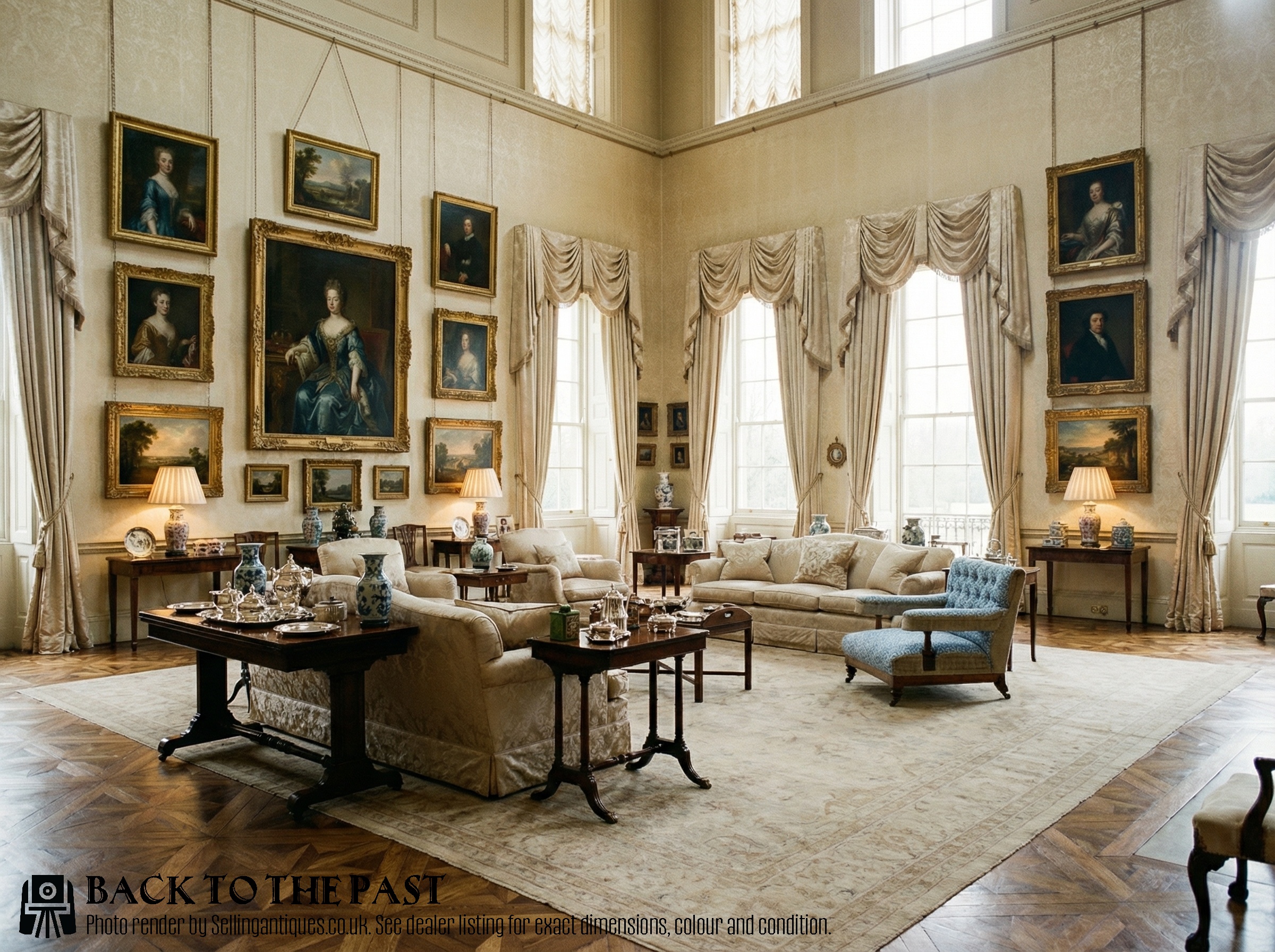
How they were made
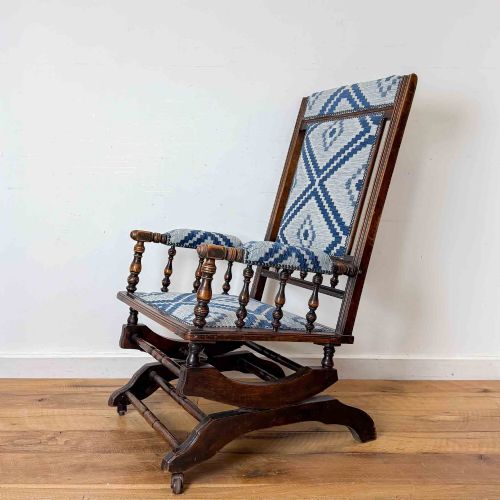
Frames are constructed from hardwoods like mahogany and walnut, occasionally supported by brass components, providing a stable structural skeleton beneath the upholstery. Joinery techniques from the nineteenth and early twentieth centuries ensure durability across armchairs, library chairs, and rocking chairs.
Upholstery relies on fabric, cotton, and specialised textile materials applied over sprung or padded interiors. Traditional methods involve securing patterned fabric directly to the frame, sometimes retaining original ticking underneath the outer layer.
Hidden maker stamps tucked beneath nineteenth-century upholstery webbing reward the curious collector who turns a chair upside down.
What varies in quality
The integrity of the underlying timber frame and the survival of original upholstery elements determine the standing of an armchair. Pieces retaining maker stamps or original lining fabric demonstrate superior historical authenticity.
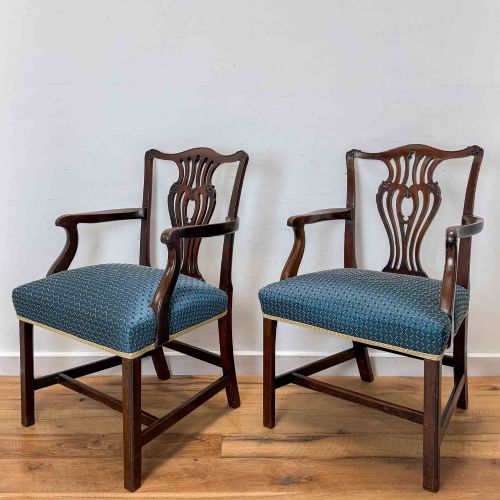
Proportion and scale distinguish fine library and club armchairs from standard bedroom or slipper chairs. Finer examples exhibit balanced woodwork, such as mahogany frames carved in Chippendale or revival styles, paired with carefully fitted textile covers.
Howard and Sons·Whytock and Reid
The Blue Pattern Armchair Glossary
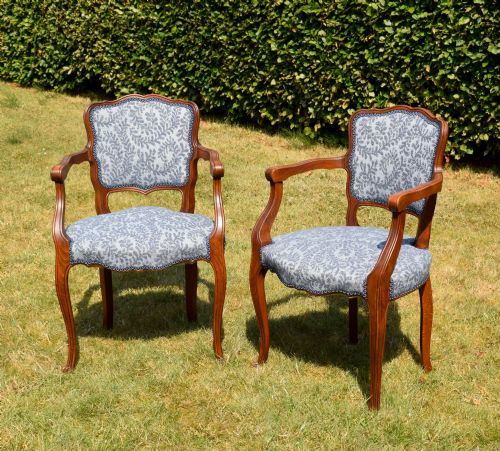
- Bergère style
- An upholstered armchair with enclosed sides, usually featuring wooden framing around the upholstered panels. This design draws on French traditions adapted into Edwardian production.
- Club armchair
- A deep, low-seated upholstered chair designed for heavy use and comfort. These pieces often feature sprung backs and arms.
- Slipper chair
- A low-seated bedroom chair traditionally used while dressing. They lack arms to accommodate bulky nineteenth-century garments.
- Ticking
- A tightly woven cotton or linen fabric used as an internal lining for upholstery. Original stamped ticking is valued by collectors.
- Wing armchair
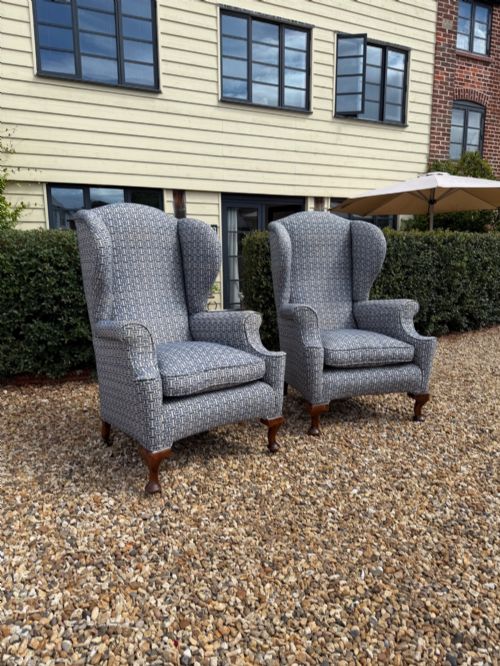
- A high-backed chair with side panels designed to shield the sitter from draughts. Victorian and Edwardian variants often incorporate mahogany or walnut legs.
Blue Pattern Armchair: Frequently Asked Questions
How do I identify a Howard and Sons armchair?
Look for stamped legs, paper labels, or maker signatures stenciled directly onto the webbing or lining material.
Many pieces also feature distinctive casters and specific proportions characteristic of their nineteenth-century London workshops.
Are these armchairs suitable for daily use?
Most antique armchairs are structurally robust enough for regular seating if their internal webbing and springs have been properly maintained. Many nineteenth-century frames were built to withstand heavy daily service.
Upholstery condition varies, so check whether the textile covering is original or a later replacement.
How can I tell a Victorian armchair from an Edwardian one?
Victorian armchairs often display heavier carved mahogany or walnut frames with deep button-backed upholstery and robust proportions. Edwardian examples tend to show lighter scaling, subtle revival styling, and brighter wood finishes.
Both periods frequently utilise patterned fabric and cotton textiles.