



Blue Pastoral Landscape
A blue pastoral landscape brings quiet countryside scenes into the home through traditional British artistry.

Blue Pastoral Landscape
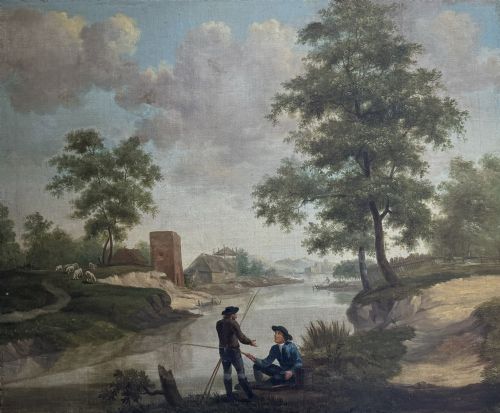
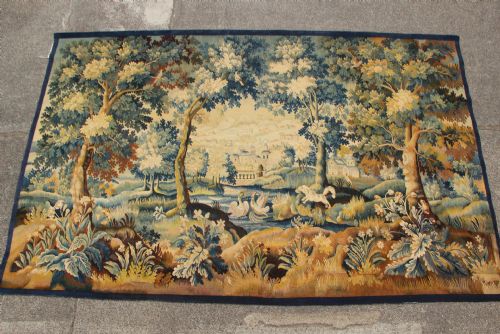
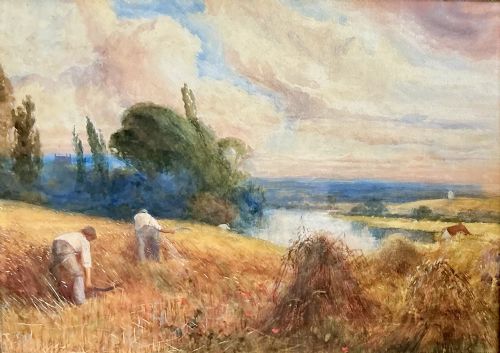
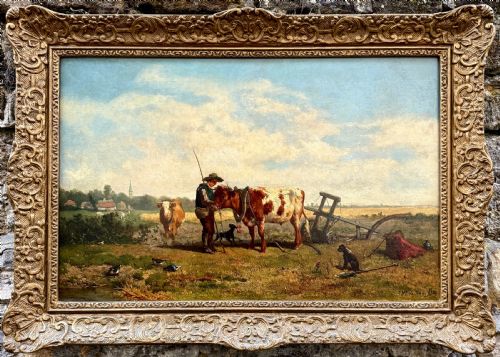
A blue pastoral landscape represents rural scenes, river views, and agricultural life created across several centuries of British art. When searching for a blue pastoral landscape, buyers encounter watercolours and oil paintings depicting cottage exteriors, harvesting scenes, and riverside conversations.
The pieces on this page span the eighteenth, nineteenth, and early twentieth centuries, capturing shifts in British artistic styles from Georgian watercolours to Edwardian pastoral works. These framed paintings and watercolours preserve historical views of the countryside, featuring figures, livestock, and farmsteads.
Most examples originate from British artists working in traditional mediums on paper or canvas. The selection demonstrates how painters across different periods interpreted rural tranquillity and agricultural labour through pigment and brushwork.
Materials and methods
Artists created these works using watercolour pigment on paper and oil paint on canvas or wood panels. Watercolour paintings rely on translucent washes layered to build depth in skies and waterways, while oil paintings utilise heavier application to capture texture in fields and foliage.
The physical support structures consist of traditional wood framing, linen canvases stretched over wooden frames, and heavy paper sheets. Pigments derived from natural and early synthetic sources give these paintings their enduring colouration across Victorian and Edwardian examples.
Several cows, sheep, and horses persistently occupy these fields without ever disturbing the quiet morning air.
Assessing quality
Quality in these pastoral scenes rests upon the surety of the brushwork and the artist's command of atmospheric perspective. Master works control light across distant hills and river valleys with deliberate economy of line and tone, whereas lesser examples rely on repetitive formulas.
The preservation of the pigment and the condition of the paper or canvas also determine the calibre of a piece. Stronger works retain their original vibrancy without excessive fading or discoloration in the lighter passages of the composition.
Percy Lancaster·Frederick Hines·Johannes de Haas·Philip Richard Morris·Cornelius Pearson·Darte Brothers·Henry John Kinnaird·James William Booth·William Sydney Cooper·James Orrock·George Vicat Cole·Frederick W. Jackson·George Soper·Florence Hess·William Greaves·Bernard Walter Evans·Will Anderson·Basil Bradley·John Inigo Richards·Thomas Sydney Cooper·Daniel Pasmore·A. Winter Shaw·Peter Jackson·Frederick J. Knowles·Henry Sylvester Stannard
The Blue Pastoral Landscape Glossary
- Watercolour
- A painting method where fine pigment is suspended in a water-soluble binder and applied to paper. It allows for luminous, transparent effects particularly suited to atmospheric skies and rivers.
- Oil painting
- A technique involving pigments bound in a drying oil, typically linseed, applied to canvas or wood. This medium permits rich surface textures and deep tonal layering.
- Pastoral
- A genre of art that idealises rural life, featuring shepherds, agricultural workers, farm animals, and cottages. These scenes emphasise harmony between humans and the natural countryside.
- Victorian
- Pertaining to the reign of Queen Victoria, spanning the mid to late nineteenth century. Art from this period often explores detailed narrative realism in landscape settings.
- Edwardian
- Relating to the reign of King Edward VII in the early twentieth century. Paintings from this era frequently adopt softer Impressionistic qualities in rural depictions.
Blue Pastoral Landscape: Frequently Asked Questions
What defines a pastoral landscape painting?
A pastoral landscape depicts rural scenes involving farms, rivers, livestock, and agricultural workers. These artworks celebrate traditional country life and natural scenery.
Such compositions often include figures tending fields, grazing animals by riverbanks, and cottages nestled among hills.
How should I care for an antique watercolour?
Antiques works on paper require protection from direct sunlight to prevent pigment fading and paper degradation. Framing with acid-free mounts preserves the integrity of the paper.
Keeping the painting in a stable indoor environment away from excessive moisture protects both the watercolour pigment and its historic frame.
How do I distinguish Victorian from Edwardian paintings?
Victorian paintings generally feature tighter brushwork and clear narrative details within the rural scene. The lighting tends to be dramatic and focused.
Edwardian works often show looser brush techniques influenced by Impressionism, with softer blending of light across fields and skies.
Where were these landscape watercolours originally displayed?
Original owners typically displayed these framed watercolours and oil paintings in domestic parlours and drawing rooms. They brought views of the open countryside into urban homes.
Many pieces also appeared in regional exhibitions and galleries across Britain during the nineteenth and early twentieth centuries.