

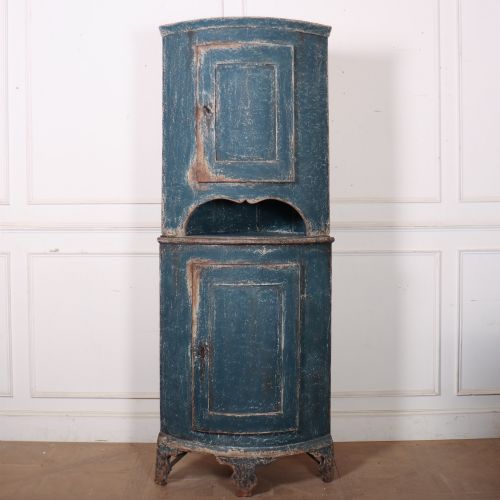


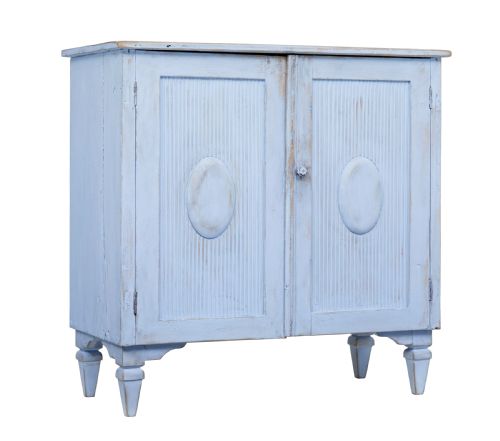


Blue Painted Swedish Cabinet
A blue painted swedish cabinet brings functional storage and calm Scandinavian style into a room, offering historic pine construction finished in soft historic pigments.
Blue Painted Swedish Cabinet
A blue painted swedish cabinet encompasses diverse storage forms spanning the eighteenth and nineteenth centuries, including corner cupboards, linen cupboards, commodes, and wall cupboards. These pieces originate from Scandinavian country and Gustavian traditions, reflecting the utilitarian needs of historic rural and domestic interiors.
The version most commonly encountered on this page is the nineteenth century pine cupboard, often featuring original scraped paint or hand-painted finishes. Alongside these upright storage pieces, buyers will find related forms such as chests of drawers, kitchen cabinets, and miniature dressers sharing the same painted softwood construction.
How they were made
Makers constructed these cabinets using pine and softwood timbers, joined simply to build sturdy carcasses for daily domestic use. Iron and brass hardware, such as hinges and locks, secured doors and drawers while adding functional metal detail to the timber framework.
Surfaces received layers of paint, sometimes utilising ragwork techniques or applied pigments that aged gracefully over the decades. This painted finish defined the exterior aesthetic, preserving the underlying wood while offering the characteristic colour palette seen across Scandinavian folk art.
Blue Painted Swedish Cabinet Retail Price Guide 2026
Typical asking prices for blue painted swedish cabinet among the pieces listed under this phrase on Sellingantiques today, from the lower quarter to the upper quarter. They describe what is for sale here now, not the wider market.
Some nineteenth century cupboards wear their history through ragwork paint, proving that historic home decorators loved a sponge-paint effect just as much as we do.
What varies in quality
Quality in these painted cabinets rests on the survival of original surface treatments, such as scraped paint finishes and hand-painted details, compared to later repainting. Pieces retaining their early or original decorative layers present a more authentic historical character.
Construction integrity and proportion also distinguish individual examples, from the clean lines of Gustavian influenced pieces to robust rustic country forms. Refined joinery and well-proportioned cornices elevate the standing of a cupboard within its particular stylistic tradition.
The Blue Painted Swedish Cabinet Glossary
- Gustavian
- A neoclassical Swedish design style dating from the late eighteenth century, characterised by restrained ornamentation and lighter proportions. It draws inspiration from French court aesthetics adapted to Nordic tastes.
- Ragwork
- A decorative paint technique where rags or cloths create textured patterns and mottled colour effects on furniture surfaces. This method was popular in Scandinavian folk art to simulate richer materials or add visual depth.
- Scraped paint
- A conservation or ageing term describing a painted surface where later overlayers have been partially removed to reveal original historic colours beneath. It exposes the authentic chronological layers of the piece.
- Softwood
- Timber derived from conifer trees, predominantly pine in the context of these Scandinavian pieces, chosen for its workability and abundance. It forms the core structural material for nearly all listed cupboards and commodes.
- Bowfronted
- A convex, outwardly curving front profile found on specific cabinet and commode designs. This shape softens the corners of storage furniture and demonstrates more advanced woodworking skill.
Blue Painted Swedish Cabinet: Frequently Asked Questions
What periods do these cabinets come from?
The pieces span the eighteenth and nineteenth centuries, alongside occasional Georgian examples reflecting British and Scandinavian design links. Most survivals date specifically from the nineteenth century.
Buyers will find items representing distinct stylistic traditions like Gustavian elegance and Scandinavian country folk art. Dating relies on construction methods, timber choice, and surface wear.
How were these cabinets used originally?
Historic households utilised these cupboards for storing textiles, kitchen provisions, and everyday household items in domestic spaces. Corner cupboards and wall cupboards maximised room space in smaller interiors.
Larger linen cupboards and commodes provided secure, enclosed storage for garments and household linens. Their sturdy pine construction suited the practical demands of rural and urban homes alike.
How do I care for a painted pine cabinet?
Maintain the furniture by keeping it away from direct heat sources and strong sunlight, which can dry out historic pine and fade painted finishes. Dust gently with a dry or slightly damp cloth without using harsh chemical polishes.
Preserving original paint layers requires stable indoor humidity to prevent flaking or timber movement. Treat the surfaces with care to maintain the integrity of the historic finish.
How do I distinguish Gustavian from rustic pieces?
Gustavian pieces display neoclassical symmetry, refined proportions, and sometimes fluted columns or delicate carved details reflecting continental influence. They offer a more formal aesthetic suited to refined interiors.
Rustic Scandinavian items embrace simpler, heavier construction with folk art influences and utility-driven forms. The focus rests on practical storage rather than formal classical ornamentation.