



Blue Mountain Watercolour Artwork
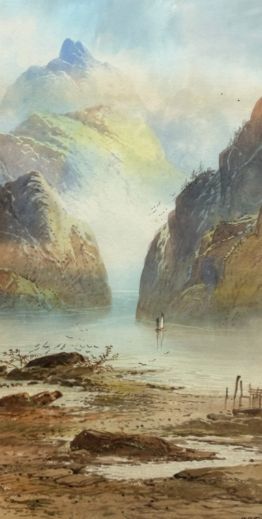
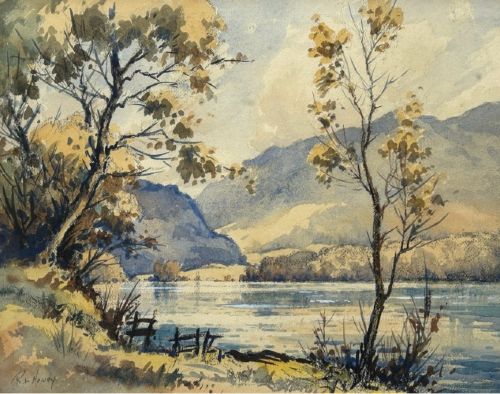
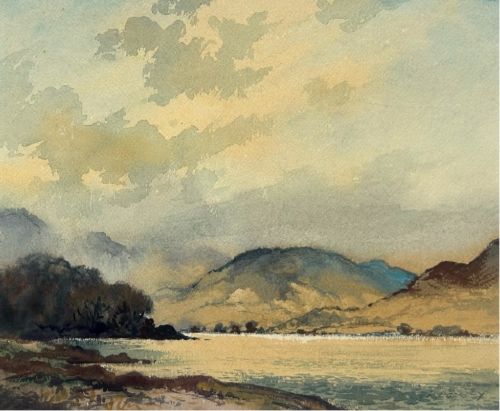
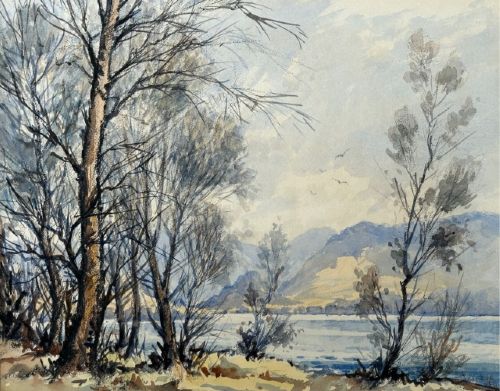
These blue mountain watercolour artwork pieces capture rugged peaks and quiet lakes through the delicate application of pigment on paper.
Blue Mountain Watercolour Artwork
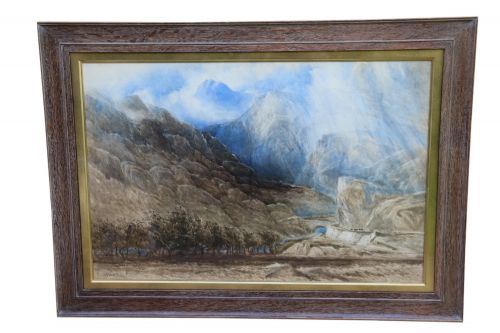
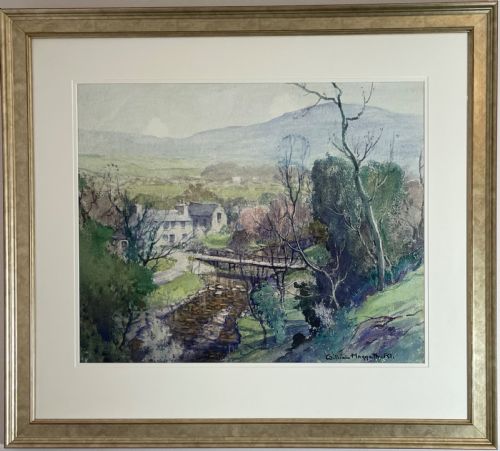
A blue mountain watercolour artwork depicts dramatic highland scenery, rolling hills, and remote valleys using translucent washes of paint. These pieces capture atmospheric weather, mist, and light over elevated terrain through spontaneous yet controlled brushwork.
The selections available here range widely across the nineteenth and twentieth centuries, featuring traditional British landscapes alongside mid-century interpretations. Works span from expansive Scottish and Welsh mountain views to continental scenes and coastal vistas.
Buyers will encounter original paintings framed in wood and glass, presenting authentic historical vistas created by established artists. These compositions provide a direct window into historical topography and artistic interpretations of wild terrain.
Materials and construction
These works rely primarily on watercolour pigment applied to paper supports, occasionally incorporating gouache for opaque highlights or ink for definition. Artists built compositions through successive layers of fluid washes to achieve depth and luminosity.
Most surviving examples feature traditional wooden frames, frequently protected beneath glass to preserve the delicate paper surfaces from moisture and atmospheric damage. Gilt accents often enhance the inner margins of these protective enclosures.
The combination of water-soluble pigments on absorbent paper requires precise control, as corrections remain difficult once the medium dries. This technique allows for subtle gradients of tone that effectively mimic mountain mists and shifting skies.
Styles represented include Victorian landscape painting, traditional British, and mid-century modern art.
Assessing artistic merit
Quality in a blue mountain watercolour artwork rests upon the artist's command of light, atmosphere, and spatial depth. Superior examples demonstrate confident brushwork that defines distant peaks without heavy reliance on opaque pigments.
The preservation of the paper support and the vibrancy of the original pigments significantly influence the desirability of a piece. Works maintained away from direct sunlight retain their subtle blues and greens, whereas faded examples lose their intended tonal contrast.
The provenance and documented attribution to a recognised painter elevate the standing of an artwork. Signed compositions by noted practitioners of British and continental schools offer greater artistic interest and historical context.
William Henry Earp·Robert Leslie Howey·Henry Martin Pope·William Hoggatt·Thomas Lound·James H Hulse·Hirst Walker·Noel Harry Leaver·Samuel Towers·Milton Drinkwater·Willie Stephenson
The Blue Mountain Watercolour Artwork Glossary
- Watercolour
- A painting method in which the paints are made of pigments suspended in a water-based solution. This medium allows for transparent washes that let the reflective quality of the paper shine through.
- Gouache
- An opaque water-based paint similar to watercolour but modified with a binding agent to make it heavier and reflective. Artists use it to add highlights and solid areas of colour to a primarily transparent composition.
- Wash
- A thin, fluid layer of watercolour paint spread evenly across the paper to create background elements like skies or distant mountains. This technique forms the atmospheric foundation of the landscape.
- Provenance
- The documented history of ownership of an artwork from its creation to the present day. Establishing provenance helps verify the authenticity and attribution of historical paintings.
- Impressionism
- An art movement characterised by relatively small, thin, yet visible brush strokes and an open composition. Works in this style focus on accurate depiction of light and its changing qualities.
Blue Mountain Watercolour Artwork: Frequently Asked Questions
How should I display a watercolour painting at home?
Watercolour works require careful placement away from direct sunlight to prevent the pigments from fading over time. Maintaining stable indoor humidity levels also protects the paper support and wooden frame from warping.
Using conservation-grade glazing helps filter harmful ultraviolet rays while preserving the delicate texture of the painted surface. Professional framing ensures the paper remains safely distanced from the glass.
What subjects appear in these mountain watercolours?
The compositions predominantly feature highland landscapes, lakes, valleys, and coastal mountain ranges from Britain and Europe. Scenes often capture specific locations such as Scottish lochs, Welsh passes, and Cumbrian lakes.
Occasional figures, rural farm workers, or encampments provide a sense of scale within the vast natural topography. These details anchor the grand scenery in a specific historical context.
How do I distinguish nineteenth-century works from later pieces?
Nineteenth-century mountain watercolours often emphasise romanticism, dramatic weather, and detailed topographical accuracy. The paper stocks, framing styles, and signatures characteristic of the period offer reliable clues for dating.
Mid-century works generally adopt freer brushwork and different tonal palettes influenced by modern art movements. Comparing the stylistic approach and signature against known active dates of the artist clarifies the era.
Are these paintings original works of art?
The listings comprise original, hand-painted watercolours created directly by the artists rather than modern mechanical reproductions. Each piece bears the unique brushstrokes and tonal variations inherent to manual painting on paper.
Many examples feature artist signatures, studio stamps, or period inscriptions that confirm their status as unique historical works. This individuality makes each mountain landscape distinct.