
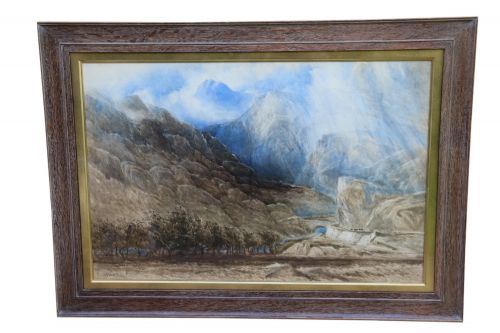


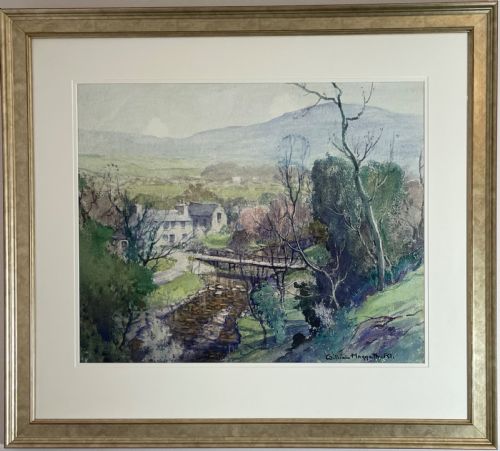


Blue Mountain Painting
These blue mountain painting works capture dramatic upland scenery in watercolour and oil, offering buyers a direct connection to historic landscape traditions.
Blue Mountain Painting
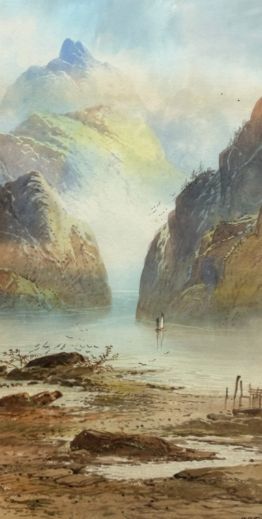
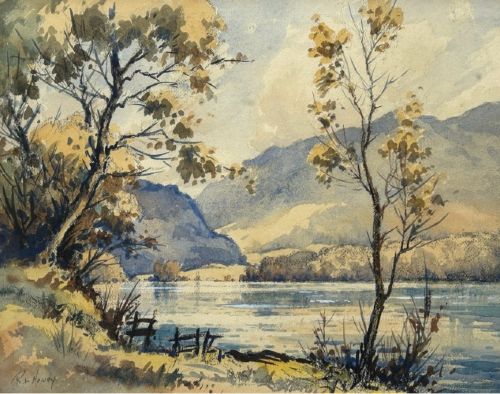
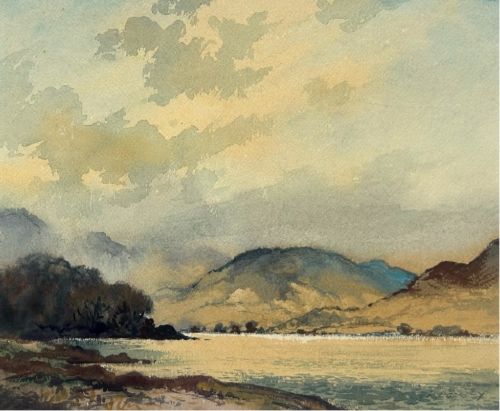
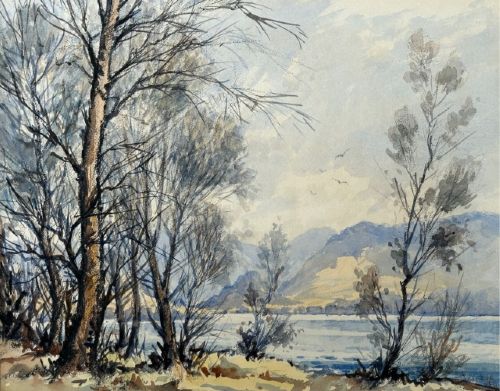
A blue mountain painting depicts upland vistas across Britain and continental Europe, frequently focusing on Scottish, Welsh, and Cumbrian terrain. The selection on this page centres primarily on nineteenth-century watercolours and mid-twentieth-century watercolours and oils.
Buyers encounter framed watercolours on paper alongside oil paintings on canvas, depicting specific locations from Loch Leven to the Alps. Traditional British and mid-century British school styles dominate the current offering.
Works range from intimate topographical sketches to substantial framed landscapes bearing artist signatures. These pieces reflect enduring fascination with mountainous topography and rural views.
Materials and technique
Artists built these compositions using watercolour pigment on paper or oil on canvas, occasionally incorporating gouache for opaque highlights. Paper supports often show gentle age toning, while canvas pieces retain their original stretchers and wooden frames.
Pigments were applied with fine brushes for atmospheric distance and bolder strokes for foreground rocks and foliage. Gilt frames frequently accompany the paintings, providing a traditional border to the landscape.
The inventory includes nineteenth-century Victorian landscapes alongside mid-century British school and Italian school paintings.
Evaluating quality
Quality rests upon the artist's handling of light and atmospheric depth within the upland scenery. Stronger pieces demonstrate confident brushwork and accurate topographical perspective rather than rigid mechanical drafting.
The preservation of the paper or canvas surface influences overall standing, with clean sheets and stable pigment layers holding greater appeal. Original framing and clear signatures by known regional painters further distinguish superior examples.
William Henry Earp·Robert Leslie Howey·Henry Martin Pope·John Grenville Fennell·William Hoggatt·John Syer·Thomas Lound·James H Hulse·Hirst Walker·Noel Harry Leaver·Samuel Towers·Milton Drinkwater·Percy Lancaster·Hubert Sattler
The Blue Mountain Painting Glossary
- Watercolour
- A painting method where fine pigment is suspended in a water-soluble binder and applied to paper. It allows for translucent washes that simulate atmospheric mountain mists.
- Gouache
- An opaque water-based medium containing pigment and gum with added white filler. Artists utilise it to create solid highlights on watercolours.
- Stretcher
- The wooden frame that holds a canvas taut behind an oil painting. Historic pieces retain period stretchers that support the fabric.
- Impressionism
- A style focused on capturing the visual impression of a moment, evident in mid-century British school landscapes. It prioritises light and colour over precise line work.
Blue Mountain Painting: Frequently Asked Questions
What periods do these mountain paintings date from?
The selection spans from the nineteenth century through the mid-twentieth century. Works include Victorian romantic scenes and mid-century British school interpretations.
Dates are determined by artist signatures, stylistic markers, and period materials such as historic paper supports and original wooden frames.
Where do the landscape locations usually come from?
Locations feature prominent British and European topography, including Scottish lochs, Welsh passes, and the English Lake District. Continental scenes from Switzerland, Spain, and Italy also appear.
Many pieces record specific valleys and lakes, reflecting nineteenth-century and twentieth-century sketching tours.
How should I hang a watercolour painting?
Watercolours require placement away from direct sunlight to prevent fading of the paper and pigments. Glass-fronted frames protect the delicate surface from airborne dust and moisture.
Stable indoor humidity levels ensure the paper and mount board remain free from foxing and warping over time.
What is the difference between watercolour and oil?
Watercolour employs water-soluble pigment on paper supports, creating transparent washes of light and colour. Oil paint uses a drying oil binder on canvas, allowing for rich textures and deep colour layering.
Oils are generally heavier and arrive on stretched canvas, whereas watercolours require protective glass framing.