


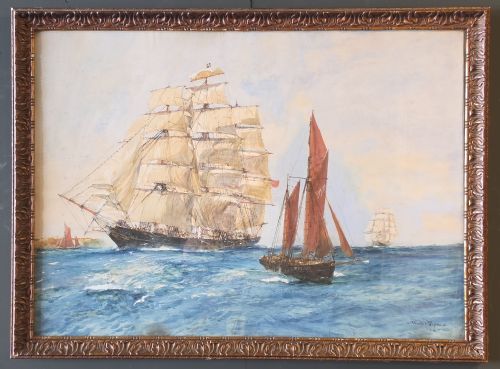
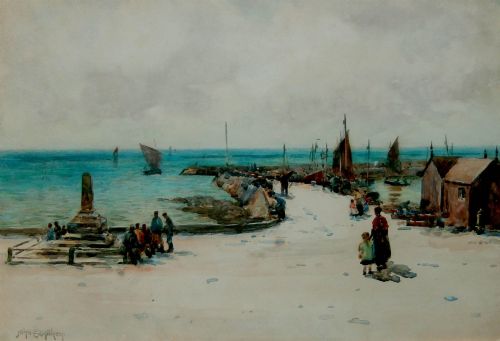
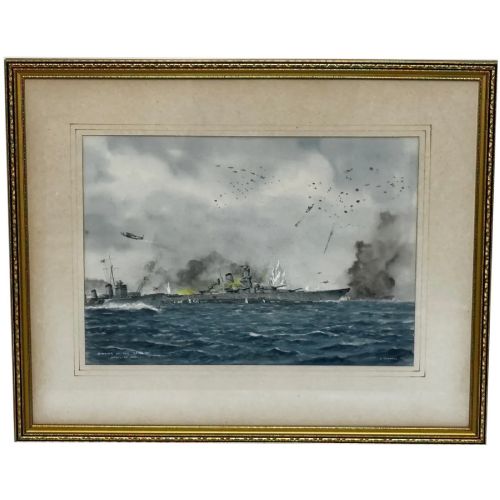

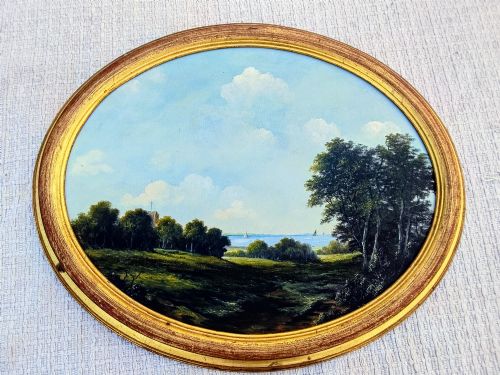
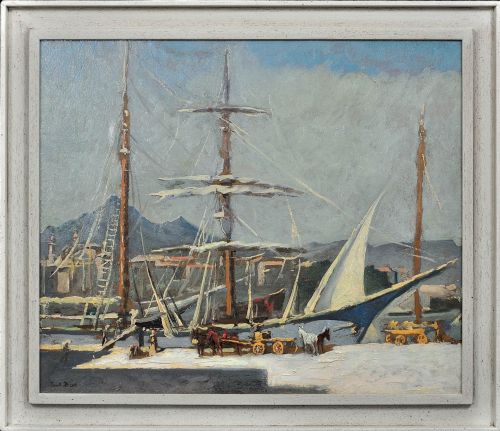
Blue Maritime Framed Artwork
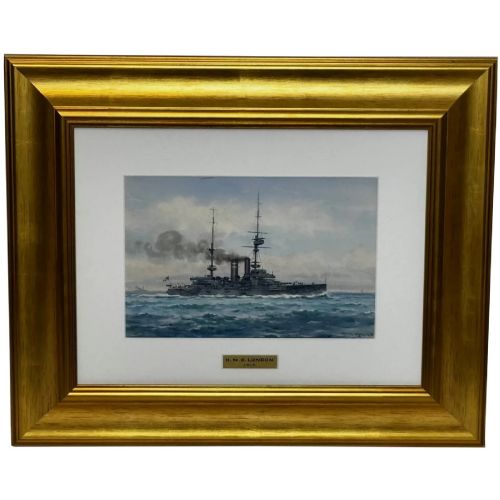
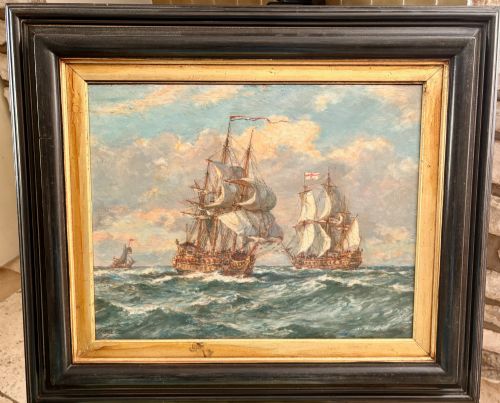
Blue maritime framed artwork captures coastal scenes, naval vessels and sailing ships rendered in paint or on paper through various historical periods.
Blue Maritime Framed Artwork
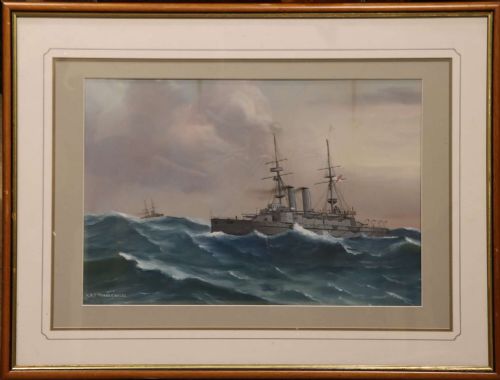
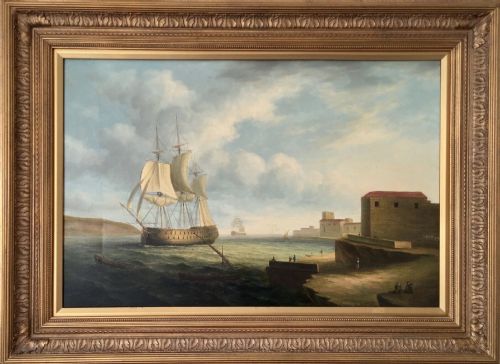
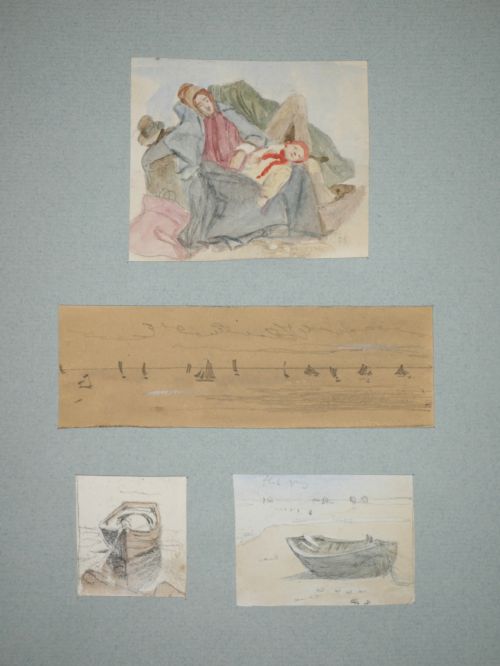
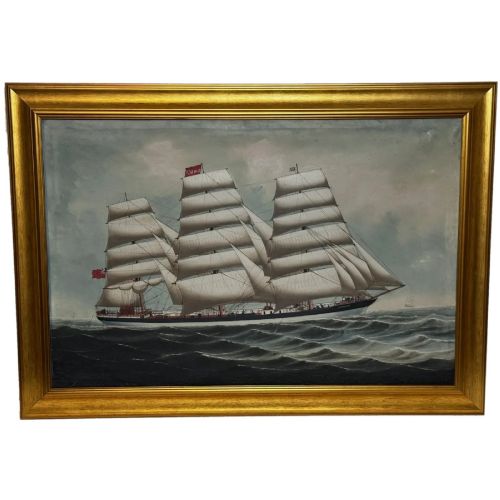
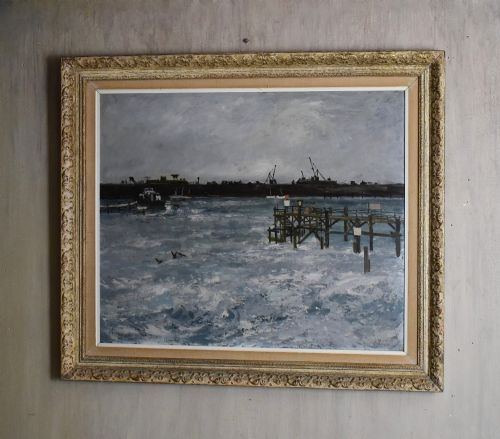
When buyers search for blue maritime framed artwork, they encounter visual representations of the sea, harbours, naval vessels and coastal landscapes created across the nineteenth and twentieth centuries. These pieces encompass framed watercolours, gouache works and oil paintings on canvas, panel or board, produced within British Impressionism, Victorian marine art and mid-century modern traditions.
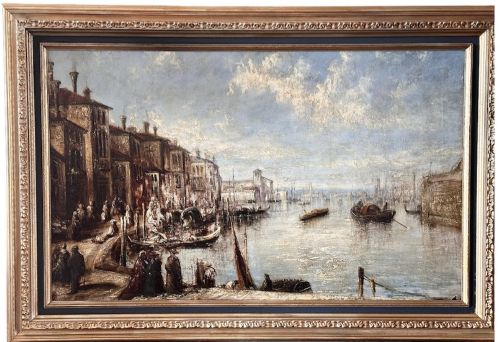
The selections available here range from nineteenth-century depictions of British harbours and sailing ships to Edwardian naval scenes and twentieth-century coastal views. Works frequently document specific vessels, historical ports or coastal towns such as St Ives, Whitby and Scarborough, reflecting diverse stylistic approaches from detailed realism to freer post-impressionist handling.
Most entries are presented in period timber frames, often with gilt wood elements, protecting paper or canvas supports beneath glass. These items document maritime history, naval movements and coastal life through the hands of named artists and regional painters working between the Victorian era and the mid-twentieth century.
Materials and methods of production
Artists producing these works utilised traditional painting supports, applying oil paint to stretched canvas, wooden panels or board, and watercolours or gouache to heavy paper. Oil mediums allowed for textured impasto effects and rich tonal depth in sea views, whilst watercolours provided translucent washes suited to coastal skies and harbour water.
Framing played an integral role in presentation, utilising wood mouldings finished with gilt leaf or painted surfaces to enclose the artwork. Glazing protected works executed on paper, whilst oil paintings on canvas remained open to the air within their protective wooden surrounds.
Regional coastal scenes from Cornwall, Yorkshire and foreign ports including Palermo and Cannes appear frequently across the current selection.
Distinctions in quality and execution
Quality in these maritime works rests upon the artist's command of atmospheric perspective, anatomical accuracy in rigging and vessels, and confidence of brushwork. Superior examples demonstrate precise observation of light upon water and sky, whereas lesser pieces rely on formulaic repetition without genuine engagement with the subject.
The condition of the primary support and the originality of the matching frame significantly influence the standing of a piece. Well-preserved surfaces free from extensive restoration alongside period-appropriate frames distinguish the more accomplished examples from standard decorative works.
James Hardy·James Orrock·Charles Edward Dixon·Frank Watson Wood·Bernard Gribble·Francis Moltino·Bernard Benedict Hemy·Thomas Creswick·Francis Hayman·William Henry Williamson·George Stanfield Walters·Paul Delvaux
The Blue Maritime Framed Artwork Glossary
- Gouache
- An opaque water-based medium sharing ingredients with watercolour but containing a white pigment filler to create a heavier, solid finish. It allows artists to build bright highlights upon darker marine papers.
- Impasto
- Paint applied thickly to a canvas or board so that it stands proud of the surface. This technique creates physical texture that captures light across waves and clouds.
- Panel
- A rigid support made from wood or board used by artists instead of stretched canvas. Wooden panels provide a stable surface for detailed marine oil paintings.
- Gilt wood
- Timber framing finished with a thin layer of gold leaf or metallic powder. It provides a traditional decorative border for nineteenth-century watercolours and oils.
- Provenance
- The documented history of ownership surrounding a work of art. It establishes authenticity and connects pieces to specific collections or exhibitions.
Blue Maritime Framed Artwork: Frequently Asked Questions
What subjects appear in maritime art?
These works depict sailing vessels, naval warships, steamships, harbours, fishing boats and coastal landscapes. Scenes frequently record specific locations across Britain and Europe.
Artists documented historical events, commercial shipping and everyday maritime labour, providing a visual record of sea life through different eras.
How should these framed artworks be displayed?
Pieces require placement away from direct sunlight and damp environments to protect paper supports, canvas and wooden frames. Maintaining stable indoor temperatures preserves the integrity of both the artwork and the original framing.
Wall hanging should utilise appropriate fixings suited to the weight of the timber frames and glass elements.
How do I identify the period of a painting?
Dating relies upon stylistic markers, costume details in figures, depicted vessel types and framing materials. Signatures, inscriptions on the reverse and artist biographical dates offer further chronological context.
Comparative study of known works by listed artists helps confirm the era of production.
What is the difference between watercolour and oil maritime pieces?
Watercolour works utilise water-soluble pigments on paper supports and require glass protection within the frame. They typically offer a lighter, luminous quality suited to atmospheric coastal conditions.
Oil paintings utilise pigmented oils on canvas or panel, presenting heavier textures, deeper colour saturation and durability without surface glazing.