

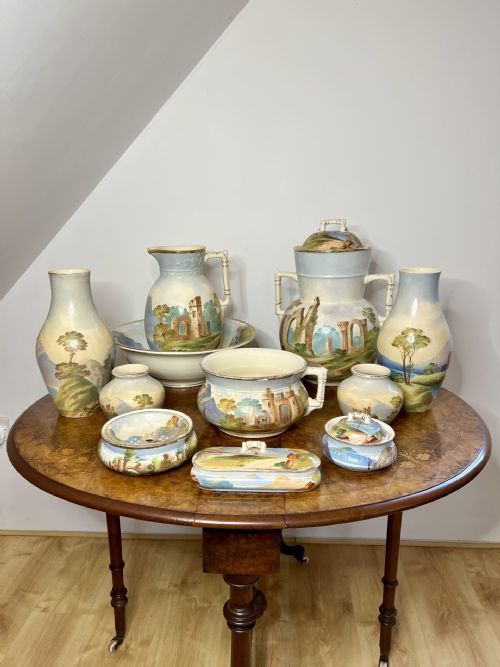


Blue Landscape Pottery
Blue landscape pottery gathers scenic earthenware, porcelain and pearlware from Georgian, Victorian and Meiji periods.
Blue Landscape Pottery
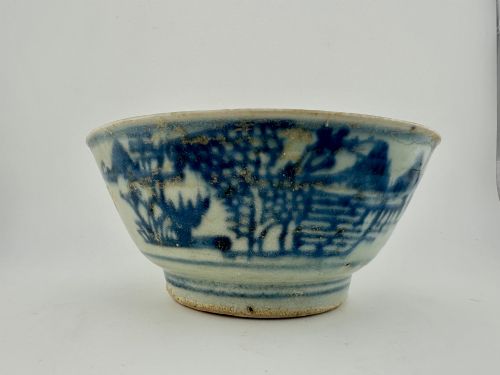
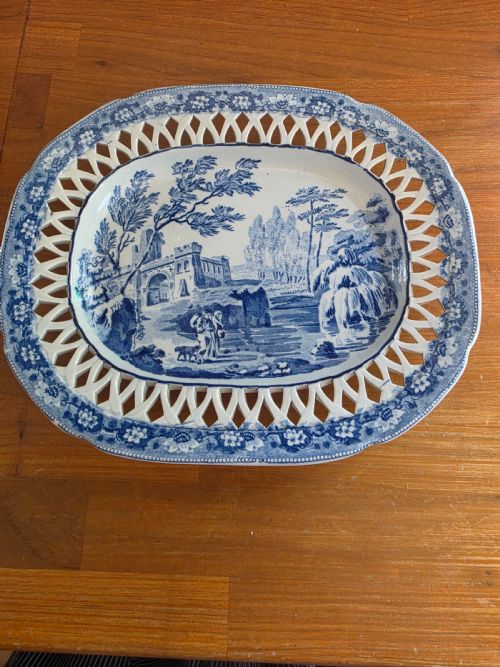
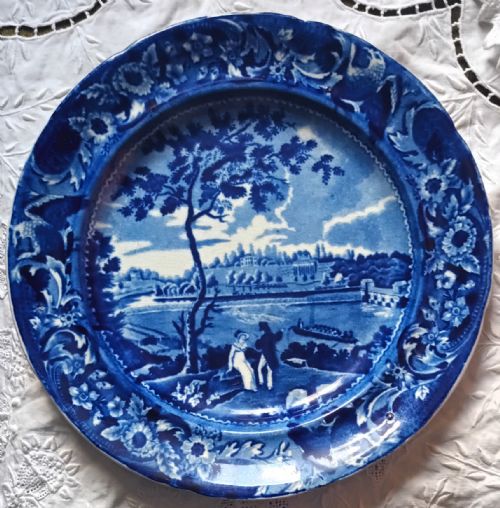
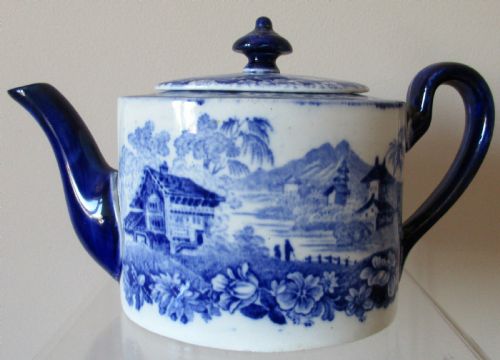
Blue landscape pottery covers items depicting scenery, towns and rivers, most frequently found as 19th Century English earthenware transferware plates, platters and teapots.
The category extends to Chinese and Japanese ceramic vases, jars and lamps utilising cobalt glaze, alongside Italian faience plaques and wash sets from various periods.
Materials and Construction
Potters shaped earthenware, pearlware and porcelain into decorative plates, teapots, vases and platters before applying cobalt glaze or enamel decoration.
Transfer printing techniques transferred detailed engraved scenic designs onto ceramic bodies, complemented by hand-painted touches and heavy gilding on select pieces.
Blue Landscape Pottery Retail Price Guide 2026
Typical asking prices for blue landscape pottery among the pieces listed under this phrase on Sellingantiques today, from the lower quarter to the upper quarter. They describe what is for sale here now, not the wider market.
Listings feature earthenware, porcelain, pearlware and glazed ceramic objects decorated with cobalt glaze and enamel.
Assessing Quality and Execution
Superior examples display crisp transfer printing clarity and balanced cobalt tone across the landscape motif, whereas lesser pieces show blurred lines or uneven pigment distribution.
Artisanal execution separates standard factory output from signed works and pieces featuring intricate moriage or elaborate gilt panels.
Davenport·Stubbs·Mintons·Makuzu Kozan·Spode·William Adams·Mason·James Wallace and Co.·Royal Worcester
The Blue Landscape Pottery Glossary
- Transferware
- Earthenware or porcelain decorated by printing a design from an engraved copper plate onto tissue paper, then transferring it to the ceramic body. This method allowed intricate scenic views to be produced in quantity.
- Pearlware
- A refined earthenware developed in the late 18th century featuring a bluish glaze that pooled in recesses, making the body appear whiter than standard creamware.
- Cobalt glaze
- A metallic colourant added to ceramics to produce a deep blue shade under or over the glaze during firing. It remains stable at high temperatures.
- Faience
- Tin-glazed earthenware produced in continental Europe, often formed into large plaques or decorative vessels with painted landscape scenes.
- Moriage
- A Japanese ceramic decorating technique where slip is piped onto the surface to create raised designs, frequently highlighted with gold.
Blue Landscape Pottery: Frequently Asked Questions
What periods do these pieces come from?
The selection spans from the 18th century through the Regency, Victorian, and Edwardian eras up to the early 20th century.
Items also originate from the Meiji and Taisho periods in Japan alongside European and Chinese workshops.
How do I care for antique ceramic pottery?
Wash pieces gently by hand using mild soap and warm water, avoiding harsh scrubbing or dishwashers.
Keep delicate gilt and enamelled surfaces away from prolonged direct sunlight and abrasive materials.
What forms do these items take?
Common forms include decorative plates, platters, teapots, sauce tureen stands, asparagus dishes, and vegetable tureens.
Larger decorative examples comprise vases, ginger jar lamps, wash sets, and wall plaques.
How are English and Asian pieces distinguished?
English examples typically utilise transfer-printed earthenware or pearlware featuring topographical and rural scenery from Staffordshire potteries.
Asian pieces often employ porcelain, cobalt glaze, or Satsuma-style earthenware with hand-painted religious and landscape panels.