





Blue Kilim Carpet
A blue kilim carpet brings flat-weave tribal textiles into modern interiors, offering geometric patterns and rich natural dyes.
Blue Kilim Carpet
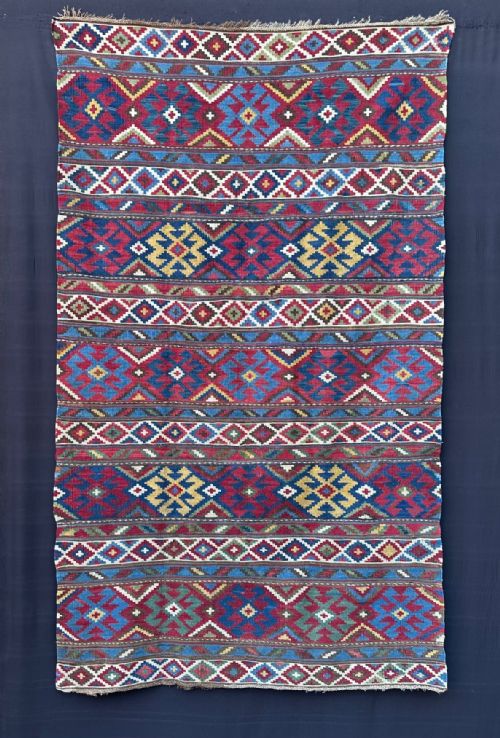
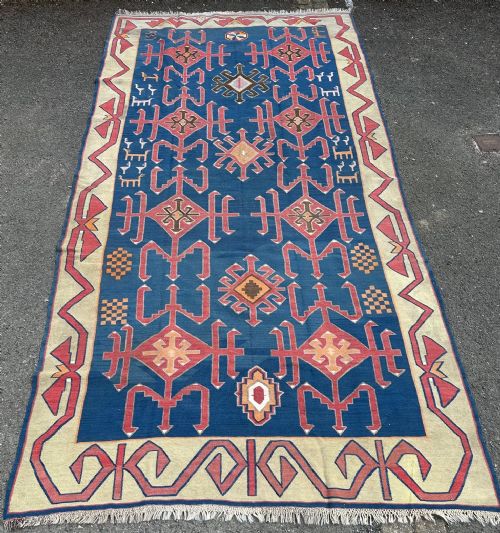
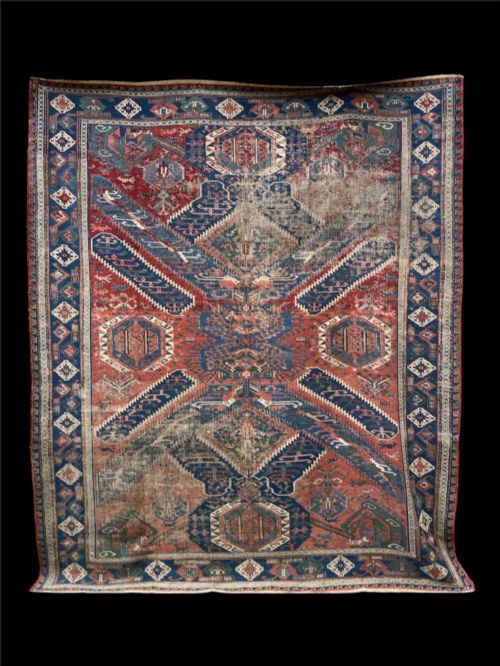
A blue kilim carpet is a flat-woven textile originating from various tribal regions across the Caucasus, Persia, Turkey, and Central Asia. These pieces are produced without a pile, resulting in a smooth, tapestry-like surface that functions effectively on floors or as wall hangings.
The selections encountered here span multiple decades from the nineteenth century into the mid-twentieth century, showcasing diverse regional traditions. Forms range from large room-size carpets and narrow runners to specific regional formats such as Sofreh eating cloths and multi-strip panel covers.
Materials and construction methods
These textiles rely predominantly on wool and hand-spun wool for the warp and weft yarns, providing durability and a tactile handle. Cotton also appears in the structural foundations of certain regional specimens.
Makers utilised natural dyes to achieve the characteristic colour palettes found across these flat-weaves, resulting in soft, varied hues that age gracefully. The weaving techniques involve intricate slit-tapestry methods, sometimes constructed in multiple parts or strips and later joined together.
Blue Kilim Carpet Retail Price Guide 2026
Typical asking prices for blue kilim carpet among the pieces listed under this phrase on Sellingantiques today, from the lower quarter to the upper quarter. They describe what is for sale here now, not the wider market.
Evaluating the standard of weaving
Quality in these flat-weaves rests upon the tightness of the weave and the precision of the geometric execution. Finer structures require greater skill from the weaver, resulting in crisp pattern boundaries and structural integrity.
The depth and complexity of the natural dye palette also dictate the grade of a piece. Subtle shifts in colour tones and well-balanced compositions distinguish superior tribal examples from standard utilitarian work.
CVS
The Blue Kilim Carpet Glossary
- Kilim
- A flat-woven carpet or rug produced without a pile. This technique creates a lightweight textile suitable for both floor placement and decorative display.
- Soumak
- A brocaded flat-weave technique involving wrapping weft threads around the warp yarns. This method adds structural thickness and textural relief to the surface.
- Sofreh
- A traditional woven cloth used for food preparation or dining among tribal groups. These items often feature specific symbolic motifs and elongated formats.
- Warp
- The stationary vertical threads stretched on a loom before weaving begins. Weft threads are passed alternately over and under these foundational strands.
Blue Kilim Carpet: Frequently Asked Questions
Where were these carpets made?
These textiles originate from various nomadic and settled tribal groups across regions such as the Caucasus, Anatolia, Persia, and Central Asia. Each area developed distinct weaving techniques and design repertoires.
Local traditions dictated the choice of geometric motifs, dye formulas, and structural formats like multi-strip construction.
How do I care for a flat-weave?
Maintenance involves regular gentle vacuuming without a rotating brush to prevent pulling the wool fibres. Professional cleaning tailored for antique textiles ensures the natural dyes remain stable.
Placing a suitable underlay beneath the textile prevents slipping and reduces friction against hard flooring.
What is a multi-part kilim?
Certain regional weavers produced large formats by creating narrow panels on smaller looms and stitching them together. This technique allowed nomadic makers to construct room-size coverings.
The seams joining these strips form an authentic characteristic of specific nineteenth and early twentieth-century tribal pieces.
How are different regional styles told apart?
Distinctions rely on specific combinations of geometric medallions, border arrangements, and structural panel counts. Caucasian pieces often display sharp shield or chevron designs, while Persian workshops favour intricate runners and compartment layouts.
Palette choices also offer clues, as specific geographical areas favoured particular natural dye combinations.