



Blue Gold Porcelain Set
A blue gold porcelain set brings rich cobalt tones and gleaming metal together for the table or cabinet.
Blue Gold Porcelain Set
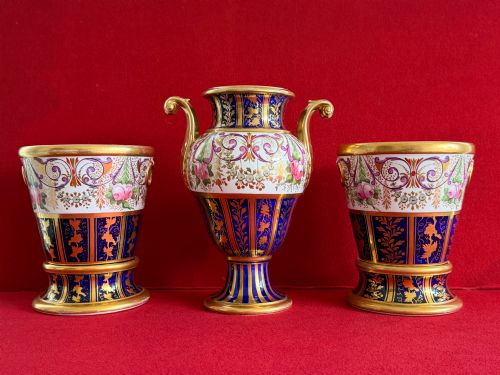
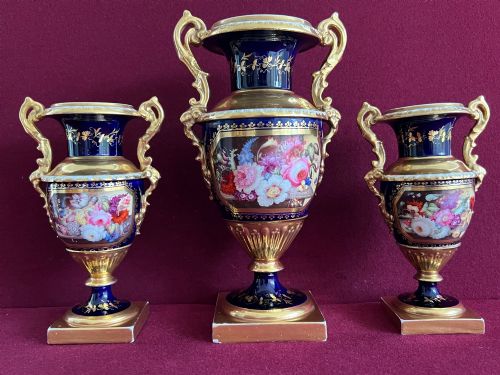
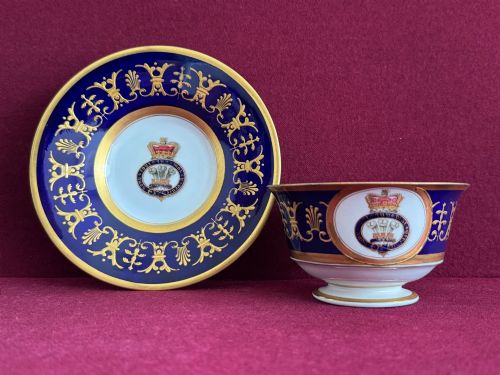
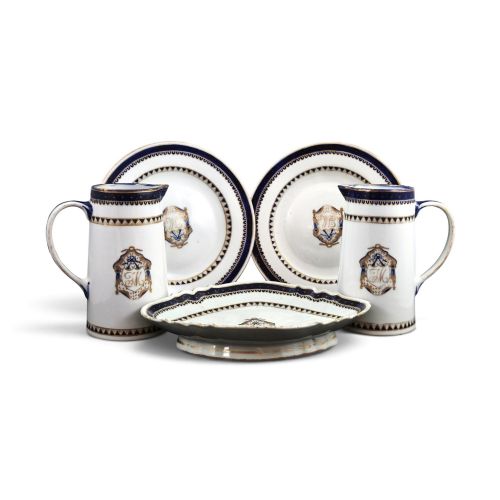
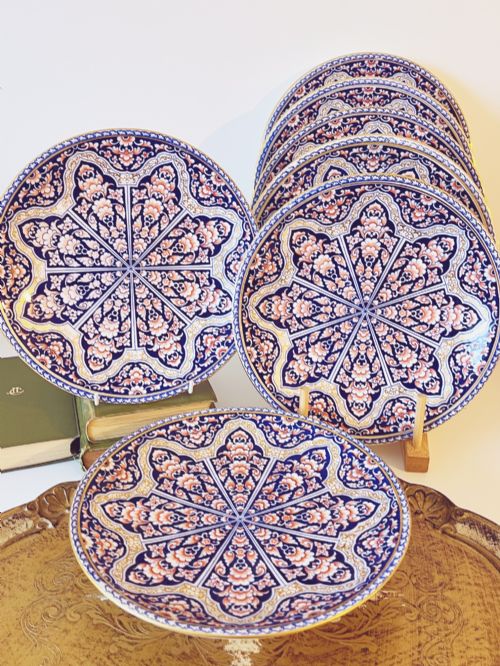
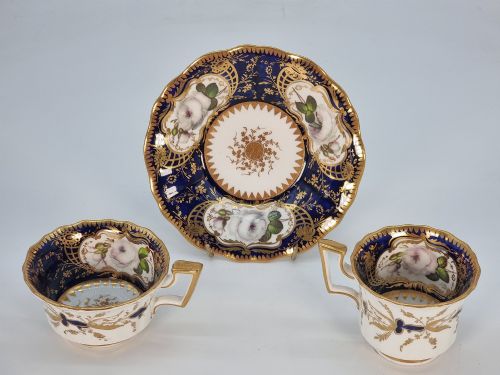
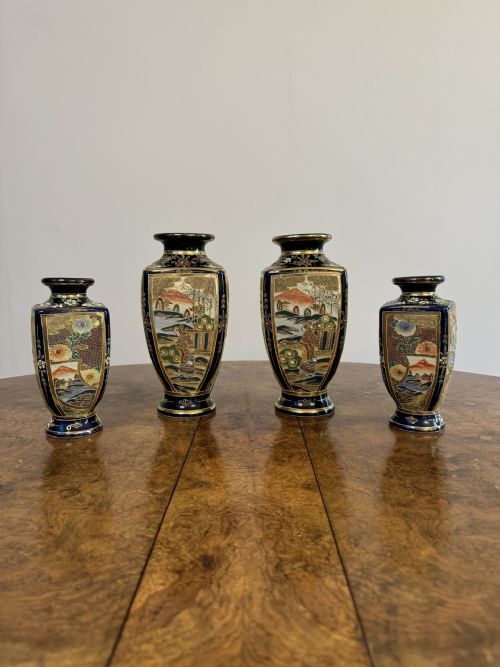
When you search for a blue gold porcelain set, you are looking at matched groupings designed for dining, display, and tea service. These pieces range from extensive dessert services and supper sets with lazy susans to cabinet plates, vases, garnitures, and inkstands.
The versions you are most likely to meet on this page span the eighteenth, nineteenth, and early twentieth centuries. They cross English, French, Japanese, and Chinese export origins, taking shape in styles from Regency and Victorian classical revival to French rococo revival and Meiji period aesthetics.
How they were made
Makers shaped these items from porcelain, bone china, and earthenware, applying cobalt and coloured enamel glazes before firing. Artisans then added rich surface decoration through gilding, gold leaf, and gold gilt applications.
Hand-painted details appear across cabinet plates and tea services, alongside transfer-printed patterns and moulded forms. Workshops combined these techniques to achieve the deep blue and metallic gold contrast characteristic of the period.
Blue Gold Porcelain Set Retail Price Guide 2026
Typical asking prices for blue gold porcelain set among the pieces listed under this phrase on Sellingantiques today, from the lower quarter to the upper quarter. They describe what is for sale here now, not the wider market.
Several pieces include rotating lazy susans, proving that nineteenth-century hosts loved saving guests from awkward reaches across the table.
What varies in quality
The distinction between standard production and exceptional manufacture lies in the execution of the hand-painted details and the precision of the gilding. Superior examples display crisp brushwork on subjects like game birds or floral motifs, alongside thick, well-preserved gold leaf.
The refinement of the ceramic body and the complexity of the form also separate ordinary wares from outstanding pieces. Elaborate garnitures, monogrammed services, and specialised items like rotating supper sets demand higher technical skill from the pottery.
Royal Crown Derby·Coalport·Minton·Royal Worcester·Royal Vienna
The Blue Gold Porcelain Set Glossary
- Gilding
- The application of gold leaf or gold paint to the surface of ceramics. This technique provides the metallic highlights characteristic of these wares.
- Cabinet Plate
- A decorative ceramic plate intended for display in a cabinet rather than for practical dining use. These often feature intricate hand-painted scenes.
- Garniture
- A set of matching vases or ornamental vessels designed to be displayed together on a mantelpiece or sideboard. They typically number three or more pieces.
- Bone China
- A type of soft-paste porcelain incorporating bone ash for added strength and whiteness. It forms a smooth base for bright enamel glazes.
- Comport
- A raised dish or bowl used for serving fruit or sweetmeats as part of a dessert service. It stands on a central foot above the table.
Blue Gold Porcelain Set: Frequently Asked Questions
What is a porcelain supper set?
A porcelain supper set is a matched collection of serving dishes often arranged on a revolving tray or lazy susan. These configurations allowed diners to access various courses easily during formal meals.
Such sets typically date from the early nineteenth century and showcase coordinated blue and gold decorative schemes across multiple compartments.
How do I care for gilt porcelain?
Gilt porcelain requires gentle handling to preserve the delicate gold leaf and enamel decorations applied over the glaze. Hand washing in lukewarm water with mild soap is essential, avoiding abrasive sponges or harsh detergents.
Displaying these items away from direct sunlight protects the vibrant cobalt tones and metallic finishes from fading over time.
What is a garniture set?
A garniture set consists of three or more matching decorative vessels designed to sit together on a mantelpiece or sideboard. These groupings create a balanced visual focal point within a room.
Originating largely in the nineteenth century, they often feature detailed hand-painted motifs complemented by rich gilding.
How do I identify Victorian porcelain?
Victorian porcelain can be identified through its distinct combination of revival styles, including rococo and classical motifs. Many pieces carry factory date marks, registration diamonds, or specific maker stamps on the underside.
Comparing the style of the hand-painted enamels and the weight of the gilding helps place the item within the nineteenth-century timeline.