





Blue Glazed Earthenware Plaque
These blue glazed earthenware plaque examples range from seventeenth-century tiles to twentieth-century chargers, offering wall decoration with rich tin-glazed surfaces.
Blue Glazed Earthenware Plaque
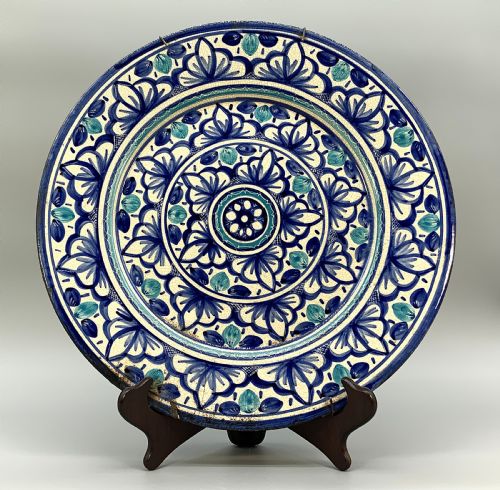
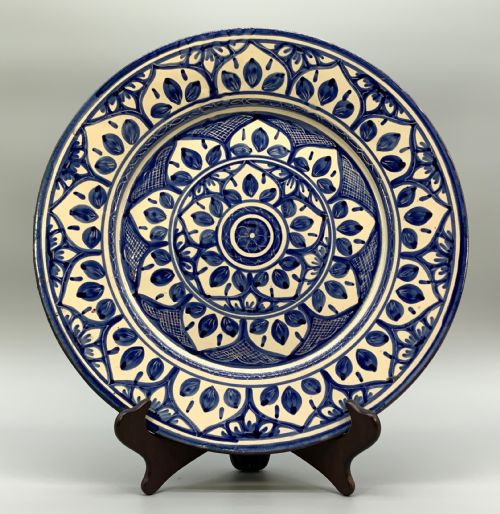
A blue glazed earthenware plaque brings historic ceramic art directly to the wall, functioning primarily as decorative wall art or charger plates rather than functional tableware. Buyers seeking this phrase encounter formats spanning from seventeenth-century tiles to nineteenth-century Italian faience and twentieth-century Moorish style chargers.
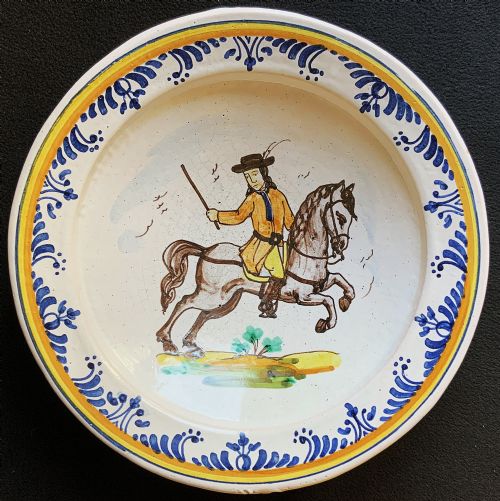
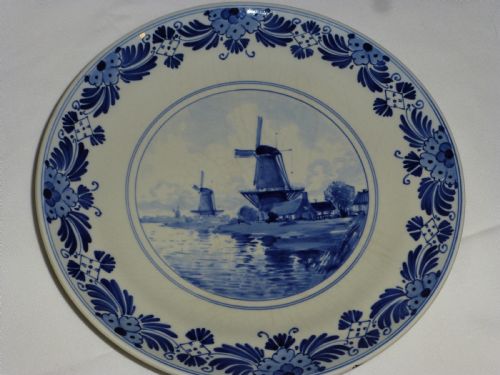
The objects take several distinct shapes including large decorative platters, circular charger plates, and rectangular devotional or narrative wall plaques. Origins stretch across Continental Europe, encompassing Dutch Delft, Spanish Catalana, Italian Maiolica, and Scottish Portobello works.
The visual vocabulary covers varied aesthetics, from Dutch Baroque Chinoiserie and Renaissance Revival themes to Victorian folk art and Moorish orchard patterns. Many pieces use blue and white pigments, whilst others incorporate polychrome detailing upon the tin glaze.
Materials and Making
Makers shaped porous earthenware bodies from local clays, firing the raw substrate before applying liquid tin-glaze coatings that dried to an opaque white surface. Pigments containing cobalt oxide were then brushed directly onto this absorbent glaze layer before a final kiln firing fused the decoration.
Certain examples incorporate additional embellishments such as gilt highlights applied over the fired glaze, or employ specialised tin-glaze techniques known variously as faience, maiolica, or Delft depending on the regional workshop tradition.
Blue Glazed Earthenware Plaque Retail Price Guide 2026
Typical asking prices for blue glazed earthenware plaque among the pieces listed under this phrase on Sellingantiques today, from the lower quarter to the upper quarter. They describe what is for sale here now, not the wider market.
Listings feature earthenware plaques spanning four centuries, utilising tin glaze, pigment, and gilt across Dutch, Spanish, Italian, and Scottish origins.
Judging Quality
Excellence in these pieces rests upon the confidence of the brushwork and the clarity of the painted narrative, whether depicting a classical historical scene or an intricate orchard pattern. Superior examples display precise control over cobalt pigments, achieving deep blues and clean white grounds without excessive running.
The sophistication of the moulded or thrown earthenware body also dictates standing, where heavier chargers maintain structural integrity and finer tiles exhibit crisp definition along their edges. Historical depth, regional attribution, and the preservation of the original tin glaze further separate standard items from exceptional survivals.
C. Ravier
The Blue Glazed Earthenware Plaque Glossary
- Earthenware
- Porous pottery fired at lower temperatures than stoneware or porcelain, requiring a glaze to achieve watertightness. It forms the structural body for the vast majority of these wall plaques and chargers.
- Tin-Glaze
- An opaque white ceramic glaze containing tin oxide, providing a smooth canvas for painted decoration. It is characteristic of traditions such as Delftware, faience, and maiolica.
- Charger
- A large ornamental plate designed primarily for display on walls or sideboards rather than dining use. Many examples in this category measure substantial diameters.
- Faience
- European tin-glazed earthenware, particularly associated with French, Italian, and Dutch production centres. The term encompasses a wide variety of decorative wall plaques and plates.
- Maiolica
- Tin-glazed Italian pottery noted for vibrant coloration and detailed narrative painting known as istoriato. These works often depict classical historical scenes.
- Istoriato
- A style of ceramic decoration featuring narrative scenes derived from history, mythology, or religion. It covers the entire surface of plates and plaques.
Blue Glazed Earthenware Plaque: Frequently Asked Questions
How were these wall plaques displayed historically?
Historic interiors utilised large charger plates and plaques as prominent wall decoration, often hung using pierced foot rings or wire frames mounted in principal rooms. They served to showcase wealth, artistic taste, and narrative subjects.
Today, hanging them requires appropriate brackets or wire mounts designed for heavy ceramics to ensure the earthenware body remains secure against the wall.
What is the difference between Delft and faience?
Delft specifically refers to tin-glazed earthenware produced in the Dutch town of Delft, famous for its blue and white Chinoiserie and biblical scenes. Faience is the broader European term for tin-glazed pottery made across France, Germany, Spain, and Italy.
Both categories share the fundamental technique of painting on an opaque tin glaze before firing, though regional stylistic traits help separate Dutch works from Spanish Catalana or Italian pieces.
Can these plates be used for serving food?
Most pieces listed under this category functioned as decorative wall plaques, charger plates, or salesman samples rather than functional tableware. The earthenware bodies and historic glazes are unsuited for modern culinary use.
Examine the back of the object for hanging holes or mounting evidence, which confirms its primary role as wall art rather than a dining platter.
How do I distinguish eighteenth-century pieces from nineteenth-century revivals?
Eighteenth-century examples typically display softer glaze textures, characteristic cobalt pigment bleeding, and hand-mixed clay bodies consistent with period kiln technology. Revival pieces from the nineteenth century often show crisper mechanical forming and brighter, more uniform pigment application.
Comparing the stylistic markers, such as Renaissance Revival or Moorish motifs, against documented period production helps clarify the exact date of manufacture.