


Blue Glaze Staffordshire Figure
A blue glaze staffordshire figure brings Victorian character to a room, offering modelled earthenware portraits and animals with striking cobalt accents.
Blue Glaze Staffordshire Figure
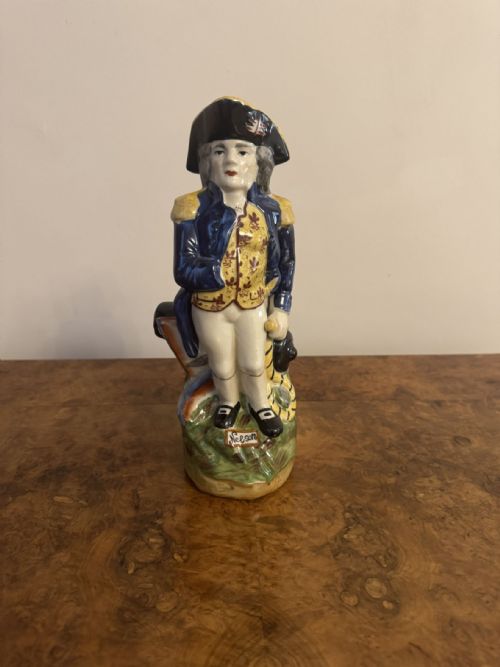
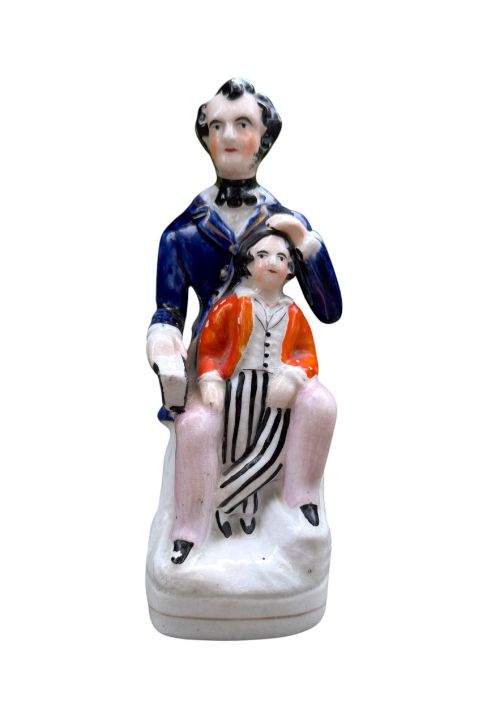
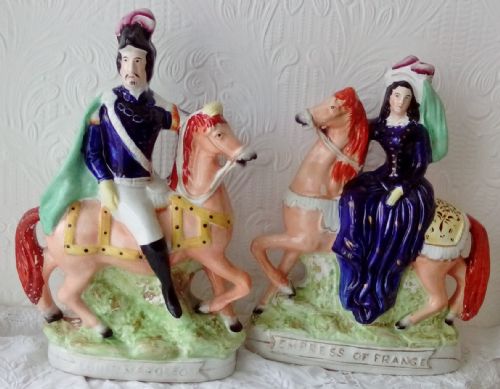
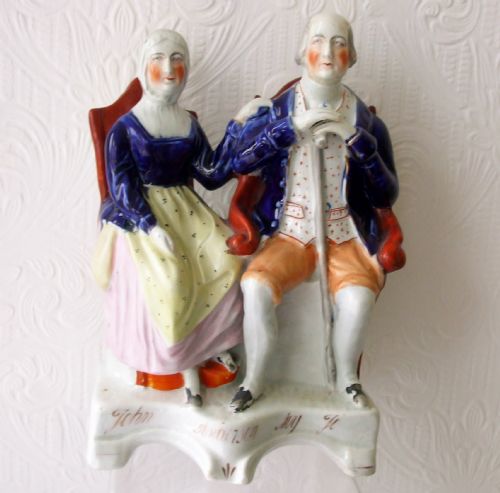
When you search for a blue glaze staffordshire figure, you encounter nineteenth-century ceramic pieces created in Staffordshire potteries. These encompass portrait figures, flatbacks, animals, and toby jugs produced during the Victorian era.
The versions most commonly met on this page include flatbacks designed to stand against a wall, spill vases, inkwells, and portrait groups representing royalty and historical figures. Earthenware forms dominate the selection, often accented with enamel paint and gold leaf alongside cobalt blue glazes.
How they were made
The characteristic blue colouring appears either as a deep cobalt glaze on specific details like crowns and bases or as part of the overall palette. Ceramic bodies vary in weight and thickness depending on whether the piece is a hollow flatback or a solid-cast animal.
Watch out for Staffordshire poodles accompanied by tiny pups, faithfully guarding mantels since the Victorian era.
What varies in quality
The richness and stability of the glaze also define the piece, alongside the preservation of original hand-painted details. Heavier potting and well-defined mould seams point to careful manufacture in the Staffordshire potteries.
Mexborough
The Blue Glaze Staffordshire Figure Glossary
- Flatback
- A ceramic figure designed with a finished front and a plain, unglazed or flat back intended to stand against a wall. This construction saved materials and allowed larger forms to sit securely on mantelpieces.
- Lead glaze
- A glossy coating containing lead oxide applied to earthenware before firing to create a smooth, waterproof surface. It enhances the brightness of underlying colours and enamels.
- Spill vase
- A hollow ceramic figure incorporating a cylindrical holder designed to store wooden spills for lighting fires or pipes. These combine decorative portrait or animal subjects with practical domestic utility.
- Toby jug
- A pottery jug modelled in the form of a seated, stout person, usually wearing eighteenth-century attire and holding a mug or jug. They formed a popular staple of Staffordshire production.
- Earthenware
- A porous, opaque ceramic fired at lower temperatures than stoneware or porcelain. It serves as the primary body material for nineteenth-century Staffordshire figures.
Blue Glaze Staffordshire Figure: Frequently Asked Questions
What is a Staffordshire flatback?
A Staffordshire flatback is a Victorian ceramic figure moulded with a detailed front and a flat, unpainted reverse. These pieces were specifically made to stand on shelves or mantelpieces where only the front view mattered.
The flat construction also kept the figures stable and reduced the weight of larger portrait groups and spill vases.
How are these figures dated?
Dating relies on stylistic clues, historical subjects, and the specific types of glaze and earthenware used. Royal portraits and military figures often correspond to the reigns and events of the nineteenth century.
Changes in ceramic bodies and enamel colours further help distinguish pieces made across the Victorian period.
Were these figures painted by hand?
Makers used moulds to shape the basic earthenware bodies, but decorators applied enamel paints and gold leaf by hand. This secondary hand-finishing means facial expressions and clothing details vary between individual examples.
The cobalt blue elements were typically integrated into the glaze before the final firing.
How do I display a ceramic figure?
These figures suit stable mantelpieces, bookshelves, and cabinets away from heavy foot traffic or direct sunlight. Because they consist of nineteenth-century earthenware with delicate enamel details, gentle placement is essential.
Pairing flatbacks with compatible Victorian accessories creates an authentic period arrangement in a room.