



Blue Glass Salt Pots
These blue glass salt pots bring rich colour and polished metal to the table.
Blue Glass Salt Pots
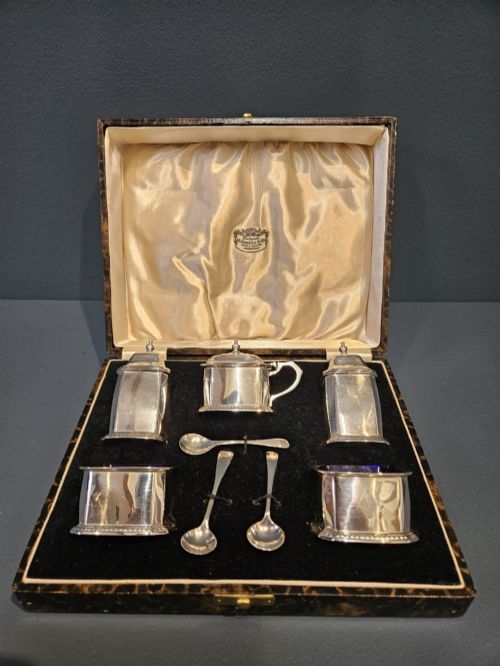
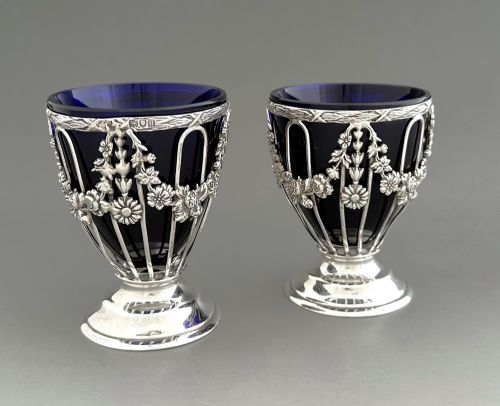
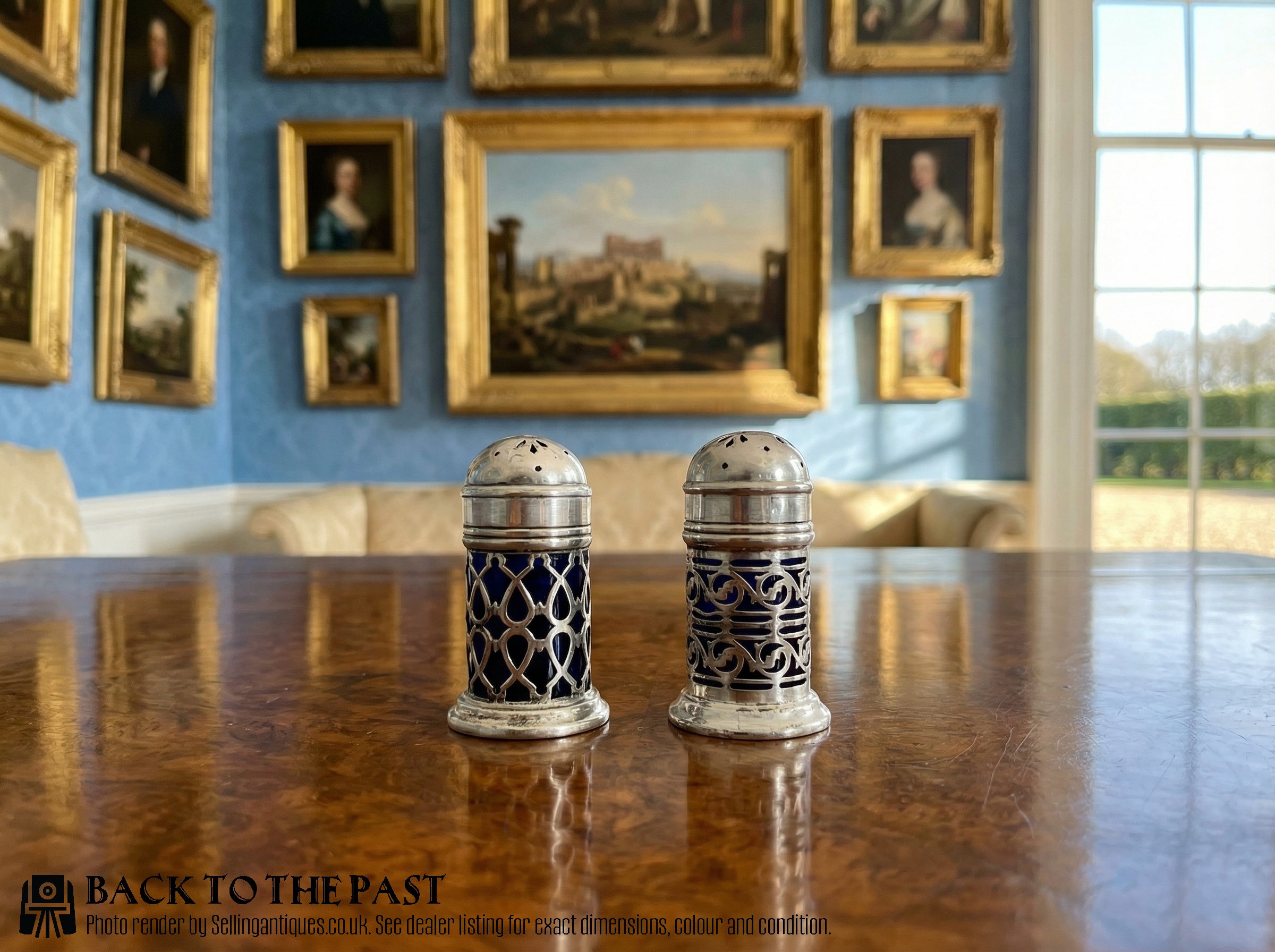
Blue glass salt pots combine deep cobalt vessels with silver or silver-plated frames, forming miniature table containers designed to hold loose salt or made as mustard pots and cruet sets. These pieces appear across several distinct historical eras, including the Georgian, Victorian, and Edwardian periods, as well as the later Art Deco style of the 1930s.
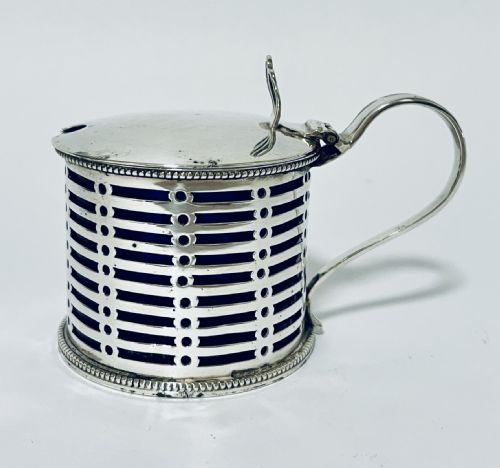
The objects take various domestic forms such as open table salts, pierced mustard pots, wirework condiment tubs, and multi-piece cruet stands. Buyers encounter single items alongside matched pairs and fitted cased sets that preserve their original presentation.
How they were made
The construction relies on blown or moulded cobalt glass liners fitted securely within frames shaped from sterling silver, silver plate, or silver wirework. Metalwork techniques involve piercing, casting, and hand-finishing to create decorative pierced walls or solid bodies that securely hold the glass insert.
Interiors often feature fitted velvet linings within cased presentations, while the metal components carry hallmarks or maker stamps that record the year and place of production.
Listings span the Victorian, Edwardian, and Art Deco periods, utilising sterling silver, silver plate, and cobalt glass.
What varies in quality
Quality rests upon the weight and crispness of the metalwork, distinguishing heavy cast sterling silver frames from lighter silver-plated alternatives or delicate wirework. Pieces featuring fully intact cobalt glass liners without internal chips display superior preservation compared to those altered or mismatched over time.
The presence of clear hallmarks and distinct maker attribution adds considerable interest for collectors seeking documented examples from established silversmiths.
Goldsmith & Silversmith's·William Neale
The Blue Glass Salt Pots Glossary
- Cruet set
- A matched collection of condiment bottles and pots held together in a metal stand for table service. These sets frequently combine mustard pots and salt cellars.
- Cobalt glass
- A deep blue glass coloured by the addition of cobalt oxide during manufacture. It forms the vibrant liner visible within open salt cellars.
- Sterling silver
- A silver alloy containing 92.5 percent pure silver and 7.5 percent other metals, usually copper. This standard alloy provides durability for intricate mustard pot frames.
- Silver plate
- A base metal foundation coated with a thin layer of pure silver through electroplating or older techniques. It offers the appearance of solid silver at a different scale of production.
- Wirework
- Metalwork constructed from thin wires soldered into open geometric or scroll patterns. This technique appears in Edwardian condiment tubs.
Blue Glass Salt Pots: Frequently Asked Questions
What is a blue glass salt pot used for?
These vessels held dry salt or prepared mustard for individual dining at the table before modern salt shakers became common.
They sat beside plates or within larger cruet frames, allowing diners to serve themselves using small spoons.
How do I date a silver and glass salt pot?
Dating relies on metal hallmarks stamped directly onto the silver frames, which indicate the assay office, date letter, and maker.
Stylistic details like Edwardian wirework or Art Deco geometric lines also help place the piece within its historical period.
Are the blue glass liners removable?
Most glass liners lift out easily from their metal frames to allow for thorough washing and cleaning after use.
Care should be taken when handling older glass inserts to prevent accidental chips along the rim.
What is the difference between a salt cellar and a mustard pot?
Salt cellars are typically open vessels designed for loose salt granules, sometimes paired with tiny spoons for serving.
Mustard pots feature hinged lids and often include a vertical notch in the rim to accommodate a serving spoon.