




Blue Glass Centrepiece
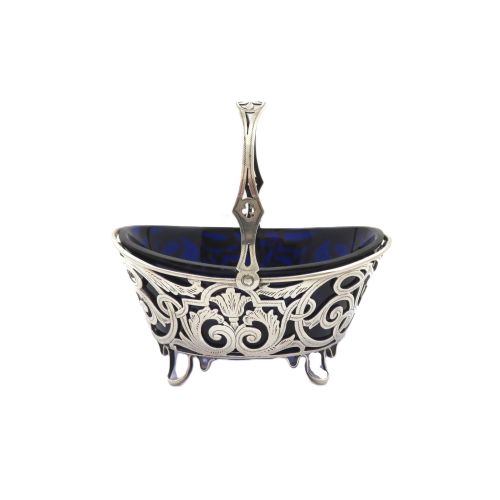
A blue glass centrepiece commands a dining table with deep cobalt or milky opalescent tones set against silver or clear crystal.
Blue Glass Centrepiece
A blue glass centrepiece takes the form of decorative bowls, shallow coupes, chargers, and vases produced across the Victorian, Edwardian, and Art Deco periods. Makers from Britain, France, Bohemia, and Germany shaped these vessels to sit proudly in the middle of a table or sideboard.
The selection ranges from Victorian cobalt glass mounted in sterling silver frames to 1930s opalescent moulded glass bowls by French and Scottish makers. Buyers find everything from heavy cut crystal comports to iridescent Art Nouveau dishes resting on ball feet.
Materials and technique
Craftsmen utilised cobalt glass, opalescent glass, and lead crystal, often combining moulded or blown vessels with sterling silver, silver plating, and gilt metal mounts. Cut-to-clear techniques revealed deep blue layers beneath sharp facets of clear glass.
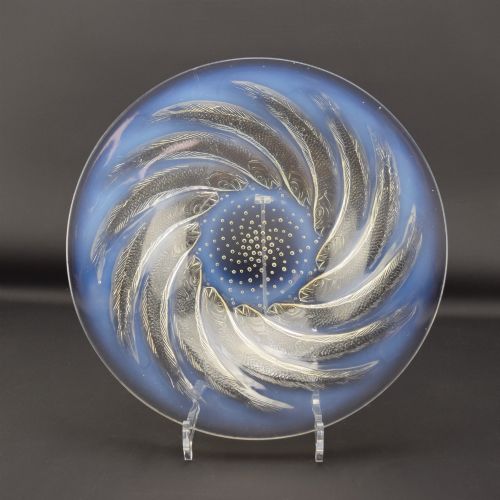
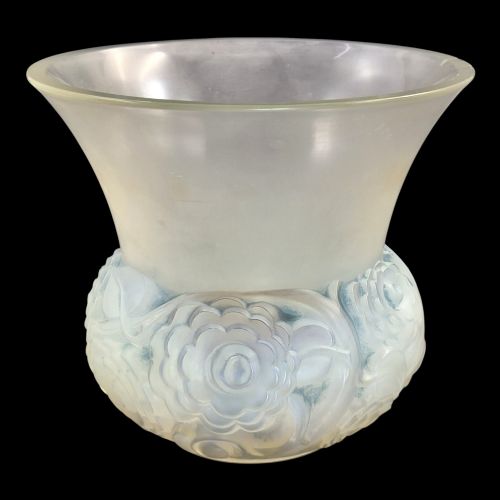
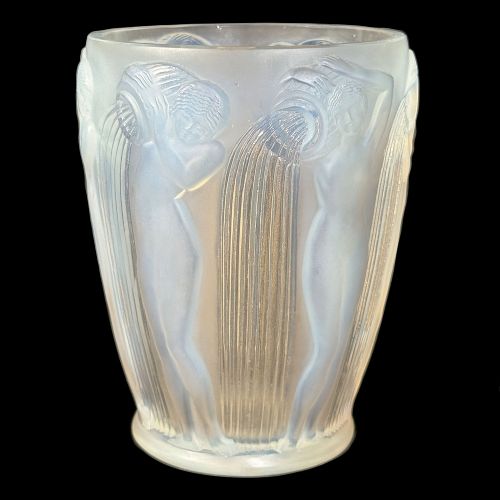
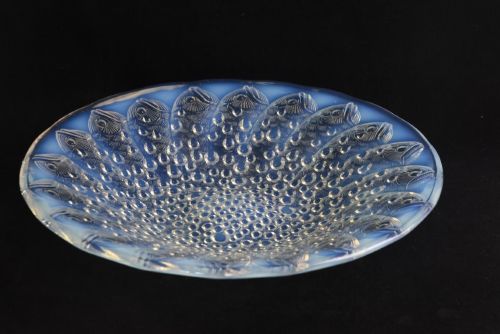
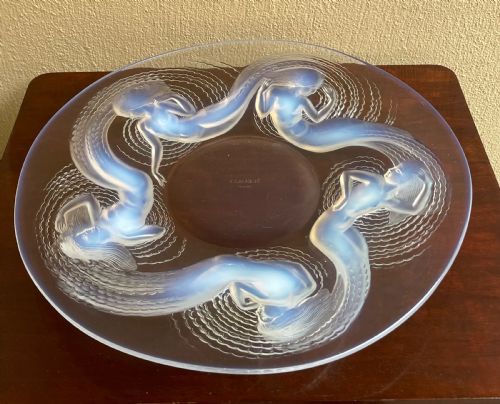
Moulding and pressing allowed French and British ateliers to achieve intricate relief details, such as fish, flowers, and water carriers, highlighted by the milk-blue glow of opalescent glass.
Some bowls feature frosted water carriers and swimming fish that seem to circle forever beneath the blue glow.
Judging the work
Quality rests upon the crispness of the glass moulding, the depth of the cobalt or opalescent coloration, and the integrity of any metal mounts in sterling silver. Pieces bearing clear signatures or registry marks show greater precision in finishing.
The weight of the glass and the smoothness of the polished pontil or rim distinguish standard production items from masterworks designed by leading artists.
Rene Lalique·Val St Lambert·Monart Glass·Loetz·Jobling Opalique
The Blue Glass Centrepiece Glossary
- Opalescent glass
- Glass that diffuses light with a milky, semi-translucent quality, often shifting between blue and amber tones. This effect was heavily utilised during the Art Deco era.
- Cobalt glass
- Deep blue glass coloured by the addition of cobalt oxide during the melting process. It remains intensely vivid under both natural and artificial light.
- Coupe ouverte
- An open bowl or shallow dish used for display or service. These forms often showcase figural or floral reliefs on the interior.
- Pontil mark
- A rough scar left on the base of blown glass where the pontil rod was snapped off. Skilled makers polished this area flat.
- Comport
- A raised dish or bowl standing on a pedestal or foot. These elevated vessels dominate table settings.
Blue Glass Centrepiece: Frequently Asked Questions
Were these pieces used for food?
Many bowls and comports served fruit, sweets, or flowers during formal Victorian and Edwardian dinners. Their decorative presence often outweighed practical utility.
Larger chargers and salvers acted as ornamental centerpieces rather than everyday tableware. Owners displayed them prominently on dining tables and sideboards.
How do I identify Art Deco opalescent glass?
Look for milky, translucent glass that catches blue light against dark backgrounds and reveals warm tones when backlit. Moulded floral or figural reliefs are typical of this style.
Check the base for signatures or registry numbers. Makers frequently pressed their names directly into the molten glass.
What is cut-to-clear glass?
Cut-to-clear involves casing a layer of coloured glass over a clear core and grinding geometric patterns through the top layer. This exposes the transparent crystal beneath.
Victorian makers utilised this method to create high contrast on vases and bowls. The technique requires immense skill to maintain uniform depth.