
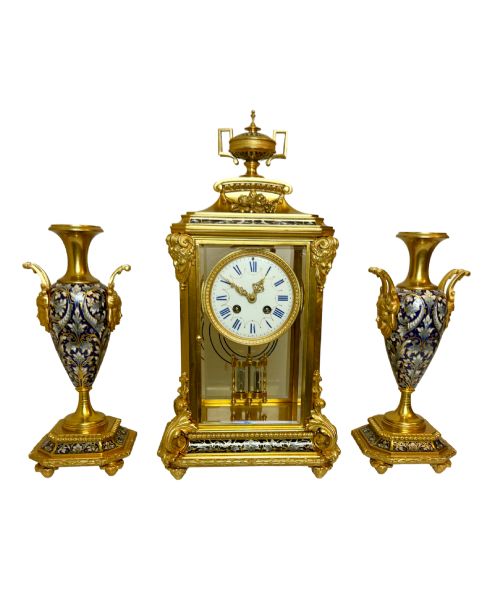
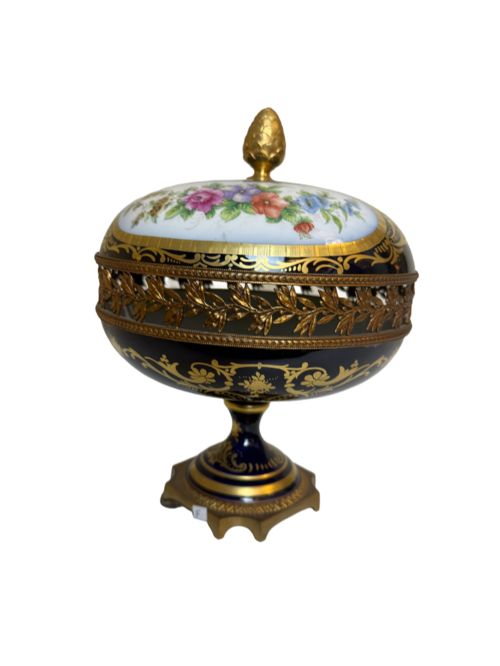
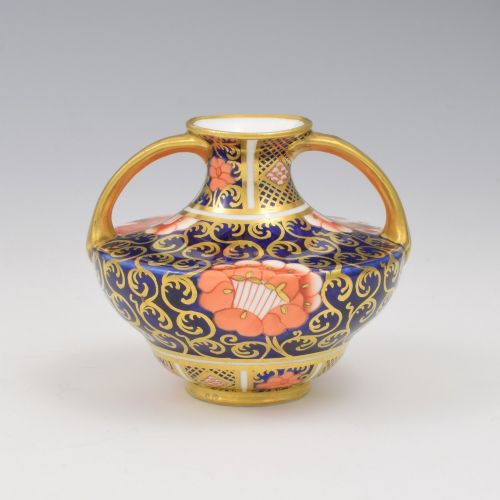

Blue Gilt Urn
A blue gilt urn brings together deep cobalt or turquoise glazes and gleaming metallic highlights, offering a striking centrepiece for a mantel or table.
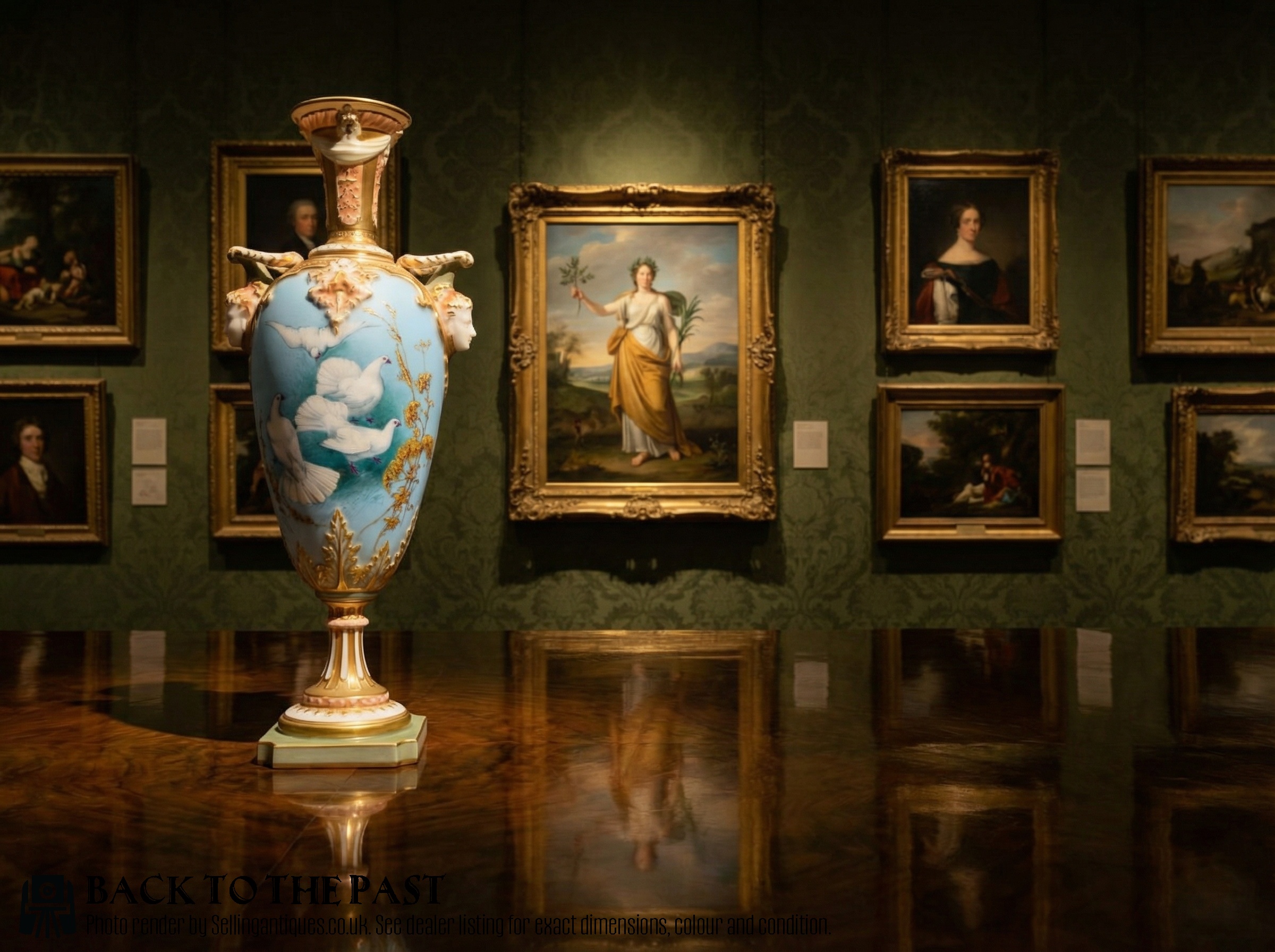
Blue Gilt Urn
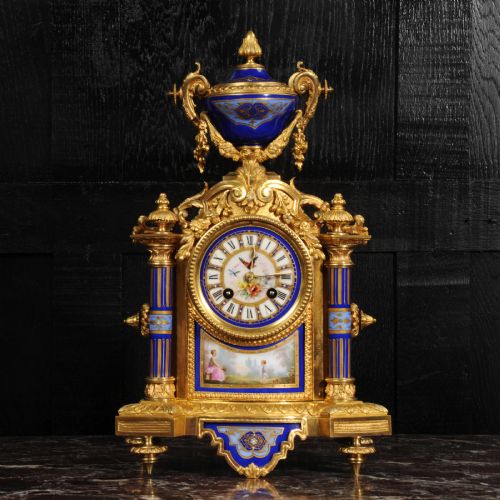
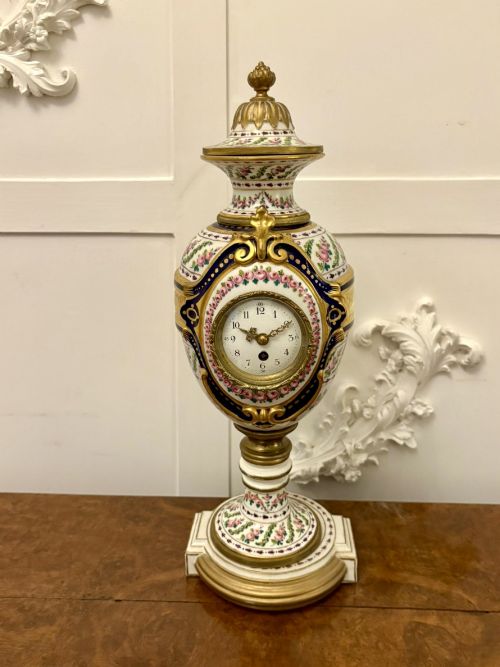
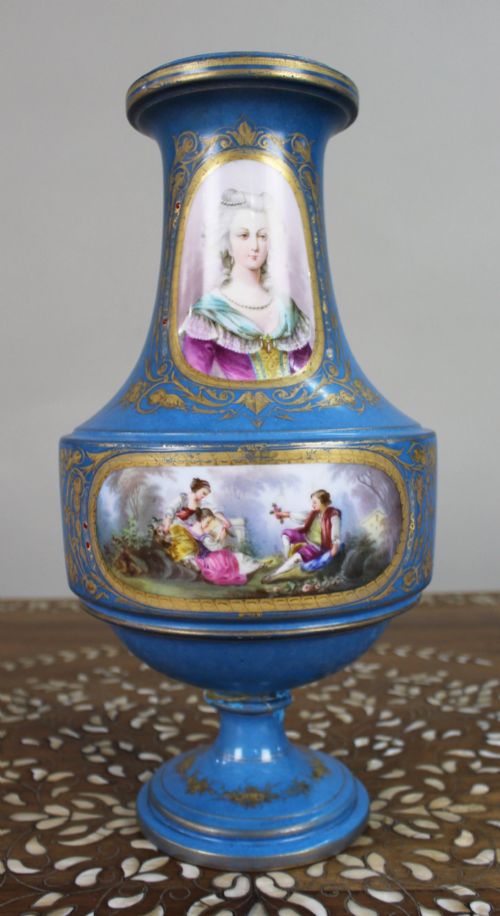
A blue gilt urn search uncovers decorative vessels, lidded jars, mantel clocks, and table lamps shaped from ceramic, porcelain, or glass. These pieces span the nineteenth century into the Edwardian period, drawing on French Rococo Revival, Empire, and Japanese Satsuma traditions.
The most common examples on this page are nineteenth-century French porcelain and ceramic urns mounted with gilt bronze or ormolu trim. English porcelain works from factories like Spode and Coalport also appear frequently alongside Japanese Imari and Satsuma ceramics.
How They Were Made
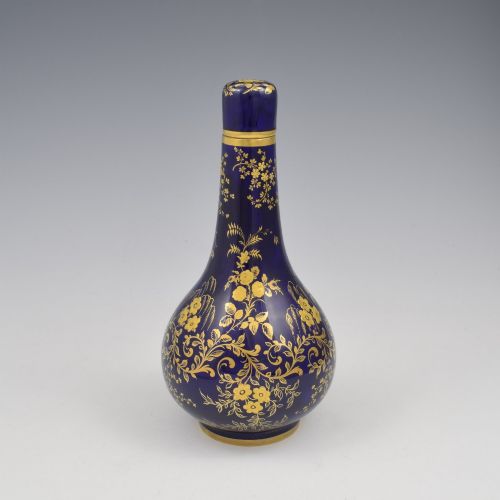
Makers shaped these vessels from ceramic, earthenware, or porcelain, frequently applying deep blue grounds such as powder blue, bleu céleste, or cobalt glaze. Artisans then added hand-painted scenes, transfer prints, or enamel details before firing the bodies.
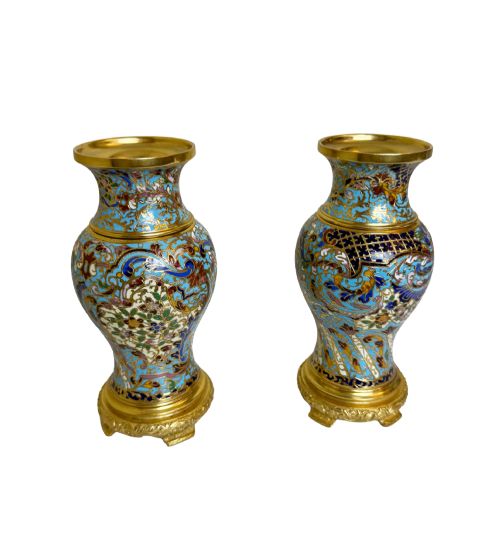
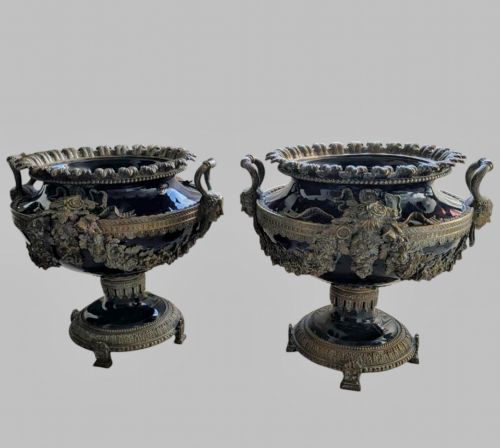
Metalwork played a defining structural role, with gilt bronze, ormolu, and gold leaf forming handles, mounts, bases, and champlevé enamel trims. Craftsmen cast and chased these brass and bronze mounts to frame the ceramic bodies precisely.
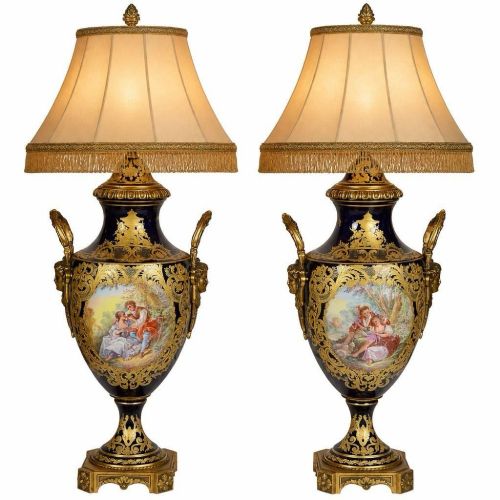
Several porcelain urns on this page spent decades secretly moonlighting as electrified table lamps.
What Varies in Quality
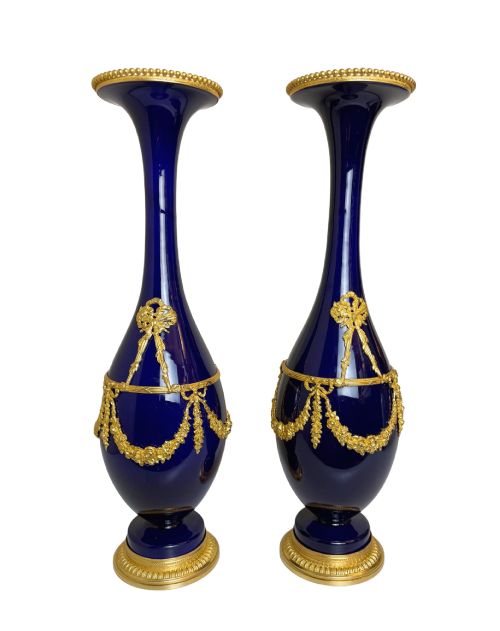
The standard of a blue gilt urn rests on the crispness of the gilt bronze chasing and the depth of the porcelain glaze. Superior examples display meticulously hand-painted scenes and heavy, finely finished ormolu mounts rather than light, stamped metal.
Integration between the ceramic body and the metal fittings distinguishes finer items. Well-executed pieces show balanced proportions where the gilt mounts complement the blue ground without overpowering the form.
Sèvres·Wedgwood·Spode·Derby·Limoges·Chamberlain Worcester·Samson Paris·Royal Doulton·Coalport
The Blue Gilt Urn Glossary
- Ormolu
- Gilded bronze used for mounts and decorative trim on furniture and ceramics. This technique involves applying a finely ground high-carat gold mercury amalgam to bronze.
- Champlevé
- An enamelling technique where troughs are dug out of a metal surface and filled with vitreous enamel powder before firing. The resulting design sits flush with the metal partitions.
- Campagna Urn
- A classical bell-shaped pedestal vessel with flared rims and looped handles, popular in nineteenth-century decorative ceramics. This classic form derives from ancient Roman stone excavation finds.
- Bleu Céleste
- A bright sky-blue porcelain ground colour developed at the Sèvres factory during the eighteenth century. Collectors frequently encounter this distinctive shade on French revival pieces.
- Imari
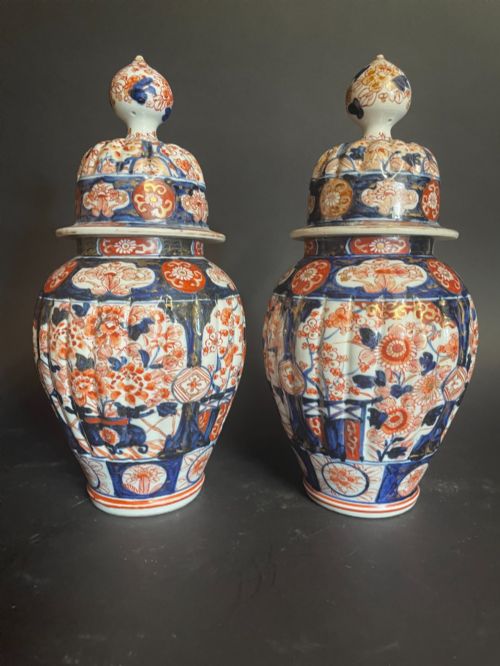
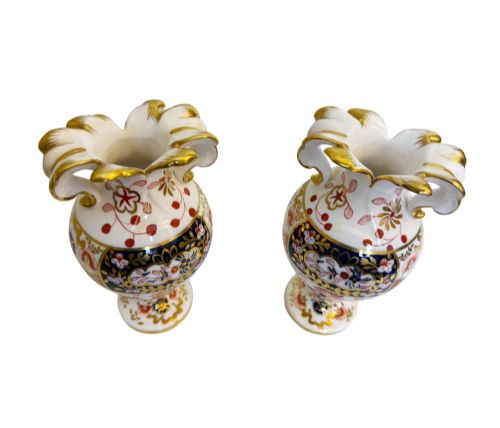
- A style of Japanese export porcelain decorated in underglaze blue, iron red, and gold. This aesthetic heavily influenced European ceramic factories throughout the nineteenth century.
Blue Gilt Urn: Frequently Asked Questions
What is a cassolette?
A cassolette is a dual-purpose decorative vessel functioning either as a lidded vase or, when inverted, as a burner for scented substances. These pieces typically feature pierced covers designed to diffuse fragrance into a room.
In many designs, removing the lid reveals a candle socket or a fitted liner. This versatility made them popular decorative accessories on nineteenth-century mantelpieces.
How do I identify Sèvres style?
Sèvres style pieces usually feature rich blue ground colours, lavish gold leaf gilding, and hand-painted pastoral or courtly scenes within shaped reserves. They often incorporate decorative ormolu mounts and classical handles.
While genuine eighteenth-century pieces are scarce, many nineteenth-century French and English factories produced high-quality revivals that emulate this decorative vocabulary.
Were these urns made as lamps?
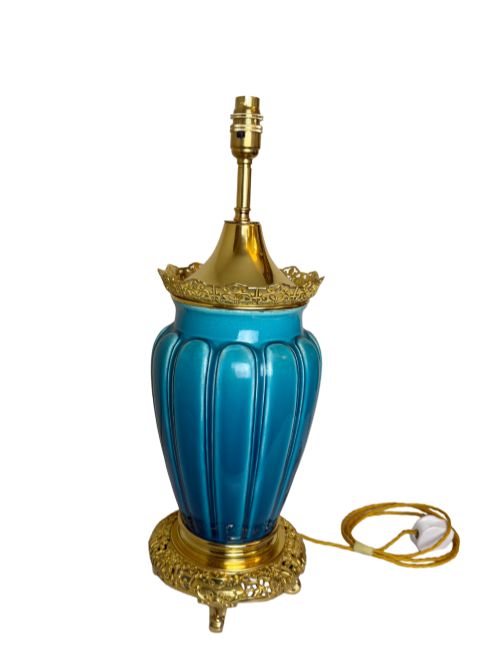
Most nineteenth-century urns and jars were manufactured purely for display or as garniture sets rather than as lighting. Many surviving examples were converted into table lamps during the twentieth century by drilling the base or running cord through existing mounts.
Converters often mounted the ceramic bodies onto weighted gilt metal bases to ensure stability. This adaptation preserved the decorative impact of the original vases for domestic interiors.
What is a garniture set?
A garniture set consists of three or five matched decorative vessels designed to sit together on a mantelpiece or sideboard. A standard arrangement includes a central urn flanked by matching smaller vases or lidded jars.
These coordinated sets were manufactured to create a balanced symmetrical display in formal reception rooms. Finding a complete surviving set is less common than discovering individual pieces.