


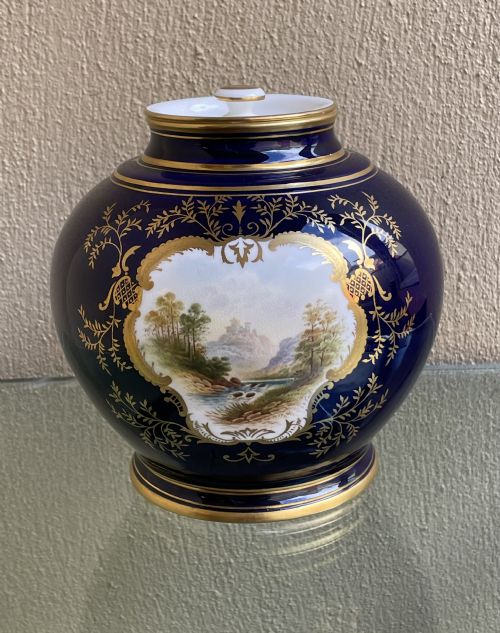


Blue Gilt China Urn
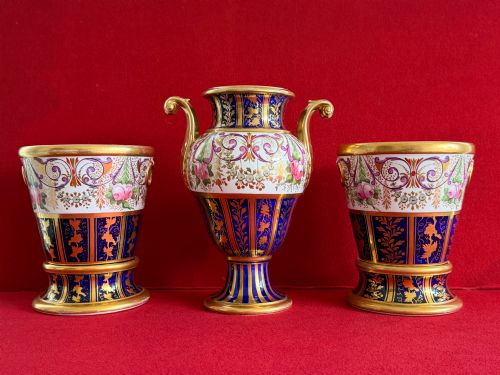
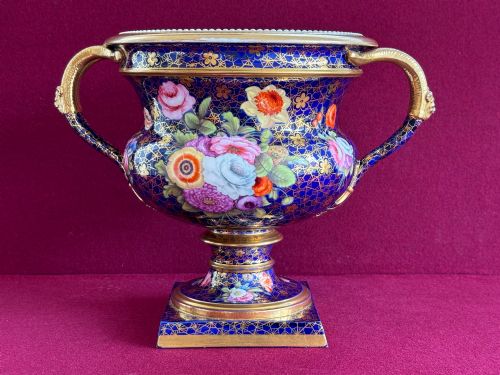
A blue gilt china urn brings cabinet presence to a room through saturated cobalt grounds and raised gold leaf.
Blue Gilt China Urn
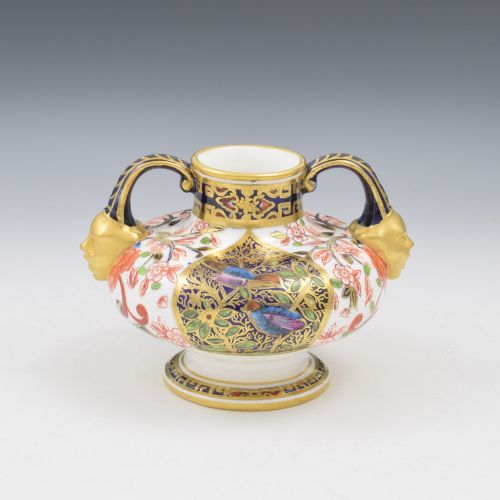
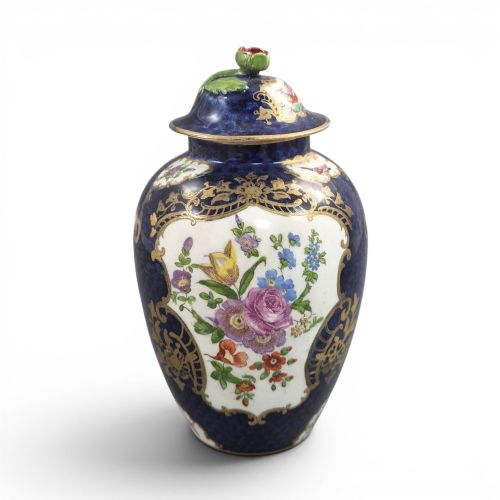
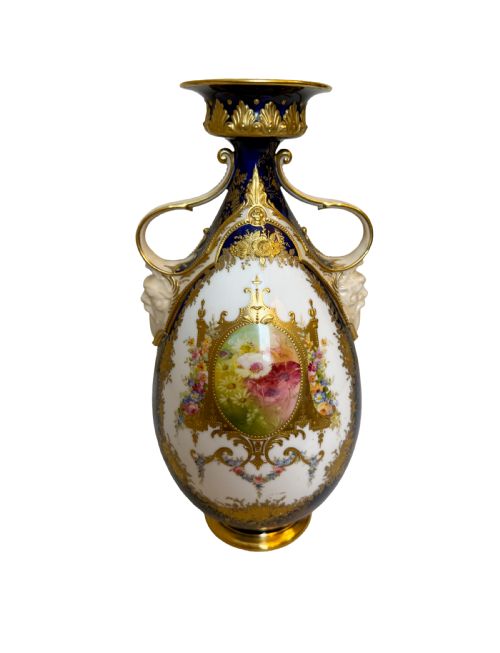
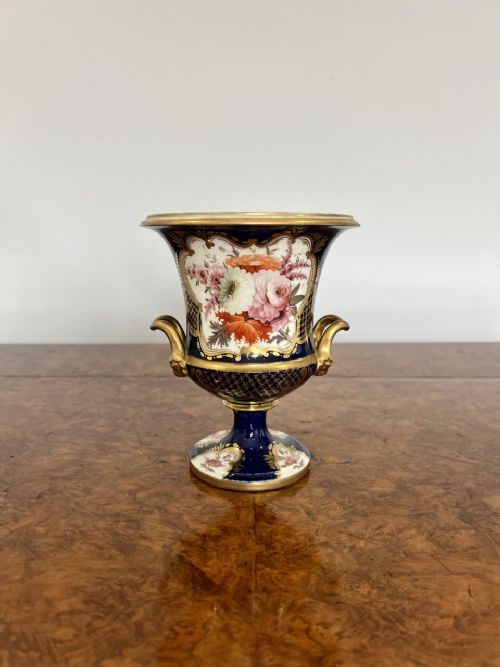
When you search for a blue gilt china urn, you encounter vessels produced across the nineteenth and early twentieth centuries by notable factories. These decorative objects take the form of twin-handled vases, covered jars, and pot pourri containers designed for formal display rather than utility.
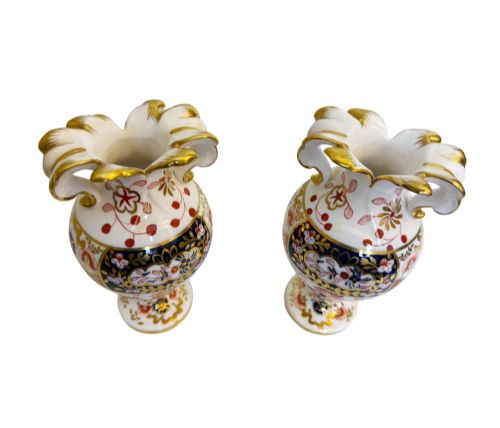
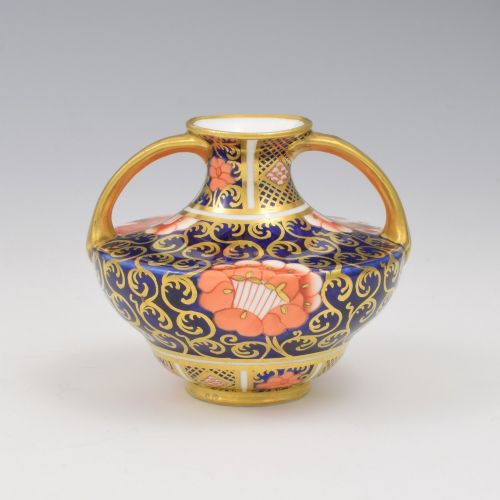
The pieces on this page span Victorian, Edwardian, and later periods, drawing on styles from Regency elegance to Japanese Imari patterns. You most frequently meet porcelain and ironstone bodies decorated in deep cobalt blue enriched with heavy gilding.
Forms range from miniature cabinet pieces to large pairs intended for mantelpieces and side tables. Manufacturers such as Spode, Mason's, and Royal Crown Derby dominate these offerings with traditional shapes and hand-painted motifs.
Materials and production methods
Potters shaped these vessels using bone china, porcelain, or durable ironstone clay bodies before firing them in kilns. Artisans applied cobalt blue underglaze paints to create rich background fields, often incorporating scale patterns or exotic birds.
Gilding was then added using gold leaf or liquid gold preparations, fixed with a secondary low-temperature kiln firing. Hand painting finished the surface details, bringing polychrome highlights and intricate borders to the finished ceramic.
Blue Gilt China Urn Retail Price Guide 2026
Typical asking prices for blue gilt china urn among the pieces listed under this phrase on Sellingantiques today, from the lower quarter to the upper quarter. They describe what is for sale here now, not the wider market.
One Edwardian decorator named E O Ball left his signature on a Coalport urn, securing his tiny artistic footprint across a century.
Distinctions in craftsmanship
The standard of a blue gilt china urn rests upon the precision of its hand painting and the thickness of its gold leaf application. Superior examples display crisp brushwork on motifs like birds or floral sprays, whereas lesser pieces rely on simpler transfer-printed outlines.
Body material also dictates quality, with fine translucent bone china and delicate porcelain sitting at a higher tier than heavier utilitarian ironstone. Furthermore, the crispness of the moulded handles and the depth of the cobalt glaze separate standard production runs from master factory output.
Spode·Royal Crown Derby·Booths Silicon China·Royal Doulton·Coalport·Masons Ironstone·Wedgewood·Minton
The Blue Gilt China Urn Glossary
- Imari
- A Japanese-inspired decorative style utilising cobalt blue, iron red, and abundant gold on a white ceramic ground. This palette became popular across British factories during the nineteenth century.
- Pot Pourri
- A perforated vessel designed to hold scented dried flower petals, allowing fragrance to diffuse into a room while concealing the contents beneath a pierced cover.
- Ironstone
- A heavy, durable type of semi-vitreous pottery patented in the early nineteenth century by Staffordshire manufacturers as a robust alternative to true porcelain.
- Gilding
- The application of gold leaf or powdered gold to ceramic surfaces, bonded through heat to create metallic decorative accents and borders.
Blue Gilt China Urn: Frequently Asked Questions
What is a blue gilt china urn used for?
These vessels served primarily as decorative garnitures on mantelpieces, sideboards, and cabinets in formal nineteenth-century interiors. Covered versions additionally functioned as containers for pot pourri or dried herbs to scent the air.
Today, collectors place them on display shelves or console tables to add colour and vertical interest to a room. They remain ornamental objects rather than functional containers for water or fresh flowers.
How do I date a ceramic urn?
Dating relies on identifying factory backstamps, ceramic body composition, and stylistic clues such as Victorian rococo curves or Edwardian proportions. Ironstone bodies and specific pattern numbers often point to definite manufacturing decades.
Comparison with documented factory archives helps narrow down the period of production. Handling pieces from different decades reveals shifts in weight, glaze composition, and gilding methods.
How do I care for antique porcelain?
Dust these decorative vessels gently with a soft, dry brush to prevent the accumulation of dirt on raised gilding and painted surfaces. Avoid using commercial cleaning agents or immersing gilded ceramics in water.
Keep them away from direct sunlight and areas subject to sudden temperature shifts to protect the glaze and gold leaf. Stable placement on a flat surface prevents accidental toppling.
What distinguishes ironstone from porcelain?
Ironstone is a dense, opaque, and robust earthenware developed to resist chipping during daily household use. It feels heavier in the hand and lacks the light translucency found in fine porcelain.
Porcelain and bone china offer a thinner, more delicate body with a vitreous texture suited to intricate cabinet display. Both materials accept cobalt blue and gold leaf differently, affecting the final visual depth.