


Blue Folk Art Chest
A blue folk art chest brings regional character and hand-painted pigment into a room, offering robust storage rooted in nineteenth-century country traditions.
Blue Folk Art Chest
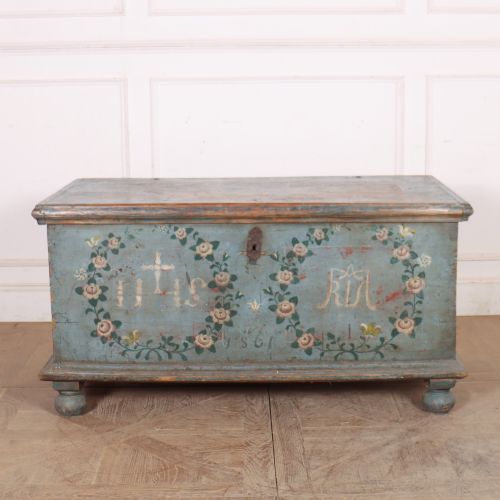
When searching for a blue folk art chest, you encounter painted storage vessels spanning the nineteenth century, including dome-top coffers, marriage chests, and rustic cupboards from Scandinavian, Alpine, Hungarian, and Italian regions.
The most common examples on this page are nineteenth-century Swedish marriage chests and dome-top coffers constructed in pine and finished with original hand-painted tempera or pigment paint.
Alongside traditional blanket boxes and mule chests, you find smaller strong boxes, commodes, and primitive shepherds coffers reflecting rural domestic life across European country workshops.
How they were made
These chests rely primarily on solid pine and occasional oak construction, assembled to withstand generations of domestic use in rural households.
Surfaces receive layers of tempera paint or pigment paint applied by hand, often featuring regional motifs and decorative schemes characteristic of Scandinavian and Alpine folk art.
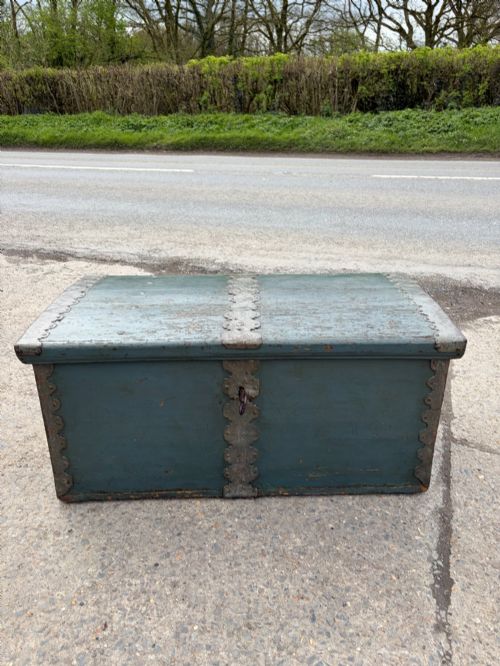
Iron and wrought iron hardware such as hinges, straps, and metal binding reinforce the lids and corners of dome-top coffers and strong boxes.
Regional styles represented span Scandinavian country, Hungarian folk art, Italian folk art, Alpine folk art, and Austrian folk art.
What varies in quality
The integrity of the original painted surface dictates the distinction between standard provincial utility pieces and masterworks of folk art decoration, depending on how much pigment survives intact.
Structural complexity sets apart simple plank boxes from sophisticated dome-top coffers featuring dovetailed joints, applied mouldings, and integrated iron binding.
The clarity and sophistication of the hand-painted regional motifs elevate individual pieces, separating routine workshop production from pieces with expressive local character.
The Blue Folk Art Chest Glossary
- Cofer
- A large chest or trunk used for storing valuables or household goods. These sturdy containers often featured flat or domed lids.
- Marriage chest
- A celebratory storage vessel commissioned or decorated for a wedding. These pieces frequently displayed specific dates, initials, or symbolic folk motifs.
- Tempera paint
- A permanent, fast-drying painting medium consisting of coloured pigment mixed with a water-soluble binder. It provides the matte surface characteristic of many nineteenth-century painted chests.
- Dome top
- A rounded lid construction that sheds dust and increases internal capacity. This shape appears frequently on nineteenth-century Scandinavian coffers.
- Cassone
- A traditional large Italian chest used for storing household linen and trousseau items. Elaborate examples often feature painted or carved decoration.
Blue Folk Art Chest: Frequently Asked Questions
How were these chests used originally?
Rural households used these chests primarily to store valuable textiles, winter blankets, and marriage linens. They also served as secure containers for personal documents and household goods.
In many domestic spaces, sturdy coffers doubled as extra seating or benches alongside dining tables and hearths.
How do I care for original paint?
Keep painted chests away from direct sunlight and radiators to prevent the nineteenth-century pigment and tempera paint from drying out or flaking. Avoid modern chemical cleaning agents and stick to a dry microfiber cloth for dust.
Maintaining stable room humidity preserves the underlying pine or oak timbers and protects the fragile painted surface from cracking.
What is a marriage chest?
A marriage chest was traditionally commissioned to hold the bride's trousseau, including linens, clothing, and domestic valuables. Families often decorated them with specific regional motifs to mark the union.
These pieces frequently remained treasured heirlooms passed down through generations in rural communities.