
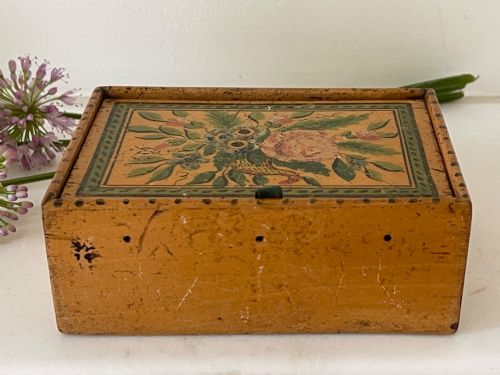


Painted Wooden Trinket Box
These painted wooden trinket box examples combine everyday utility with decorative artistry across multiple centuries.
Painted Wooden Trinket Box
A painted wooden trinket box serves as a small vessel for keeping jewellery, keepsakes, or games equipment, appearing in forms ranging from simple pine storage pieces to elaborate lacquer caskets. When exploring painted wooden trinket box items, buyers encounter domestic and decorative containers spanning the Georgian, Regency, and Victorian eras.
The selection includes regional expressions such as Scandinavian folk art boxes, Italian lacquer cases, and British penwork pieces. These items function equally as functional storage boxes and decorative objects for tabletops.
Makers utilised various timbers including pine and oak, applying surface decoration through hand painting, penwork, and lacquer. Surviving examples demonstrate how past households stored small personal valuables.
How they were made
Wood serves as the primary structural material, with pine, oak, and other timbers joined to form rectangular, oval, or sarcophagus shapes. Artisans then applied preparatory grounds before executing painted designs, lacquer layers, or penwork ornament.
Surface finishes incorporate varnish, paint, and sometimes gilt decoration to enrich the exterior appearance. Metal components such as brass or iron appear on hinges, locks, and handles.
Listings feature items from the 18th century, Regency period, and Victorian era, constructed in wood, paint, brass, and lacquer.
What varies in quality
The refinement of the surface decoration determines much of the distinction between pieces, ranging from straightforward folk art to intricate Chinoiserie or penwork detailing. Intricate hand painting and well-preserved original paint surfaces elevate the visual interest of a box.
Structural integrity and the survival of original hardware, including brass hinges and locks, contribute to the standing of an individual piece. The complexity of the box form, such as domed caskets or graduated sets, also influences distinction.
The Painted Wooden Trinket Box Glossary
- Penwork
- A decorative technique using fine ink lines on wood to simulate more expensive inlay or engraving. This method was particularly popular during the Regency period for decorating small boxes.
- Lacquer
- A durable resin finish applied in multiple layers and often polished to a smooth gloss. It frequently appears on Asian import pieces and European Chinoiserie items.
- Tunbridge Ware
- Small wooden items decorated with intricate mosaic patterns made from tiny wood segments of various natural colours. Originating in Kent, this technique created highly detailed geometric surface designs.
- Sarcophagus box
- A container design featuring a sloping lid and flared body reminiscent of ancient monumental tombs. This form gained popularity during the Regency and Victorian eras for storage.
Painted Wooden Trinket Box: Frequently Asked Questions
What were painted wooden trinket boxes used for?
These boxes held small personal items such as jewellery, sewing accessories, and gaming counters. They sat on dressing tables or writing desks in period homes.
Their decorative finishes meant they contributed to interior ornamentation while keeping private possessions secure and organised.
How do I date a painted wooden box?
Dating relies on observing the construction methods, timber types, and stylistic motifs present on the piece. Regency items often feature penwork, while Georgian pieces frequently display Chinoiserie lacquer.
Paint analysis and the style of hinges or locks also provide clues to the period of manufacture.
Are these boxes made of solid wood?
Most examples utilise solid timbers such as pine or oak as a base for the painted or lacquered decoration. Regional pieces often employ native softwoods suitable for domestic construction.
The choice of wood depends on the geographic origin and the intended finish of the container.
How should I care for an antique painted box?
Keep painted and lacquered boxes away from direct sunlight and steady heat sources to protect the surface finish from fading or cracking. Gentle dusting with a dry, soft cloth is usually sufficient for maintenance.
Avoid using liquid cleaners or chemical polishes that might damage historic paint layers or varnish.