





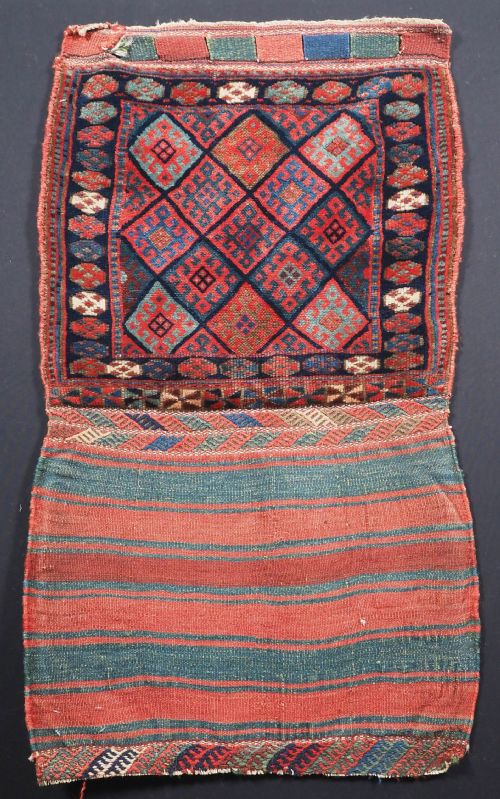


Blue Flatweave Bag
A blue flatweave bag brings tactile tribal craftsmanship into a modern interior, offering rich natural textiles woven by nomadic hands.
Blue Flatweave Bag
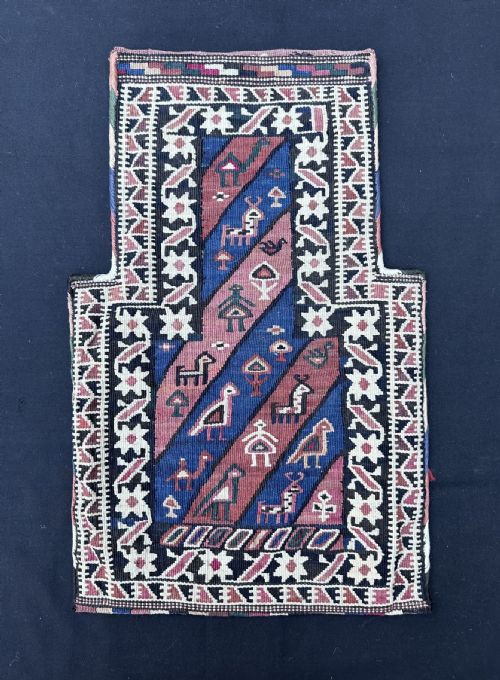
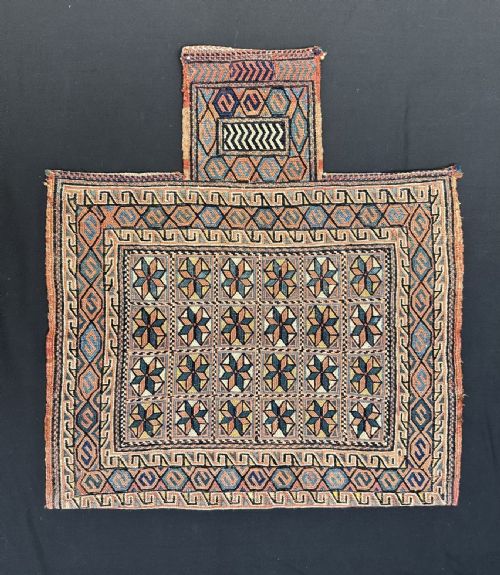
When you search for a blue flatweave bag, you encounter antique tribal textiles produced by nomadic and village weavers across Persia and the Caucasus. These utilitarian pieces include salt bags, saddlebags, grain sacks, and mafrash panels fashioned for daily nomadic life. Most examples on this page date from the late nineteenth century up to the early twentieth century, reflecting traditional weaving methods passed down through generations.
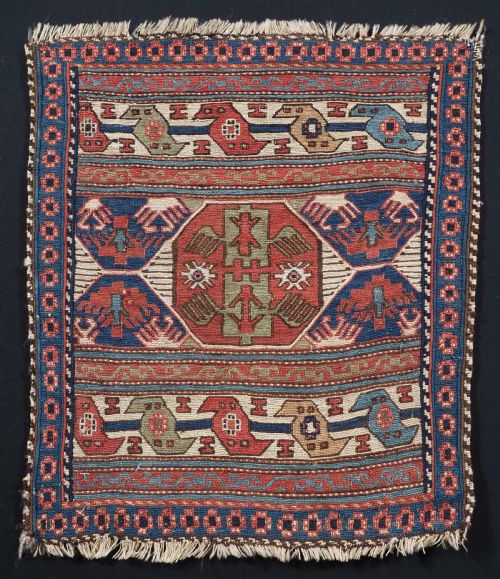
The regional variety spans Kurdish, Afshar, Lori-Bakhtiari, and Shahsavan groups, each utilising distinct construction approaches. You find complete pairs, individual bag faces, and half faces displaying characteristic tribal iconography such as birds and dragons. The predominant blue flatweave bag structure relies on flat-faced weaves like kilim or soumak rather than knotted pile.
Materials and construction
These textiles rely primarily on hand-spun wool and cotton, occasionally incorporating goat hair for structural durability. Artisans employed natural dyes and vegetable dyes to achieve deep indigo blues alongside earthy polychrome accents.
Weavers utilised warp-faced flatweave techniques, notably soumak wrapping and kilim slit-weave construction, to build rigid, durable surfaces suitable for carrying provisions or livestock loads. The resulting blue flatweave bag exhibits a sturdy texture with flat geometric or pictorial designs.
Blue Flatweave Bag Retail Price Guide 2026
Typical asking prices for blue flatweave bag among the pieces listed under this phrase on Sellingantiques today, from the lower quarter to the upper quarter. They describe what is for sale here now, not the wider market.
Nomadic weavers occasionally embedded stylized dragons and birds into storage bags, ensuring livestock salt remained well guarded.
Judging quality in tribal textiles
Quality rests upon the fineness of the hand-spinning, the crispness of the soumak or kilim execution, and the depth of the natural dye palette. Tightly packed wool yarns and well-defined motifs signal superior technical execution by the weaver.
Preservation of the original plain weave backing, structural integrity along the edges, and the presence of complete design fields elevate an individual piece. Lesser examples show extensive structural wear or fugitive dyes that diminish the visual impact of the composition.
The Blue Flatweave Bag Glossary
- Soumak
- A brocade-like flatweaving technique where coloured weft threads are wrapped over and under warp threads to create a textured, durable surface. This method allows for precise geometric patterning.
- Kilim
- A flatweave textile produced without pile, utilising interlocking weft threads to form smooth, patternless or geometric surfaces. It forms the base or backing of many nomadic containers.
- Mafrash
- A large rectangular storage bag or chest panel traditionally used by nomadic tribes for bedding and household goods. These pieces are frequently encountered as individual flatweave panels.
- Salt bag
- A small utilitarian nomadic container, often featuring a narrowed neck and hanging loop, designed to hold rock salt for livestock. They display some of the most concentrated tribal designs.
- Warp
- The stationary vertical threads stretched on a loom before weaving begins. The weft threads pass horizontally through these foundational strands.
Blue Flatweave Bag: Frequently Asked Questions
What is a blue flatweave bag used for?
Nomadic tribes originally utilised these textiles as functional containers for salt, grain, bedding, or personal possessions during seasonal migrations.
Today, collectors hang them as textile art or repurpose them as decorative decorative accents within domestic interiors.
How do I care for an antique flatweave?
Protect the wool textile from direct sunlight to prevent natural dye fading and gently vacuum using a low suction setting without a beater bar.
Professional textile conservation cleaning is recommended if deep washing becomes necessary.
Are these bags complete pairs?
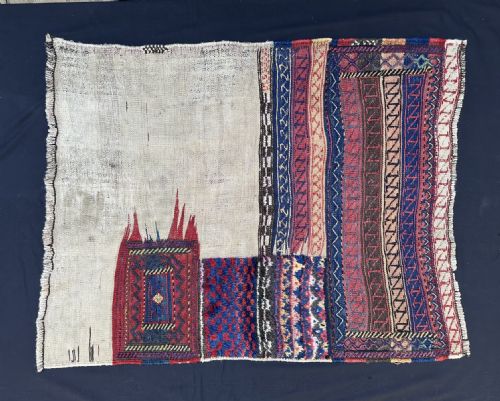
Some listings feature complete pairs or intact bags with their original plain weave backings, while others present individual bag faces or single panels.
Review individual descriptions to determine whether a backing or paired companion piece is included.
How do I identify tribal origins?
Specific wool handling, structural techniques, and characteristic geometric or animal motifs help attribute pieces to groups such as the Shahsavan, Afshar, or Kurdish tribes.
Regional colour palettes, particularly specific shades of indigo blue, also offer strong clues to geographical provenance.