






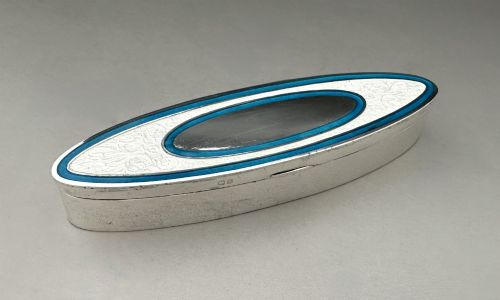
Blue Enamel Vanity Box
A blue enamel vanity box brings together coloured glass, porcelain, and sterling silver on the dressing table.
Blue Enamel Vanity Box
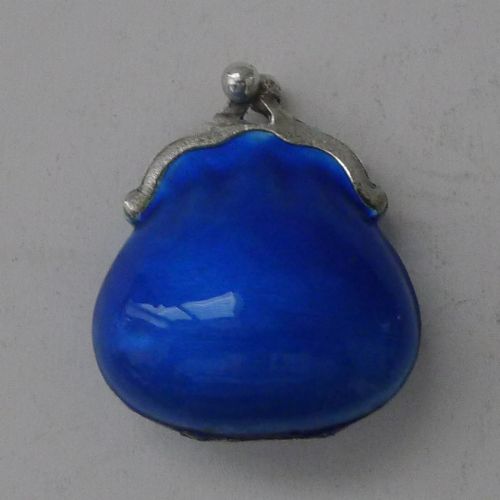
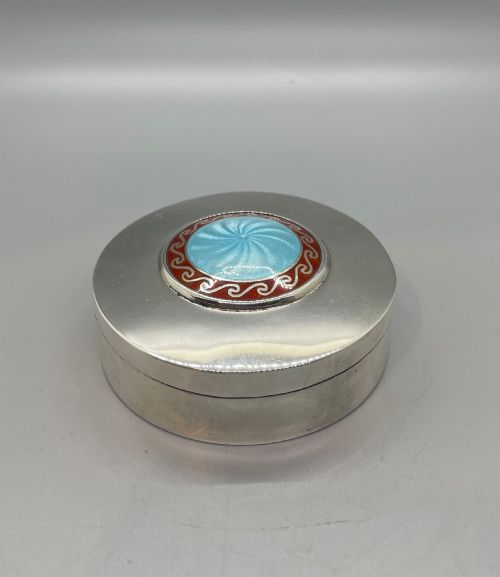
A blue enamel vanity box serves as a dressing table container for cosmetics, trinkets, or jewellery. These pieces encompass items such as powder compacts, dressing table jars, trinket boxes, patch boxes, and watch cases.
The versions most commonly met on this page span several decades and styles, including Edwardian pieces, 19th-century French examples, and geometric Art Deco designs. Materials range from sterling silver and brass to cut glass and porcelain.
Origins stretch across English workshops, French makers, and Italian silversmiths. Each form reflects the dressing table habits of its specific period, from Georgian patch boxes to mid-century Italian compacts.
How they were made
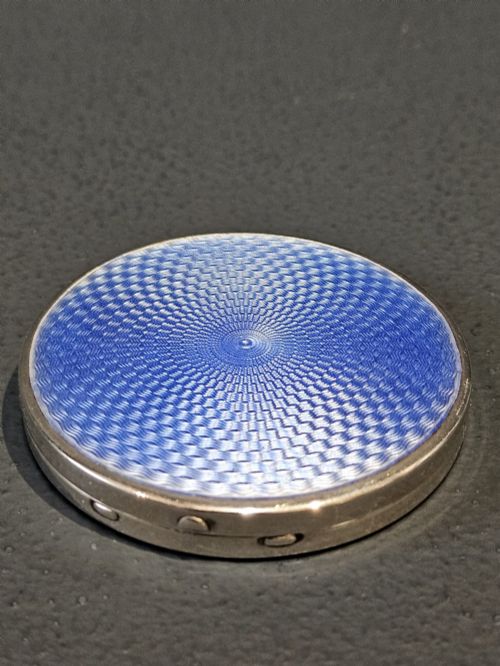
Makers combined sterling silver, copper, or brass bases with vitreous enamel, frequently employing guilloche techniques to engrave patterns beneath translucent blue coatings. Metal mounts often secure hinged lids or glass bodies.
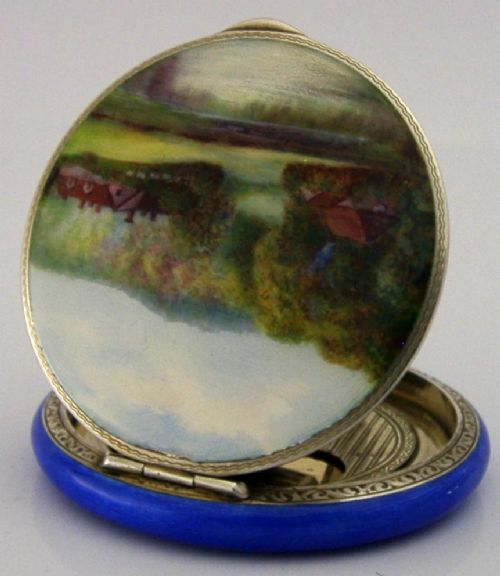
Porcelain and glass vessels utilise hand-painted details, gilt highlights, or overlay metals. Bristol blue glass and Sevres porcelain form bodies for jars and caskets, whilst compacts integrate suede linings and metal mesh.
Blue Enamel Vanity Box Retail Price Guide 2026
Typical asking prices for blue enamel vanity box among the pieces listed under this phrase on Sellingantiques today, from the lower quarter to the upper quarter. They describe what is for sale here now, not the wider market.
Materials recorded across the inventory include sterling silver, copper, brass, cut glass, porcelain, and Bristol blue glass.
What varies in quality
The finesse of the guilloche engraving beneath the translucent enamel dictates much of the visual depth. Crisp engine-turned patterns show greater skill than plain surfaces.
The preservation of the enamel surface itself defines the standard, alongside the weight and solidity of the sterling silver or brass mounts. Hand-painted details on porcelain and enamel also separate standard pieces from finer work.
Henry Clifford Davis·Henry Matthews·Evans·Giuliano Spinelli
The Blue Enamel Vanity Box Glossary
- Guilloche
- A decorative technique where a mechanical lathe engraves a precise, intricate geometric pattern into metal. This pattern shows through translucent enamel layers.
- Patch box
- A small container used in the Georgian and later periods for holding small adhesive cosmetic patches. These spots were worn on the face.
- Bilston enamel
- Enamel work produced in the Staffordshire town of Bilston during the 18th century. These often take the form of small patch or trinket boxes.
- Bristol blue glass
- A deep, cobalt-tinted glass produced in Bristol during the 18th and 19th centuries. It frequently appears in dressing table jars.
- Sevres porcelain
- Porcelain produced by the French royal manufactory, known for fine bodies and rich cobalt blue glazes with gilt detailing.
Blue Enamel Vanity Box: Frequently Asked Questions
How do I date a blue enamel vanity jar?
Dating relies on hallmarks stamped on the silver mounts, specific stylistic markers like Art Deco geometry, and materials such as cut glass or Sevres porcelain. Maker marks provide direct links to active workshop years.
Edwardian and 1930s pieces each carry distinct manufacturing traits.
Were these boxes used for powder?
Many items functioned as powder compacts, rouge pots, or dressing table jars to hold cosmetics. Others served as trinket boxes, watch cases, or jewellery caskets.
Interiors often retain remnants of use or original linings like suede.
What materials make up these boxes?
The pieces combine metals like sterling silver, copper, brass, and 800 silver with glass, cut glass, porcelain, and enamel. Some incorporate fabric linings or mesh.
French and English pieces often pair blue enamel directly with silver frames.