






Blue Enamel Powder Box
A blue enamel powder box brings a splash of cobalt or turquoise to the dressing table, combining bright metalwork with polished glass or porcelain.
Blue Enamel Powder Box
A blue enamel powder box serves as a portable container for cosmetics or a lidded jar for the dressing table. When you search for this phrase, you encounter vanity items ranging from small round pill pots to larger cut-glass jars.
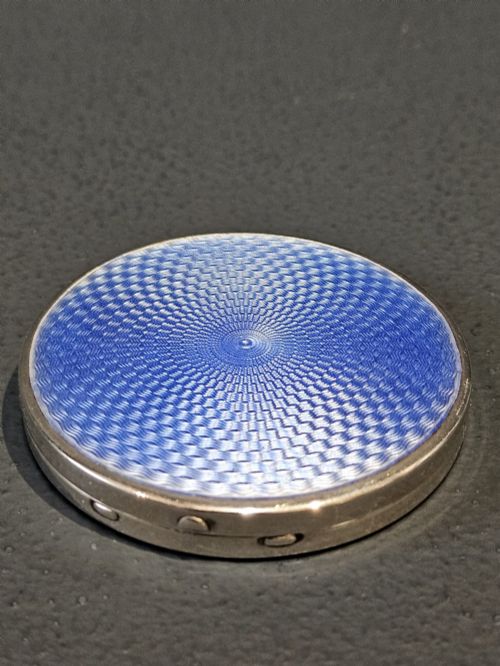
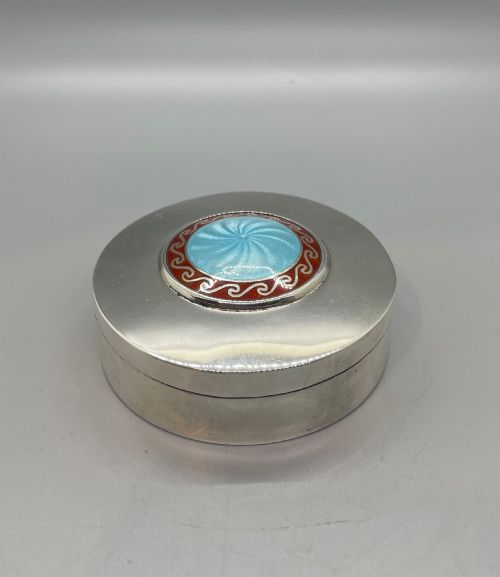
The pieces on this page span several decades, featuring Edwardian examples alongside geometric Art Deco designs. Most specimens combine silver mounts with vitreous or guilloche enamel lids in various shades of blue.
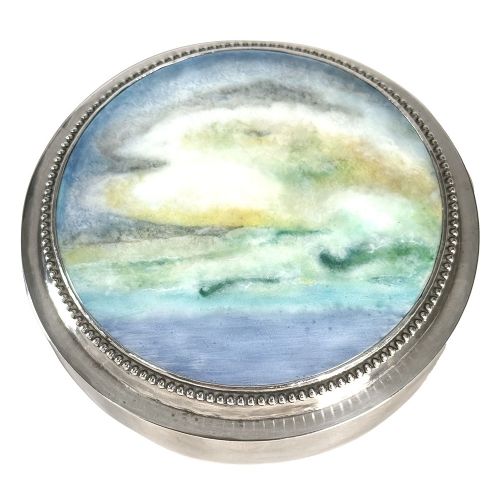
Forms include powder compacts with mesh interiors, French porcelain round boxes with gilt detailing, and heavy Bristol blue glass jars with silver lids. Each type reflects the dressing table habits of its specific period.
How they were made
Silversmiths formed the mounts and lids from sterling silver or 800 silver, often incorporating Birmingham assay marks and dates. Cut glass and crystal bodies were moulded and polished to hold loose powder or creams.
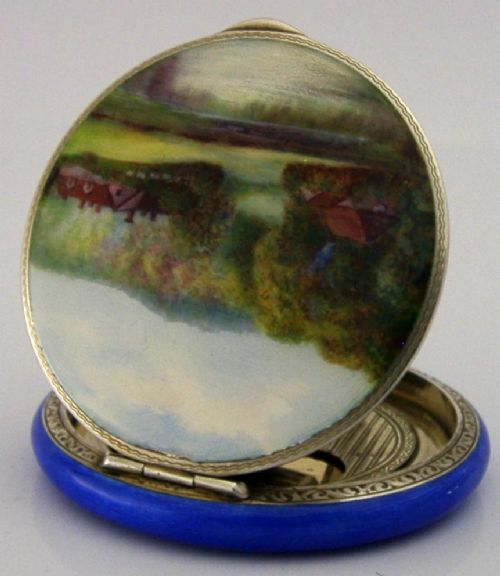
Guilloche enamel required an engine-turned metal base beneath translucent blue enamel, creating repeating geometric patterns that catch the light. Hand-painted porcelain and vitreous enamel added colour and floral motifs directly to the surface.
Blue Enamel Powder Box Retail Price Guide 2026
Typical asking prices for blue enamel powder box among the pieces listed under this phrase on Sellingantiques today, from the lower quarter to the upper quarter. They describe what is for sale here now, not the wider market.
Some survivors retain their original suede linings, preserving the faint trace of old powder from decades past.
What varies in quality
The precision of the guilloche engine-turning and the clarity of the translucent blue enamel set finer pieces apart from standard production. Crisp hallmarks on the silver mounts indicate maker status and exact assay years.
The weight and depth of the cut glass or the fineness of the hand-painted porcelain details distinguish superior objects. Intact internal elements such as suede linings or mesh inserts contribute to the completeness of a piece.
Henry Clifford Davis·Henry Matthews·Giuliano Spinelli
The Blue Enamel Powder Box Glossary
- Guilloche enamel
- A decorative technique where a mechanical pattern is engraved into metal before translucent enamel is applied over the top. This allows the underlying geometric design to show through the coloured glass layer.
- Vitreous enamel
- A material made by fusing powdered glass to a substrate by firing, usually at high temperatures. The resulting compound creates a smooth, durable, and brightly coloured surface.
- Sterling silver
- An alloy of silver containing 92.5 percent silver and 7.5 percent other metals, usually copper. It provides the structural framing for many dressing table jars and compact lids.
- Bristol blue glass
- A deep, vibrant cobalt blue glass produced in England since the eighteenth century. It was frequently used for dressing table jars and decorative glassware.
Blue Enamel Powder Box: Frequently Asked Questions
How do I date a silver enamel box?
Assay office hallmarks stamped on the sterling silver mounts provide the exact year of manufacture and the city where the piece was tested.
Stylistic indicators such as Edwardian floral motifs or geometric Art Deco lines also help place the box within its correct decade.
What is the difference between a compact and a powder jar?
A compact is typically a portable metal case designed to fit in a handbag, often featuring an internal mirror and powder sifter.
A powder jar is a larger container made of glass, porcelain, or metal meant to stay stationary on a dressing table.
How should I clean blue enamel?
Enamel surfaces require gentle cleaning with a soft, damp cloth and mild soap to avoid scratching the glass coating.
Harsh metal polishes must be kept away from the enamel panels, though the sterling silver mounts can be polished with care.
What is guilloche enamel?
Guilloche is a decorative technique involving a machine that etches precise geometric patterns into a metal disc.
Translucent blue enamel is then fired over the engraved metal so the pattern shines through the colour.