





Blue Enamel Medallion
A blue enamel medallion combines vitreous colour with precious metal, offering wearable history that catches the light.
Blue Enamel Medallion
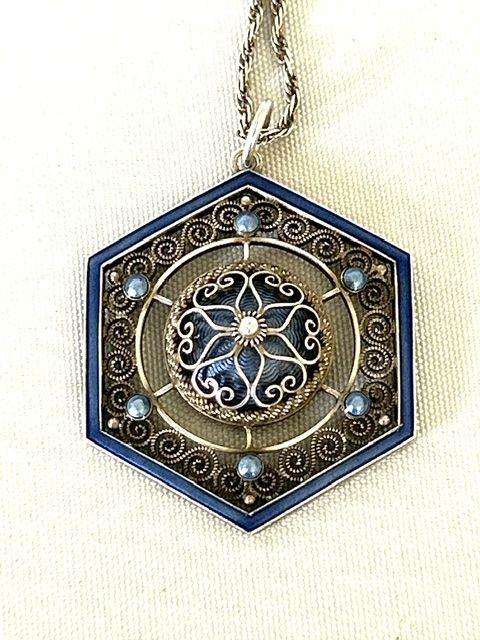
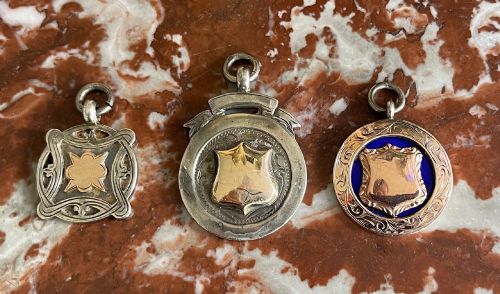
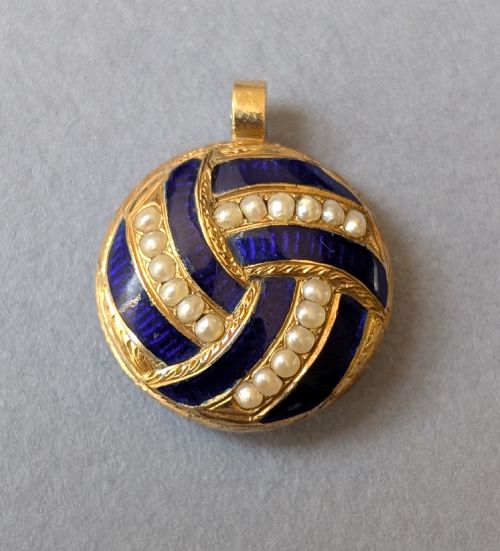
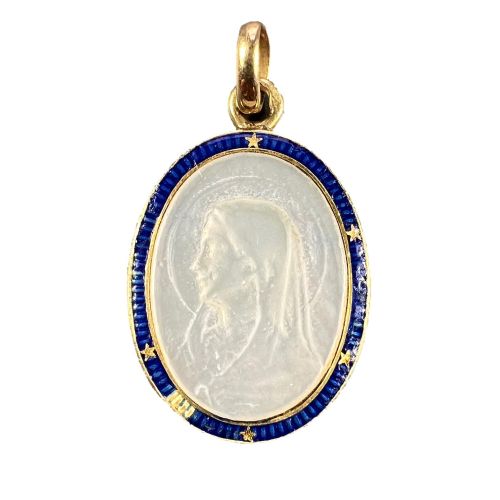
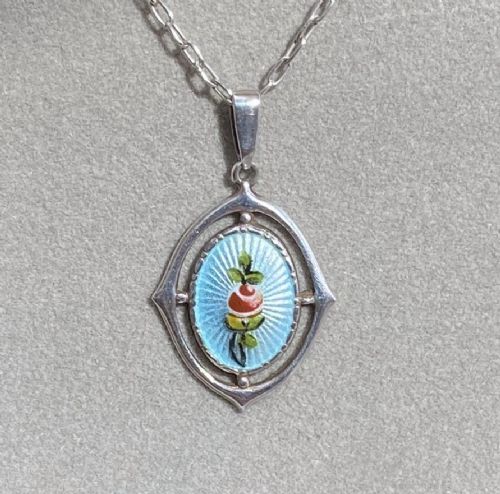
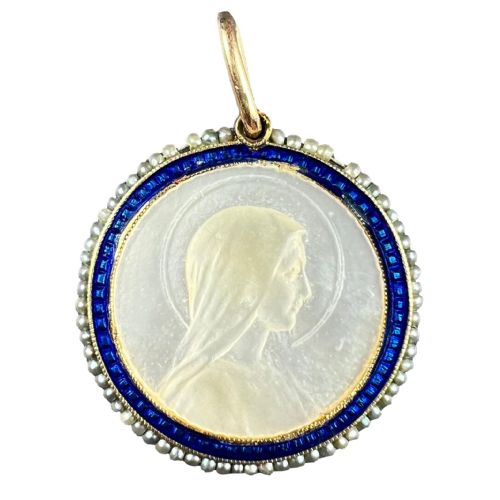
A blue enamel medallion represents a diverse group of small, decorative items fashioned from silver or gold. When searching for a blue enamel medallion, a buyer most frequently encounters pendants, watch fobs, and charms originating from the Victorian era up through the 1930s. These pieces often feature religious motifs, civic coats of arms, or geometric guilloche patterns.
The selection ranges from early nineteenth-century jewellery to twentieth-century French and British decorative pieces. While pendants dominate the current offerings, the category also accommodates occasional items such as watch fobs and small silver medals. Each piece demonstrates the enduring appeal of vitreous enamelling applied to precious metals.
Materials and Techniques
These pieces rely on the combination of vitreous enamel applied to bases of 18K gold, 15ct gold, or sterling silver. Artisans utilised specialised techniques such as guilloche, where engine-turned metal beneath translucent enamel creates patterned light effects, and plique-a-jour, which produces a stained-glass appearance without a backing.
In addition to worked metal and glass-based enamel, makers incorporated mother-of-pearl, pearls, and diamonds into the designs. The framing metals were cast, engraved, or hallmarked to denote the metal purity, particularly visible in British silver fobs and gold lockets.
Blue Enamel Medallion Retail Price Guide 2026
Typical asking prices for blue enamel medallion among the pieces listed under this phrase on Sellingantiques today, from the lower quarter to the upper quarter. They describe what is for sale here now, not the wider market.
French city coats of arms immortalised in gold and enamel show that civic pride once swung gracefully from a neckchain.
Judging Quality and Execution
Quality in these items rests on the precision of the enamelling technique and the fineness of the metalwork. Superior examples display even, bubbler-free enamel surfaces that sit flush within their bezels, whether utilising translucent guilloche or light-admitting plique-a-jour.
The refinement of the surrounding gold or silver mount also dictates the tier of the piece. Hand-engraved details, well-preserved maker marks, and secure integration of subsidiary stones such as pearls or diamonds distinguish finer workshop output from standard production.
Marius Hammer·Charles Horner
The Blue Enamel Medallion Glossary
- Guilloche
- An ornamental technique in which a precise, intricate geometric pattern is mechanically engraved into an underlying metal surface. Translucent enamel layered over this engraving allows light to reflect through the coloured glass.
- Plique-a-jour
- An enamelling technique where the enamel is applied within a cellular framework without a backing metal, allowing light to shine directly through the transparent or translucent vitreous material much like stained glass.
- Vitreous enamel
- A material made by fusing powdered glass to a substrate by firing, usually between seven hundred and nine hundred degrees Celsius. The powder melts, flows, and hardens to a smooth, durable glass coating.
- Watch fob
- A short strap, ribbon, or chain attached to a pocket watch, often ending in a decorative medallion or seal. These were frequently made of silver or gold and served both decorative and practical purposes.
Blue Enamel Medallion: Frequently Asked Questions
What is a blue enamel medallion?
A blue enamel medallion is a small decorative or wearable item, typically a pendant, charm, or fob, made from gold or silver and decorated with fused glass enamel in shades of blue.
These pieces span various periods from the Victorian era into the twentieth century, often incorporating techniques like guilloche or plique-a-jour.
How do I date these pieces?
Dating relies on hallmarks, metal purity standards, and stylistic markers associated with specific periods like the Victorian era or the 1920s and 1930s.
Makers' marks and specific enamelling styles, such as French plique-a-jour or Arts and Crafts silverwork, also provide clear chronological indicators.
How were these medallions worn?
Pendants and charms were typically suspended from necklaces or chains around the neck, serving as personal ornaments or devotional items.
Watch fobs were attached to pocket watches and carried in waistcoat pockets, functioning as decorative pendants for gentlemen's timepieces.
Are these items made of solid gold?
The evidence shows items fashioned from 18K yellow gold and 15ct gold, alongside sterling silver components.
Precious metal content is typically verified through hallmarks or stamps on the reverse or loop of the pendant.