




Mother of Pearl Charm
A mother of pearl charm brings luminous iridescence and delicate religious carving to a collection, offering miniature artistry in gold and shell.
Understanding the mother of pearl charm
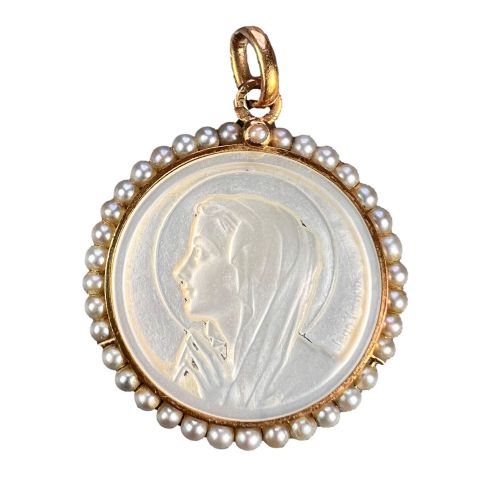
A mother of pearl charm represents a distinct category of small decorative objects, primarily featuring carved shell set within precious metal frames. When searching for a mother of pearl charm, buyers encounter pieces that double as pendants, often combining religious iconography with tactile organic materials. The selection spans early twentieth-century French examples featuring figures like the Virgin Mary or Rafael's cherub alongside geometric wirework designs.
The recorded pieces demonstrate a strong French provenance, particularly from the nineteen-ten and nineteen-thirty periods. These items combine the natural lustre of nacre with eighteen-karat yellow or white gold. While archive records show larger Victorian silver accessories such as knives and notebooks, current offerings concentrate firmly on wearable pendant charms.
The form relies on the contrast between polished shell and precious metal mounts. Artisans utilised twisted wire frames and seed pearl accents to enhance the visual appeal of the central mother-of-pearl plaque. These wearable items capture a specific aesthetic of early twentieth-century devotional and decorative jewellery.
Materials and construction
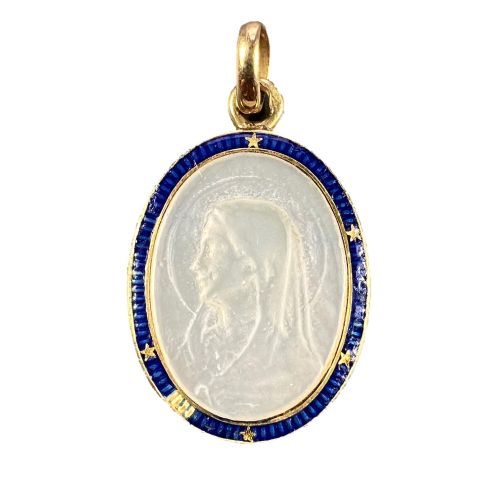
The construction of these pieces relies on thin plaques of mother-of-pearl shaped into ovals and mounted in eighteen-karat gold frames. Artisans carved religious subjects directly into the surface of the iridescent shell, creating low-relief portraits of saints and cherubs. Delicate twisted wire work often frames the central nacre plaque, securing the organic material within the metal setting.
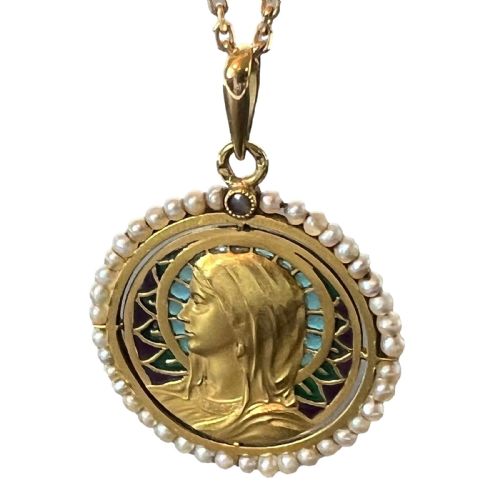
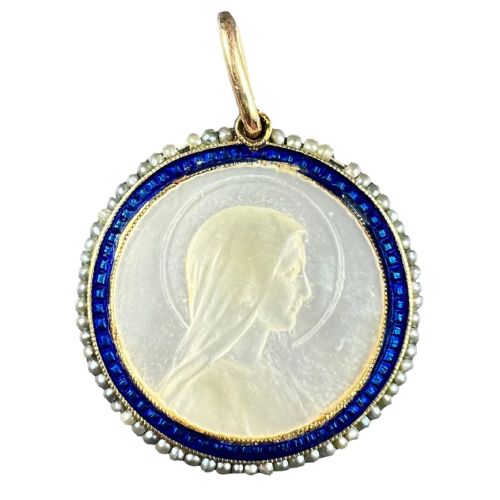
Selected examples incorporate additional materials such as vitreous enamel and seed pearls to accent the primary design. The integration of eighteen-karat yellow and white gold provides a durable housing for the fragile shell. This combination of soft organic nacre and dense precious metal requires precise hand-assembly by skilled jewellers.
Retail Price Guide 2026
Typical UK retail prices for mother of pearl charm, calculated from the Sellingantiques database of over a million retail prices indexed since 2003. This retail price guide relies exclusively on Sellingantiques data; no external sources or auction records are used, so the figures do not describe the wider market.
Even celestial cherubs need good metalwork to stay grounded on a nineteenth-century notebook.
Assessing quality and execution
The refinement of the mounting also dictates the grade of the piece, distinguishing standard production from finer goldsmithing. Better examples feature tight twisted wire borders, evenly set seed pearls, and clean enamel work without chipping. The weight and purity of the eighteen-karat gold frame further separate basic souvenirs from high-grade miniature works of art.
The Mother of Pearl Charm Glossary
- Mother-of-Pearl
- The iridescent inner layer of mollusc shell used for carving miniature reliefs and plaques. It displays a shifting play of pearlescent colours when rotated in the light.
- Seed Pearl
- Tiny, naturally occurring or cultured pearls often used to embellish the borders of jewellery. They add a delicate, shimmering texture around central gemstones or carved panels.
- Art Deco
- A design style prominent in the nineteen-thirties characterised by geometric precision and sleek lines. In these charms, it appears in structured frames and minimalist mounts.
- Pendant
- An ornamental piece suspended from a chain or cord around the neck. These items function as wearable charms designed to hang from standard neck chains.
- Enamel
- Vitreous material fused to metal through high-temperature firing to add permanent colour. It provides vibrant decorative accents on the gold frames of devotional charms.
Frequently Asked Questions
How old are these charms?
The available pieces primarily date from the early twentieth century, specifically around nineteen-ten and nineteen-thirty. French makers produced many of these devotional and decorative items during this era.
Archive records also demonstrate nineteenth-century utility items made from similar materials, but wearable charms concentrate in the Edwardian and Art Deco periods.
What materials are used?
These items combine mother-of-pearl shell with eighteen-karat yellow or white gold mountings. Selected pieces incorporate seed pearls and enamel details to enhance the visual design.
The natural nacre provides an iridescent background for hand-carved religious figures and cherubs, secured within structured wire frames.
How do I care for my charm?
Mother-of-pearl is a relatively soft organic material that requires gentle handling to preserve its surface. Avoid harsh chemical cleaners, ultrasonic baths, and prolonged exposure to water or cosmetics.
Store the pendant separately from harder gemstones to prevent scratching the delicate nacre surface and any accompanying seed pearls.
Are these pieces French?
A significant portion of the recorded inventory originates from France, reflecting traditional European craftsmanship of the period. These items often feature finely detailed religious iconography associated with French workshops.
The combination of delicate shell carving and eighteen-karat gold settings points to established Continental jewellery traditions from the early twentieth century.