



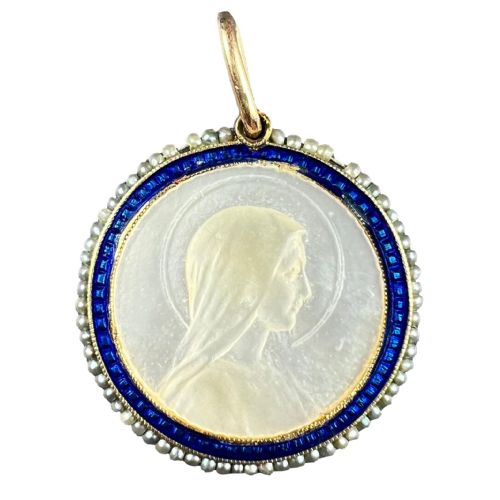
Blue Enamel Gold Charm
A blue enamel gold charm is a miniature work of wearable art, combining rich coloured glass with precious metal.
Blue Enamel Gold Charm
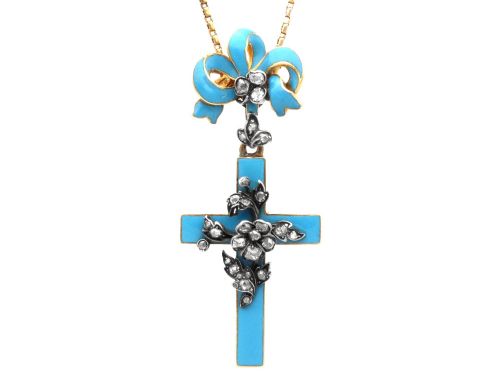
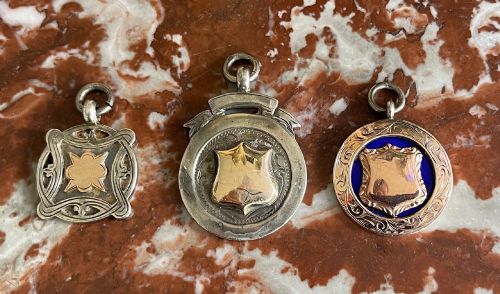
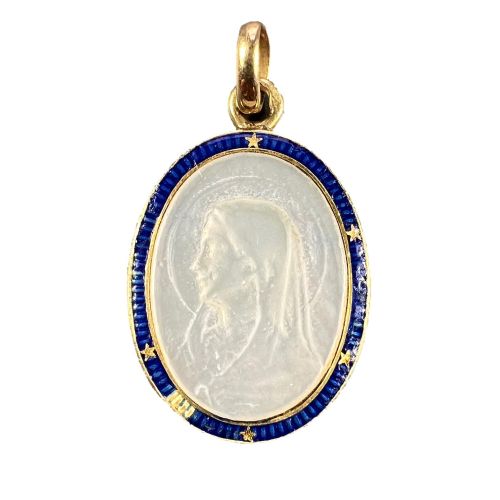
When you search for a blue enamel gold charm, you enter a field of pendant jewellery spanning the late nineteenth and early twentieth centuries, including Victorian, Edwardian, and Art Nouveau periods. These pieces take forms such as puffy hearts, religious medals, folding windows, novelty watch keys, and military insignia.
You are most likely to encounter French and English examples fashioned from yellow gold, carrying delicate vitreous or plique-a-jour enamel work. Many incorporate religious iconography, floral motifs, or heraldic coats of arms designed to be worn on a chain or fob.
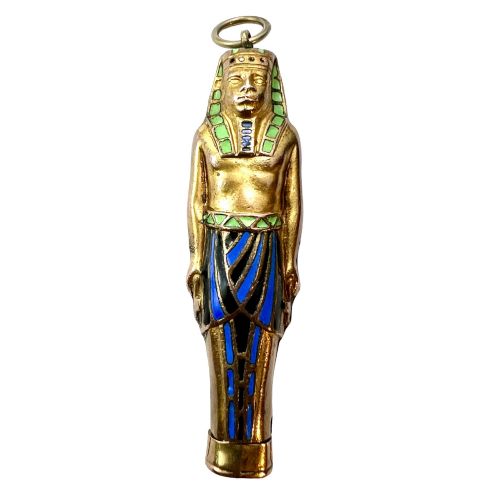
The objects serve as intimate personal mementos and decorative pendants, often doubling as lockets or mechanical curiosities like propelling pencils. Their enduring appeal lies in the miniature scale and the vibrant contrast between deep blue enamel and warm gold.
How they were made
Goldsmiths utilised various carats of yellow gold, ranging from nine and fifteen carat to eighteen carat, shaping the metal to form the body and settings of each pendant. Enamel was applied in techniques such as guilloche, where engine-turned patterns show through translucent colour, and plique-a-jour, which resembles miniature stained glass without a backing.
Jewellers embellished these gold and enamel frameworks with rose cut diamonds, seed pearls, and mother of pearl to add texture and luminance. Hand engraving and intricate soldered fittings completed the construction of charms intended to house secrets or display miniature paintings.
Blue Enamel Gold Charm Retail Price Guide 2026
Typical asking prices for blue enamel gold charm among the pieces listed under this phrase on Sellingantiques today, from the lower quarter to the upper quarter. They describe what is for sale here now, not the wider market.
Listings feature items dated from the late Victorian era through the nineteen-thirties, predominantly constructed in eighteen carat yellow gold.
What varies in quality
The refinement of the enamel work dictates much of the distinction between pieces, with smooth, evenly fired surfaces and crisp guilloche patterns marking out superior examples. Plique-a-jour requires exceptional skill to suspend translucent enamel within delicate gold wire cells without fracturing.
The precision of the gold framing and the quality of secondary stones, such as well-matched rose cut diamonds and lustrous seed pearls, elevate a piece. Maker execution in small details, from hand-engraved borders to the tight closure of a locket, separates standard production from finer work.
The Blue Enamel Gold Charm Glossary
- Guilloche enamel
- Enamel applied over metal that has been機械 engraved with a repetitive geometric pattern. This technique creates a shimmering, patterned depth beneath the translucent coloured glass.
- Plique-a-jour
- An enamelling technique where the enamel is applied in cells with no backing, allowing light to shine through the transparent material like stained glass. It is technically demanding and fragile to produce.
- Rose cut diamond
- An antique diamond cut featuring a flat base and a domed crown of triangular facets arranged in a star shape. It produces a soft, subtle gleam rather than modern brilliant sparkle.
- Watch key
- A small mechanical tool used to wind pocket watches, often fashioned into decorative pendants with gemstones and enamel. Collectors prize them for their intricate small-scale metalwork.
- Vitreous enamel
- A material made by fusing powdered glass to a substrate by firing, resulting in a durable and glossy coloured coating. It forms the vibrant blue surfaces seen on antique charms.
Blue Enamel Gold Charm: Frequently Asked Questions
How do I wear a antique charm?
These pieces function primarily as pendants for neckchains or as components for charm bracelets and watch fobs. Their small scale suits daily wear when paired with a secure chain of appropriate weight.
Care should be taken to protect the enamel from sharp impacts and harsh chemicals, as glass coatings can chip or scratch over time.
What is guilloche enamel?
Guilloche is a decorative technique where a metal surface is engraved with intricate geometric patterns using a lathe before translucent enamel is applied over the top. The underlying pattern shows through the coloured glass, creating a shimmering effect.
This method was widely utilised during the Victorian and Edwardian periods for pendants, lockets, and watch accessories.
How can I date my pendant?
Dating relies on stylistic clues such as the flowing organic lines characteristic of Art Nouveau, or the heavy sentimentality typical of Victorian pieces. Materials, hallmarks, and specific motifs like Egyptian Revival symbols also provide clear chronological markers.
Comparing construction techniques with known pieces from the late nineteenth and early twentieth centuries helps narrow the decade of manufacture.