

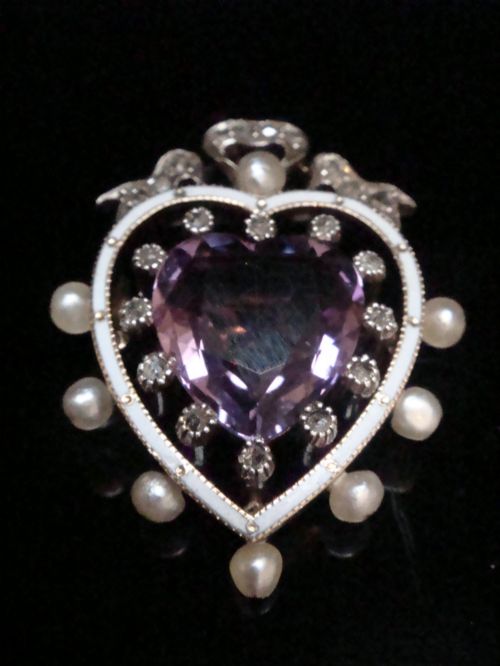


18ct Gold Heart Pendant
An 18ct gold heart pendant offers a tangible piece of sentiment, combining substantial precious metal with enduring romantic form.
18ct Gold Heart Pendant
An 18ct gold heart pendant stands as a enduring token of affection, taking the form of lockets, charms, and devotional medals produced across the nineteenth and twentieth centuries. These pieces encompass Victorian, Edwardian, Belle Epoque, and Art Deco designs, reflecting shifting aesthetic preferences through distinct periods of craftsmanship.
The versions most frequently encountered on this page date from the late nineteenth century through to the nineteen-thirties, spanning Victorian, Edwardian, and Art Deco eras. They appear in both yellow and white gold settings, sometimes housing glass, paste, or natural gemstones.
Makers fashioned these pendants as both solid charms and functional lockets designed to hold miniature portraits or locks of hair. Certain examples draw inspiration from ecclesiastical traditions, depicting sacred motifs alongside traditional romantic symbols.
How they were made
Goldsmiths utilised 18ct gold, sometimes paired with platinum in later Art Deco works, to construct the foundational frames and delicate chains of these pendants. This high-carat metal provided a rich warmth for yellow gold iterations and a secure housing for white metal settings.
Craftsmen integrated gemstones including diamonds, sapphires, rubies, emeralds, turquoise, and moonstones using flush, bezel, or pavé settings. Enamel work, particularly guilloche, added intricate surface patterns beneath translucent coloured layers.
Detailed hand-engraving frequently embellished the reverse or borders of these pieces, alongside applied pearls and paste stones to enhance visual depth.
18ct Gold Heart Pendant Retail Price Guide 2026
Typical asking prices for 18ct gold heart pendant among the pieces listed under this phrase on Sellingantiques today, from the lower quarter to the upper quarter. They describe what is for sale here now, not the wider market.
Some French medals depict the Sacred Heart with tiny floral chased details, proving that even devotional jewellery enjoyed a touch of romance.
What varies in quality
The sophistication of the lapidary work and the selection of materials set superior examples apart from standard productions. Pieces featuring natural diamonds, matched sapphires, or intricate enamel display a higher grade of workshop execution.
Structural integrity and the preservation of delicate surface details, such as engine-turned guilloche enamel or finely chased gold foliage, dictate the overall standard of survival. Original hinges and glass compartments within lockets also influence the desirability of a piece.
Perriat
The 18ct Gold Heart Pendant Glossary
- Guilloche enamel
- Enamel applied over a metal surface that has been machine-turned with an intricate geometric pattern. This technique creates a shimmering, translucent depth beneath the coloured glaze.
- Puff heart
- A three-dimensional, hollow heart-shaped pendant constructed from two domed sheets of gold joined at a seam. These items often double as lockets.
- Old cut diamond
- A precursor to the modern brilliant cut, typically characterised by a smaller table, higher crown, and open culet. These stones were hand-faceted during the nineteenth and early twentieth centuries.
- Paste
- Hand-cut and polished lead glass used to imitate gemstones. In antique jewellery, fine paste work demonstrates considerable skill.
- Witches heart
- A heart pendant with a twisted tail pointing to one side, traditionally given as a betrothal token in historical periods. The design originates from Scottish charm tokens.
18ct Gold Heart Pendant: Frequently Asked Questions
What is an 18ct gold heart pendant?
An 18ct gold heart pendant is a precious metal ornament shaped as a heart, designed to be worn on a necklace or added to a charm bracelet.
These pieces often function as lockets or decorative tokens, incorporating gemstones and enamel work from various historical periods.
How do I date my pendant?
Dating relies on stylistic clues, gemstone cuts, and manufacturing techniques characteristic of periods such as the Victorian or Edwardian eras.
Examining hallmarks, engraving styles, and the method of stone setting provides a reliable timeframe for the item's creation.
Can I put photos inside my locket?
Many heart pendants from the Victorian and Edwardian periods were specifically manufactured as functional lockets for miniature photographs or hair.
Interior frames and original glass covers often remain intact, though care is required when inserting modern paper photographs.
How do I care for enamel jewellery?
Enamel requires gentle handling because the glass surface can chip or scratch if subjected to hard impacts or harsh cleaning agents.
Store these pendants individually away from harder gemstones and clean them only with a soft, dry cloth.