

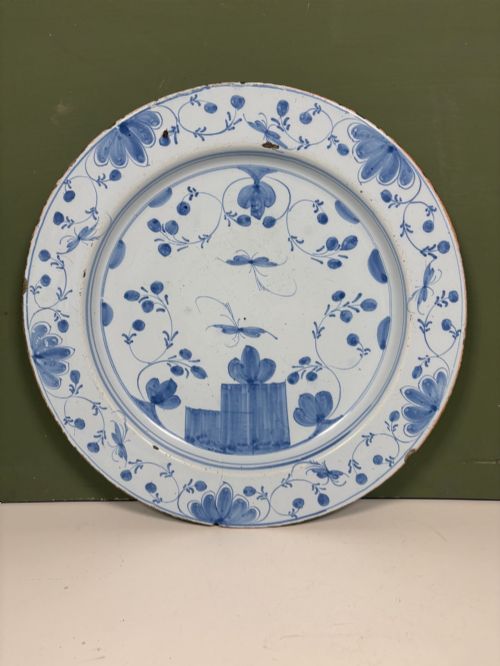


Blue Earthenware Serving Platter
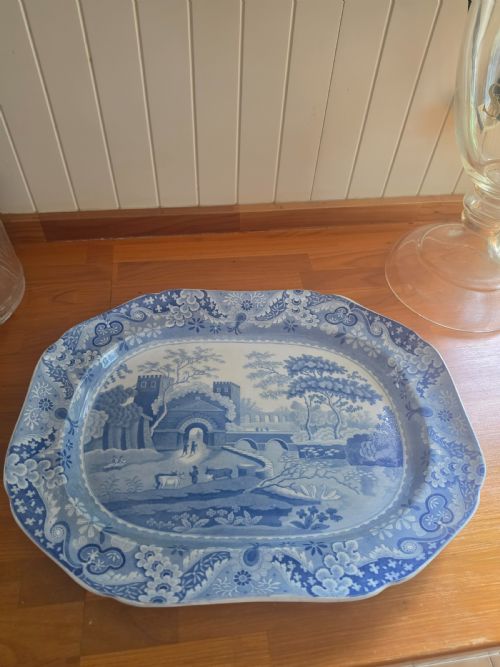
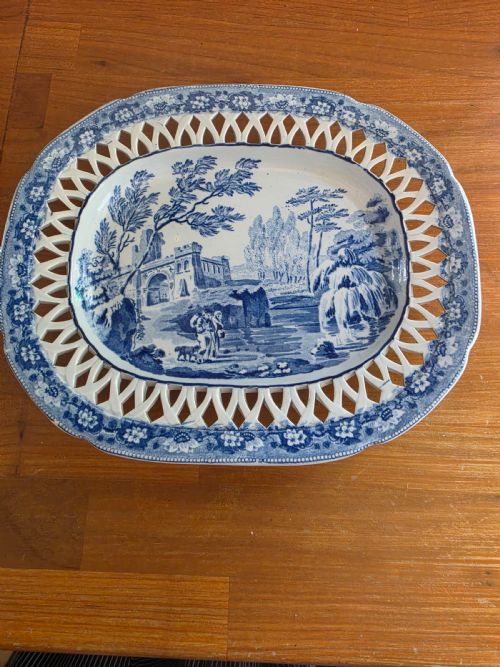
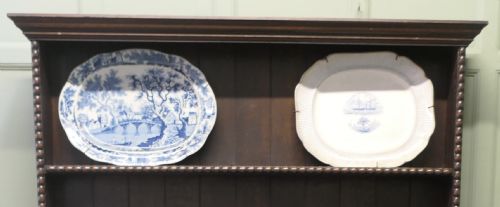
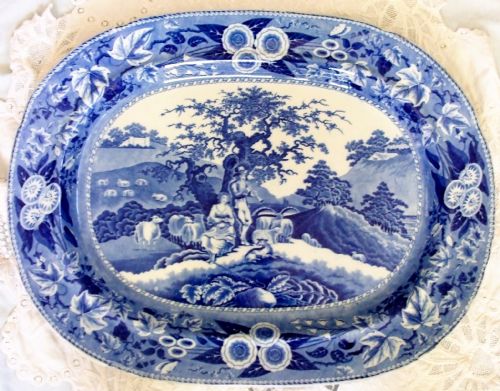
A blue earthenware serving platter brings narrative depth to a dining table through transfer-printed pastoral scenes and historic architectural views.
Blue Earthenware Serving Platter
A blue earthenware serving platter is a large ceramic vessel designed for presenting meat or courses at the table, frequently appearing in Georgian and Victorian contexts. These objects span periods from the eighteenth century through to the late nineteenth century, encompassing deep chargers and expansive meat dishes.
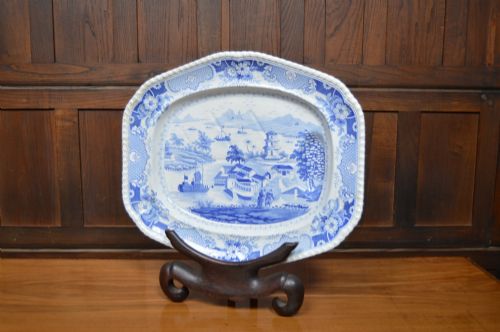
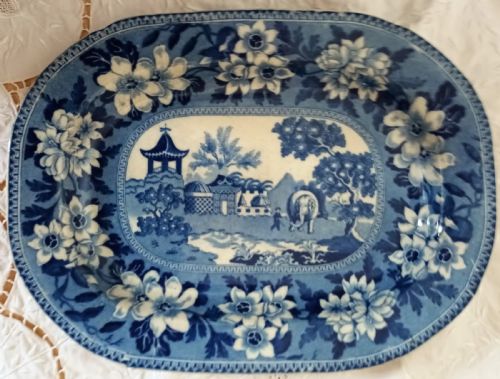
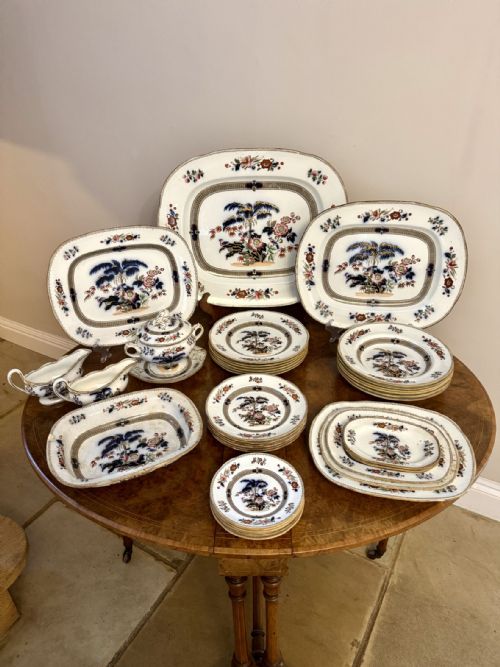
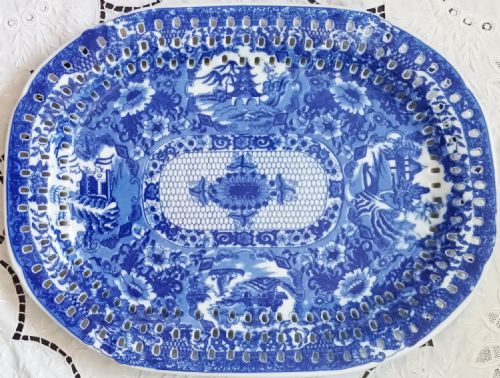
The pieces on this page are predominantly British earthenware, produced by Staffordshire potteries and historic factories using earthenware bodies finished with cobalt pigment and glaze. Buyers frequently encounter transfer-printed designs depicting pastoral views, marine battles, oriental landscapes, and classical ruins.
Materials and Techniques
Potters shaped these pieces from earthenware and pearlware, applying a transparent glaze over the porous clay body to seal the surface. The deep blue coloration relies on cobalt pigment applied beneath the glaze before final firing in the kiln.
Makers utilised transfer printing to apply intricate pictorial scenes onto the ceramic surface, transferring the design from an engraved copper plate via tissue paper onto the biscuit pottery.
Some platters feature hidden wells and drainage channels specifically engineered to intercept runaway Sunday roast juices before they ruin the tablecloth.
Judging Quality
Quality rests upon the clarity of the transfer print and the depth of the cobalt pigment, where crisp lines distinguish superior plates from blurred impressions. The crispness of pierced rims and the proportion of large meat platters also separate standard items from ambitious factory productions.
Spode·Davenport·John Rogers and Son·Wedgwood·Thomas Lakin·Don Pottery·Minton·Copeland and Garrett
The Blue Earthenware Serving Platter Glossary
- Pearlware
- A refined earthenware body developed in the late eighteenth century featuring a subtle bluish glaze that enhances the whiteness of the ceramic.
- Transferware
- Pottery decorated by transferring a monochrome engraved design from a copper plate onto the ceramic body using tissue paper.
- Charger
- A large decorative plate or platter utilised historically for display or grand serving purposes rather than individual dining.
- Well and tree
- A platter featuring an internal channel and central well designed to collect meat juices during carving.
Blue Earthenware Serving Platter: Frequently Asked Questions
How were serving platters used historically?
These large vessels sat at the centre of dining tables for presenting joints of meat, poultry, or large courses to assembled guests. Platters featuring integrated wells and channels served specifically to collect juices during carving at the table.
Beyond dining rooms, large chargers frequently hung on walls or stood on sideboards as decorative displays. Their substantial size made them practical for communal feasting before individual plating became standard practice.
How do I care for an antique earthenware platter?
Wash the ceramic gently by hand using warm water and mild soap, avoiding modern dishwashers that can damage historic glazes and pigments. Earthenware is porous, so prolonged soaking should be avoided to protect the underlying clay body.
Display the platter securely on a sturdy stand or hang it using a padded wall bracket designed for heavy ceramics. Keep the piece away from direct sunlight and sudden temperature shifts to preserve the glaze integrity.
How do I tell Georgian platters from Victorian ones?
Georgian examples often exhibit pearlware bodies with a characteristic bluish pooling in the glaze and hand-engraved transfer scenes of pastoral or topographical subjects. The patterns from this era frequently focus on classical ruins, chinoiserie, and romanticized landscapes.
Victorian platters tend to utilise denser earthenware bodies and feature more heavily populated scenes, registry marks, or industrial series titles. The borders on Victorian pieces often incorporate elaborate Victorian scrolls and floral motifs distinct from earlier Georgian framing.
What is transfer printing on ceramics?
Transfer printing is a decoration technique where an engraved copper plate is inked with cobalt pigment and pressed onto tissue paper. Workers then apply this printed paper directly onto the unfired or biscuit ceramic surface to transfer the pattern.
This method allowed potteries to produce intricate, consistent designs rapidly compared to hand-painting every individual piece. The transferred design was subsequently glazed and fired to seal the cobalt pigment permanently into the surface.