




Blue Dress Watercolour Painting
A blue dress watercolour painting captures a delicate garment and a sitter in fluid pigments, offering a tangible link to past centuries.
Blue Dress Watercolour Painting
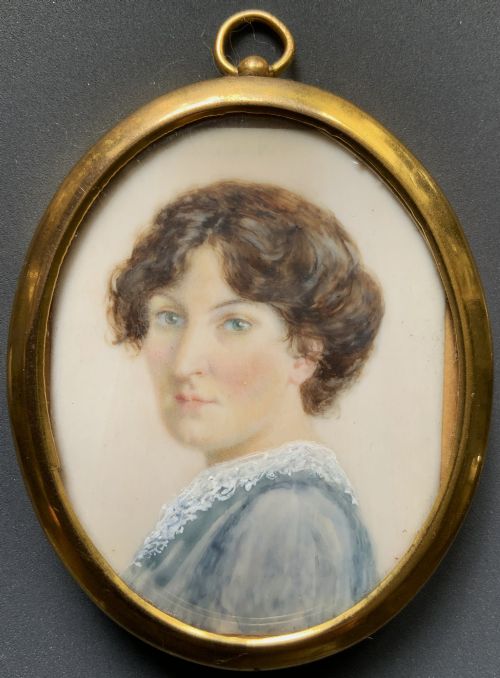
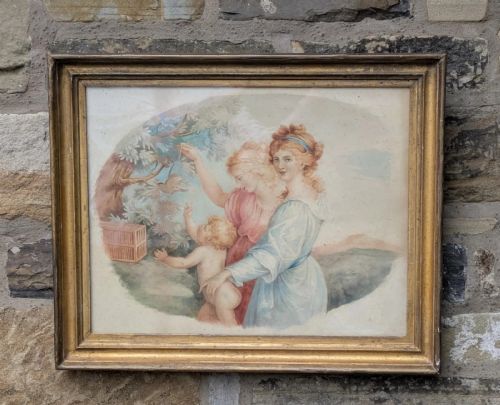
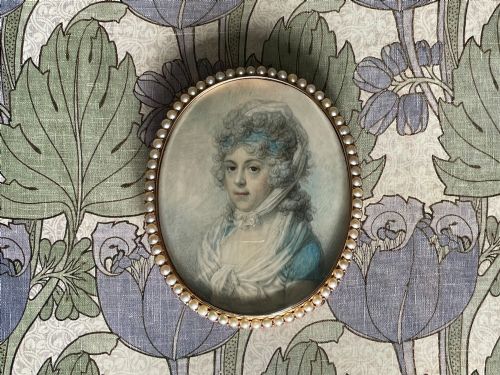
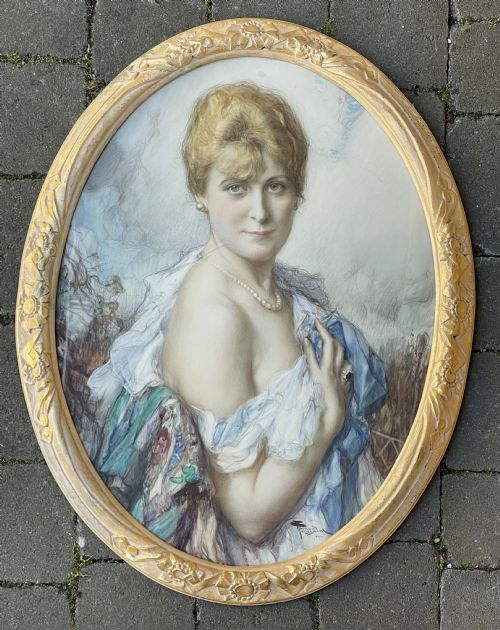
When you search for a blue dress watercolour painting, you encounter works executed on paper spanning the eighteenth, nineteenth, and early twentieth centuries. These pieces predominantly take the form of portrait miniatures and framed paintings depicting women and children adorned in distinctive blue garments or sashes.
The selections on this page range from Georgian and Regency portrait miniatures to Victorian and Edwardian framed watercolours. Portrait miniatures dominate the offerings, often presenting intimate depictions framed in giltwood, gilt metal, or maple.
Works from the 18th century sit alongside Regency and Edwardian examples, demonstrating how artists utilised the medium to record costume and character. You find both small-scale portraiture and broader genre scenes executed with watercolour on paper.
Materials and technique
Framing materials play an essential role in the construction and preservation of these pieces, incorporating glass, giltwood, gilt metal, and polished maple frames. Ebonised frames also appear, providing a dark contrast that highlights the delicate pigments within.
Listings feature works created across multiple eras, stretching from 1750 through the 19th century and into the Edwardian period.
What separates the fine examples
Quality rests heavily on the precision of the brushwork and the expressive capacity of the artist in capturing the sitter's likeness and costume. Superior pieces demonstrate a confident handling of watercolour on paper, rendering the textures of fabrics like silk or cotton with distinct clarity.
The integrity of the original framing, whether giltwood, gilt metal, or maple, contributes significantly to the overall standing of the piece. Works that retain their period glass and housing offer a more complete historical record.
Richard Cosway·L Sommer·Helena Maguire·William Egley·Susie Lassam·Fernand Toussaint·Linnie Watt·Robert Kemp·Charles Edward Wilson·Frederick Tayler·Fred Morgan·Elisabeth Vigee Le Brun·William Lee Hankey·Alexander Melville
The Blue Dress Watercolour Painting Glossary
- Watercolour
- A paint consisting of a pigment suspended in a water-soluble vehicle. It is applied to paper to create translucent layers of colour.
- Portrait Miniature
- A small, highly detailed painting, usually executed on paper, vellum, or ivory. These intimate works often depicted family members or prominent individuals.
- Giltwood
- Wood that has been treated with a thin layer of gold leaf or gilt powder. It provides a reflective, decorative border for antique paintings and mirrors.
- Regency
- An English period dating roughly from 1811 to 1820, or slightly broader, known for distinct neoclassical aesthetics in art and dress.
- Ebonised
- Wood finished to resemble ebony through staining or painting. This dark treatment was common on nineteenth-century frames.
Blue Dress Watercolour Painting: Frequently Asked Questions
What periods do these paintings cover?
The works span from the eighteenth century through the Regency and Victorian eras into the Edwardian period. This broad chronological range captures shifting styles in portraiture and costume.
Pieces reflect the aesthetic shifts from Georgian formality through Regency elegance to late Victorian and Edwardian genre painting.
How were portrait miniatures displayed?
Portrait miniatures were frequently housed in protective enclosures featuring glass and durable frames made of gilt metal, maple, or ebonised wood. These housings protected the delicate paper supports from dust and handling.
Many were designed to be hung on walls or kept close at hand as personal mementos of family members.
What materials support these watercolours?
The primary support across the selection is paper, upon which artists applied watercolour pigments. Some examples incorporate touches of gold or gold leaf to highlight elements of the composition.
Surviving works rely on glass to shield the paper surface from environmental moisture and airborne particles.
How do I care for antique watercolours?
These works require protection from direct sunlight to prevent the watercolour pigments from fading over time. Maintaining a stable environment away from excess humidity safeguards the paper support.
Keeping the original glass intact and avoiding harsh cleaning agents on the giltwood or maple frames preserves the integrity of the piece.