


Blue Damask Armchair
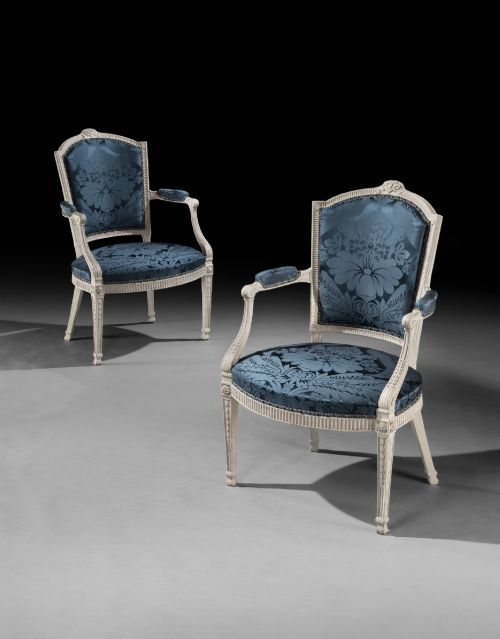
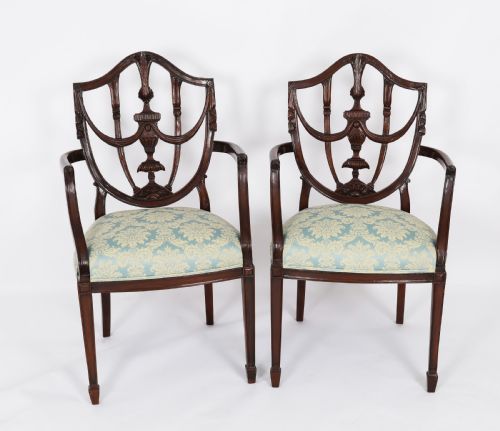
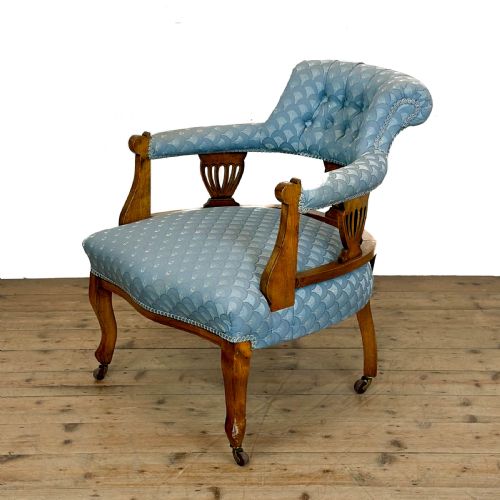
These blue damask armchair examples bring rich upholstery and period timber together for seating that holds a room.
What a blue damask armchair is
A blue damask armchair brings together traditional upholstery and sturdy timber framing, spanning periods from the eighteenth century through the Edwardian era. You will encounter forms ranging from library chairs and Gainsborough armchairs to winged designs and bergere seating.
The selections on this page lean heavily towards mahogany frames paired with patterned fabric upholstery, often finished with brass studwork. These seating pieces function both as practical library chairs and as decorative statement items for period interiors.
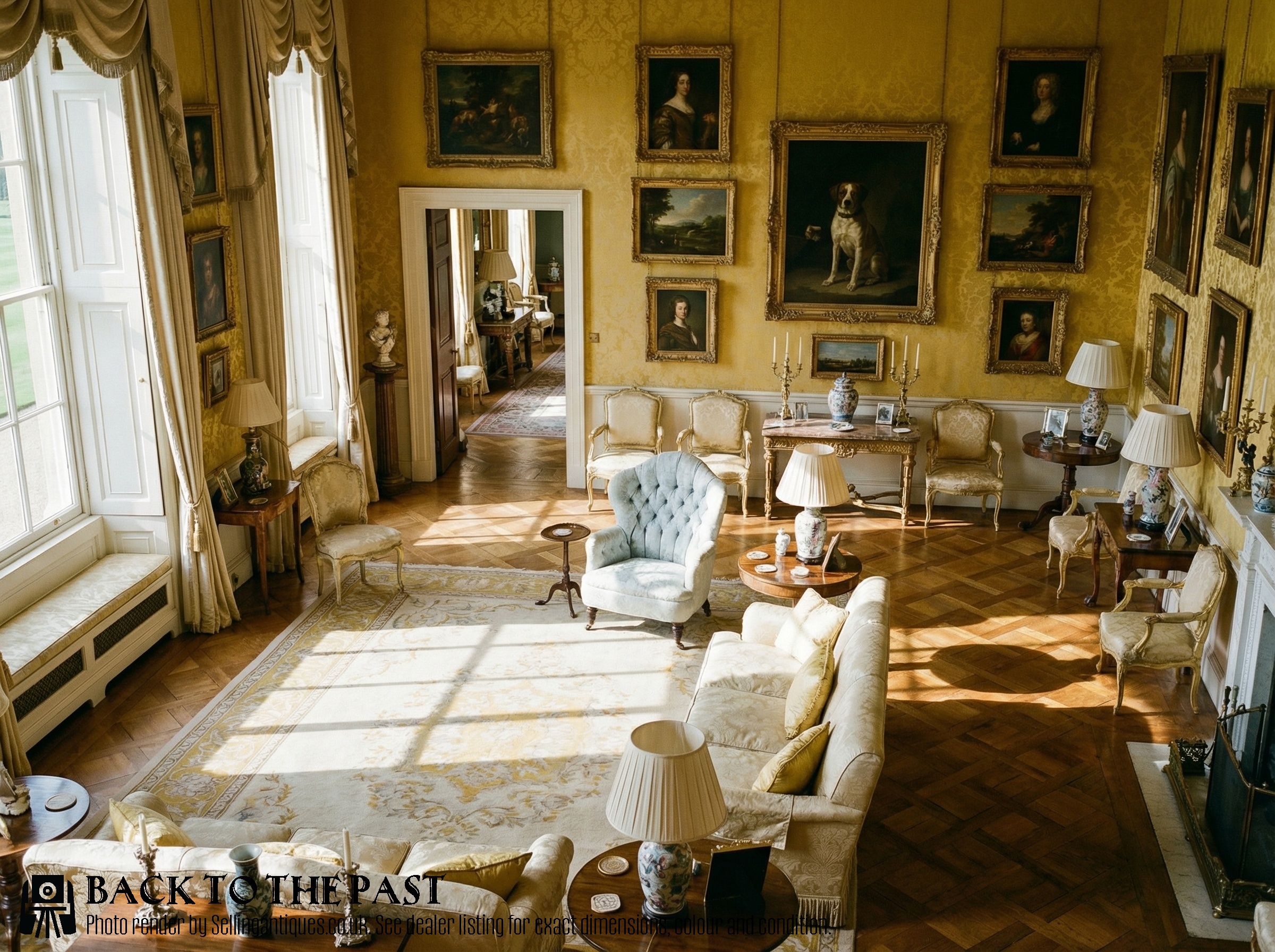
How they were made
Makers constructed these frames from solid timbers including mahogany, rosewood, and iron components. Skilled hands shaped the wood through turning and carving, creating structural frames designed to support deep cushioning.
Upholsterers applied woven damask fabric directly to the frames, securing the material with individual brass studs. This combination of timber joinery and textile work required distinct carpentry and upholstery skills.
Retail Price Guide 2026
Typical UK retail prices for blue damask armchair, calculated from the Sellingantiques database of over a million retail prices indexed since 2003. This retail price guide relies exclusively on Sellingantiques data; no external sources or auction records are used, so the figures do not describe the wider market.
The listings span from the 18th Century through the Edwardian period, utilising mahogany, rosewood, brass, and damask upholstery.
What varies in quality
Quality separates simple production from master craftsmanship through the depth of hand-carved details on the timber frame and the precision of the joinery. Superior examples show thoughtful proportion in the arms and back, alongside tightly woven damask textiles that maintain their structure over generations.
The distinction also lies in the integrity of the materials, where dense mahogany frames and heavy brass studding demonstrate greater durability than lighter, less substantial alternatives.
Thomas Chippendale
The Blue Damask Armchair Glossary
- Damask
- A reversible figured fabric with patterns formed by contrasting warps and wefts, traditionally woven in silk, wool, or linen. This textile provides the characteristic patterned surface seen on the upholstery of these chairs.
- Gainsborough armchair
- A wide, open-framed seat with padded armrests and straight wooden legs, popular during the eighteenth century for library use. This specific form allows comfortable seating while accommodating voluminous period dress.
- Bergere
- An enclosed upholstered armchair with wooden framing exposed around the sides and back, often featuring cane panels. These French-inspired seats offer a lighter visual profile than solid upholstered wingbacks.
- Wingback armchair
- A high-backed seat featuring angled panels designed to shield the occupant from drafts by the hearth. The sides of the backrest flare out to trap heat and frame the sitter.
Frequently Asked Questions
Where did people use these armchairs?
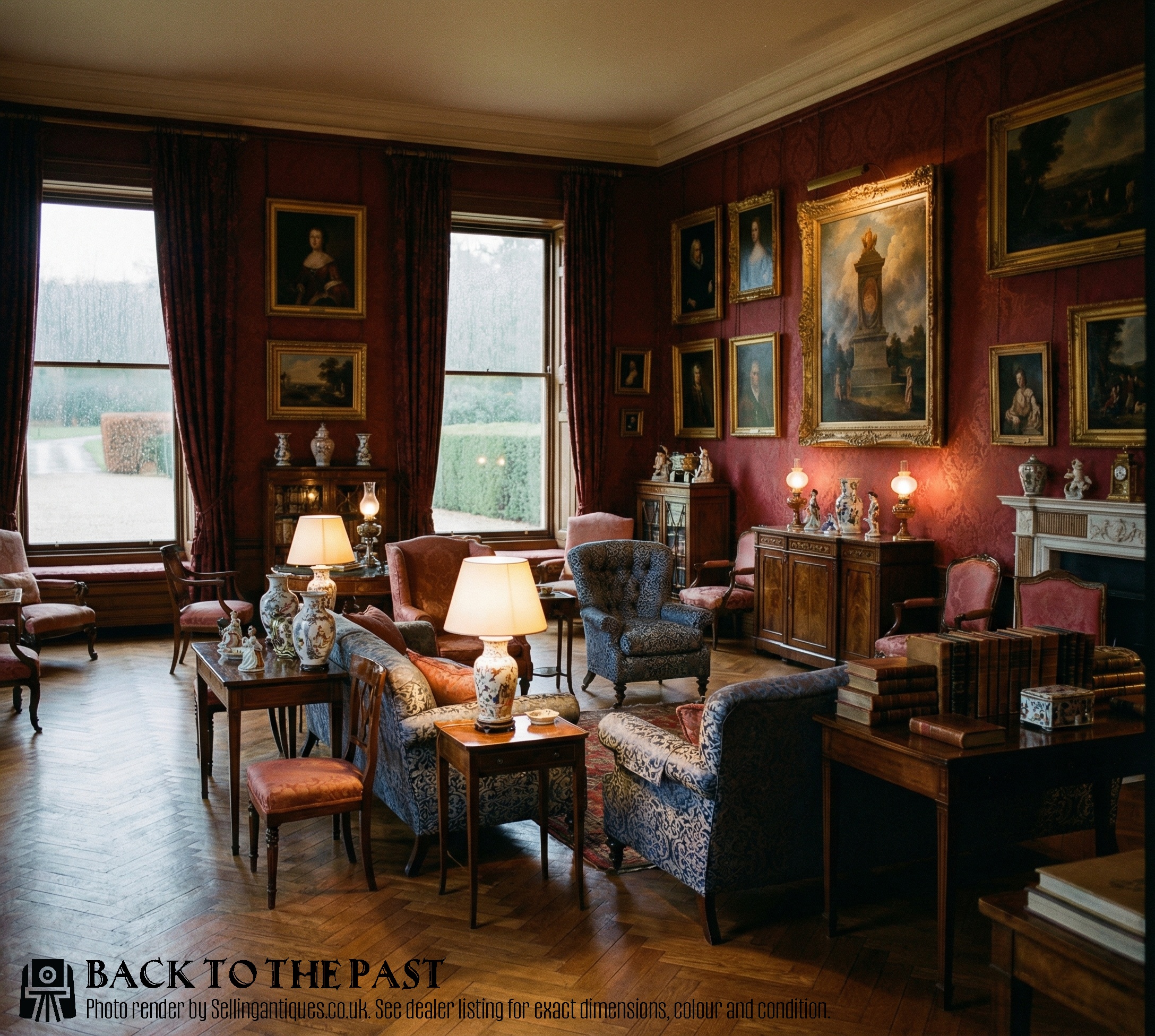
These seating pieces served primarily in grand libraries, withdrawing rooms, and parlours where comfort met social display. Occupants used them for reading, writing, and formal conversation.
Over time, owners moved them into studies and drawing rooms as status symbols and functional daily seating. Their substantial timber frames suited formal domestic interiors.
How do I care for damask upholstery?
Protect the woven fabric from direct sunlight to prevent the blue colouration from fading across the patterned surface. Gentle vacuuming with a soft brush attachment removes surface dust without snagging the threads.
Avoid harsh chemical cleaners and professional intervention unless strictly necessary. Allowing the fabric to breathe preserves the integrity of the textile.
How do I distinguish eighteenth-century pieces?
Eighteenth-century examples display hand-carved mahogany frames with proportions specific to the Georgian period, distinct from later nineteenth-century revivals. Look for dense timber weight and traditional joinery methods beneath the upholstery.
Constructive details like peg joints and aged patination on the wood indicate greater age. Comparing the carved motifs helps separate authentic early pieces from later copies.
Are these chairs suitable for daily use?
These historical seats handle normal daily sitting when placed on level flooring and treated with reasonable care. Their sturdy timber frames and solid construction were built for practical domestic deployment.
Users should avoid excessive weight loads or abrasive wear against the textile arms. Careful placement away from direct heat sources ensures the timber remains stable.