


Blue Crystal Light
Blue crystal light pieces bring a cool, sparkling presence to a room, ranging from grand chandeliers to delicate gold drop earrings.
Blue Crystal Light
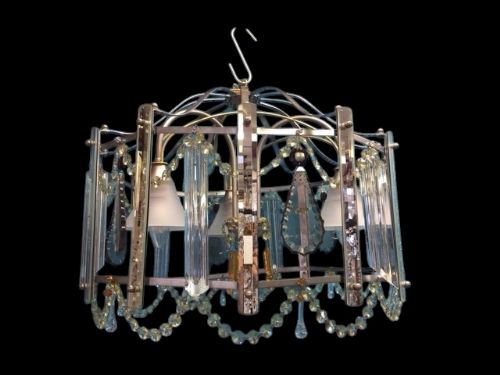
When you search for blue crystal light, you encounter a varied assortment of decorative objects and illumination spanning multiple centuries. These items encompass large hanging fixtures, wall sconces, tabletop lighting, and personal jewellery set with blue stones.
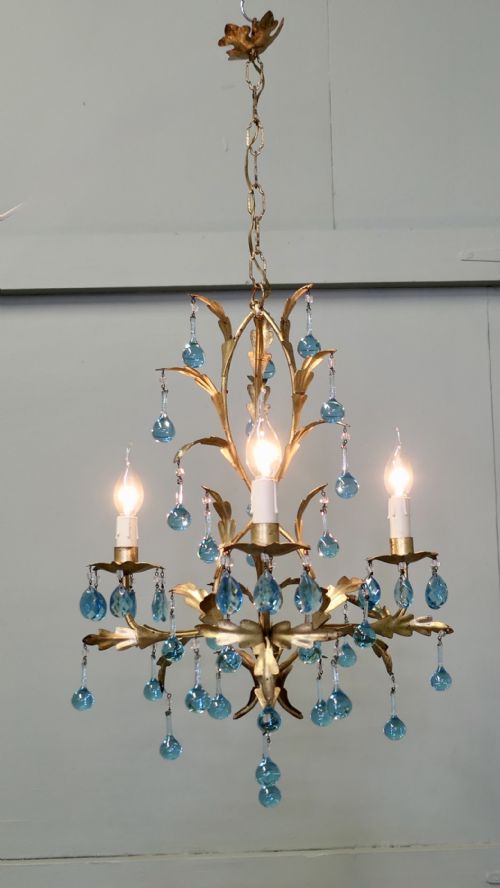
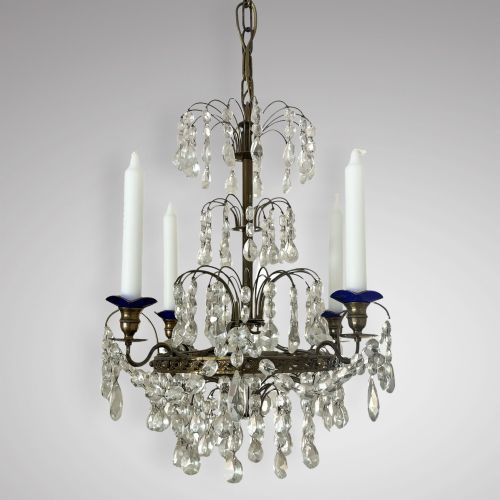
The selections on this page lean heavily toward early twentieth-century and nineteenth-century forms, featuring Swedish and French chandeliers alongside Victorian pendants and earrings. You will also find table lamps and mantel lustres utilising coloured glass elements.
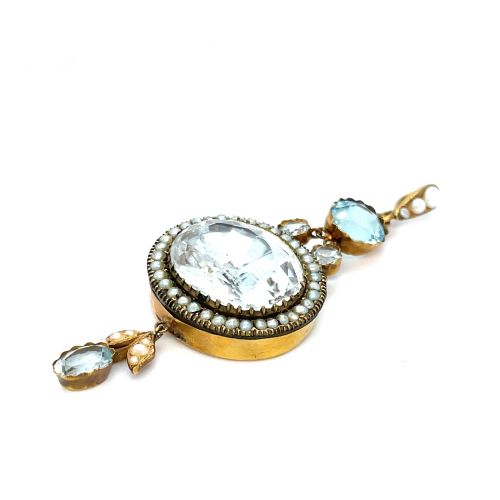
Lighting fittings often incorporate cut glass and crystal prisms, sometimes paired with tolewear, brass, or chrome structures. Jewellery items present blue topaz, aquamarine, and foil-backed stones mounted in nine-carat gold.
How they were made
Makers shaped these objects using traditional glass-cutting and crystal-working techniques, combining clear and coloured glass such as cobalt and turquoise hues. Metal components like brass, silver plating, and chrome provide the structural framework for chandeliers and wall lights.
Gold work for the jewellery pieces involves nine-carat settings shaped to hold pear-cut and square-cut aquamarine or blue topaz stones. Lustres and chandeliers frequently utilise overlay glass methods and faceted crystal prisms to refract illumination.
The listings here include items from the Victorian and Edwardian eras, alongside pieces dated to nineteen-twenty and eighteen-eighty.
What varies in quality
The grade of a piece rests upon the precision of the crystal cutting and the clarity of the glass used in the prisms or body. Superior examples display sharp facets that catch illumination cleanly, whereas lesser items show softer edges and minor inclusions.
The integration of materials also defines the tier of an object, such as the weight of the brass or silver-plated framing and the secure setting of stones in gold mounts. Original components and matched prisms elevate the standing of hanging fixtures compared to later replacements.
Baccarat·Wedgwood
The Blue Crystal Light Glossary
- Crystal glass
- Glass containing lead oxide, which increases brilliance and weight. This material allows for deeper and sharper cutting than standard glass.
- Chandelier
- A branched decorative ceiling mount designed to hold multiple lights. These fixtures often feature hanging glass prisms and drops to enhance reflection.
- Mantel lustre
- A decorative ornamental vase or pedestal hung with glass prisms. They were traditionally placed on fireplace mantels to reflect candlelight.
- Foil back
- A technique where a thin sheet of reflective metal is placed behind a gemstone. This practice intensifies the colour and sparkle of stones like aquamarine.
- Tolewear
- Painted or lacquered metalware used in decorative objects and light fittings. It often provides a contrasting matte finish to glossy crystal elements.
Blue Crystal Light: Frequently Asked Questions
How do I hang a heavy antique chandelier safely?
Hanging a heavy fixture requires securing the weight directly into the ceiling joists using a rated metal hook and proper junction box. Professional installation is strongly advised for large crystal and brass pieces.
Ensuring the electrical wiring meets modern safety standards is equally important before suspending any antique lighting in your home.
How should I clean delicate blue crystal and glass?
Cleaning requires warm water and a mild, non-abrasive detergent applied gently with a soft cloth. Harsh chemicals can damage the surface of antique glass and metal components.
For chandeliers, wiping each prism individually while it hangs prevents damage to delicate wiring and structural mounts.
Are these gold earrings suitable for daily wear?
The earrings listed utilise nine-carat gold, which offers durability for regular use compared to higher karat weights. However, the delicate nature of aquamarine and topaz stones means they benefit from careful handling.
Removing jewellery before sleeping or swimming preserves the security of the prong settings and the condition of the stones.
How do I identify a Victorian period lighting fitting?
Victorian pieces often display specific heavy casting methods, distinct brass patination, and hand-cut crystal details characteristic of the nineteenth century. Examining the construction of the joints and fixings helps differentiate them from later reproductions.
Design motifs from this era frequently draw on classic revival styles with ornate detailing.