


Blue Cloisonne Platter
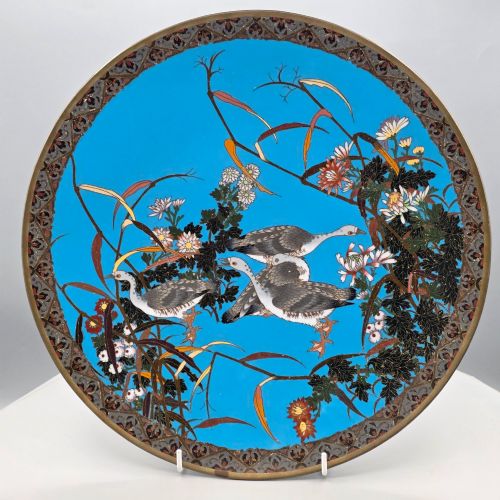
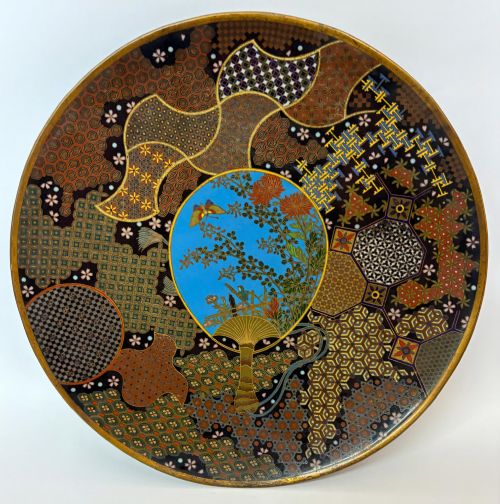
A blue cloisonne platter brings weight and colour to a room, showing precise metalwork and deep enamel decoration from the nineteenth century.
Blue Cloisonne Platter
When you search for a blue cloisonne platter, you encounter decorative chargers, plates, trays and dishes originating from Japan during the Edo and Meiji periods. These works serve primarily as display items, intended for wall mounting or tabletop presentation rather than dining use.
The format ranges from small medium plates to huge chargers measuring up to fifty centimetres across. Subjects depicted across the surface include dragons, geese, chrysanthemums, butterflies, frogs, koi, landscapes and samurai figures.
How they were made
The foundation relies on metal bases formed from copper, brass, bronze or silver. Artisans shape these metals into deep plates and chargers before applying the detailed design.
Thin wires of brass or silver are soldered onto the base to form compartments known as cloisons, which are subsequently filled with vitreous enamel pastes. Firing fixes the coloured glass pastes within the wire grid, after which the surface is ground and polished smooth.
Listings span the nineteenth century, incorporating pieces from both the Edo and Meiji periods alongside Nagoya workshop items.
What varies in quality
Visual complexity and discipline in the wirework separate standard production from exceptional examples. The fineness of the brass wire and the precision of the compartmentalised enamel dictate the visual depth of the subject matter.
Scale and ambition of the design also distinguish individual works, with large chargers featuring intricate multi-layered motifs representing high achievement by period workshops.
Kinkozan
The Blue Cloisonne Platter Glossary
- Cloisonne enamel
- A metalwork technique where fine wire creates raised partitions that hold coloured glass paste. Subsequent firing and polishing produce a smooth, patterned surface.
- Charger
- A large decorative plate intended for display on a sideboard or wall rather than for serving food. These pieces form the substantial part of the available selection.
- Meiji Period
- A historical Japanese era spanning from eighteen sixty-eight to nineteen twelve, noted for exceptional output in metalwork and decorative arts. Many listed items originate from this time.
- Edo Period
- The period of Japanese history preceding the Meiji era, extending from sixteen hundred and three to eighteen sixty-eight. Early pieces on this page date from the late phases of this era.
- Ho-o bird
- A mythical phoenix motif frequently depicted in Japanese decorative arts alongside dragons and floral subjects. The imagery signifies auspicious symbols.
Blue Cloisonne Platter: Frequently Asked Questions
How do I display a large charger safely?
Large chargers require robust wall brackets designed for heavy plates or secure tabletop stands with proper weight distribution.
Positioning the piece away from direct sunlight protects the enamel colours from fading over time.
Are these platters suitable for serving food?
These historical items function exclusively as decorative objects for display rather than tableware.
Using them for dining risks damaging the delicate wire and enamel surfaces.
How do I date a Japanese cloisonne piece?
Dating relies on stylistic shifts between the Edo and Meiji periods, alongside material choices such as brass versus copper wiring.
Signatures on the reverse can occasionally narrow down the workshop origin.
What causes the blue tones in these plates?
Mineral oxides mixed into the vitreous enamel paste produce the varied shades of blue seen across the chargers.
Firing temperatures and the specific composition of the glass compound influence the final depth of colour.