


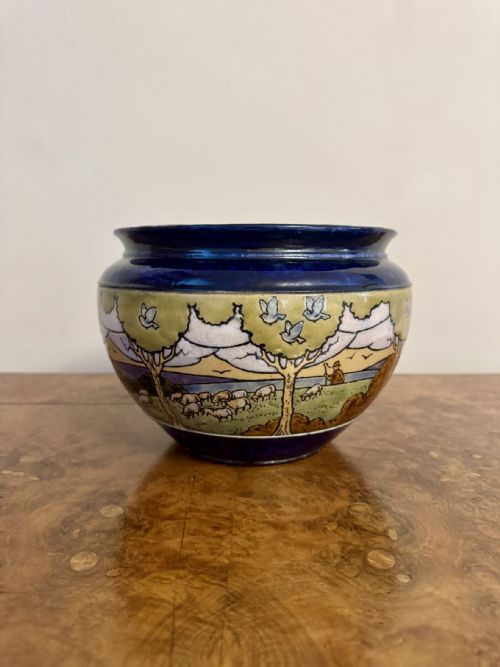
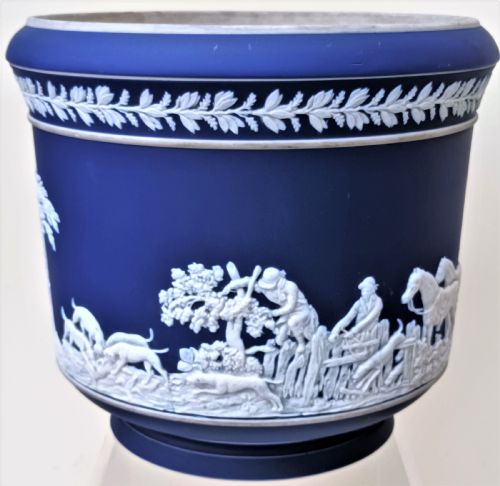


Blue Ceramic Plant Pot
A blue ceramic plant pot brings weight and deep colour to a room, holding everything from palms to ferns.
Blue Ceramic Plant Pot
A blue ceramic plant pot, often catalogued as a jardiniere or planter, is a vessel designed to hold potted plants indoors or in sheltered gardens. The selections here span the eighteenth, nineteenth, and early twentieth centuries, crossing English, European, and East Asian traditions.
The most common forms on this page are substantial jardinieres from the Victorian era and the late nineteenth century, alongside significant Japanese Imari and Chinese export porcelain pieces. English makers dominate the domestic output, while Japanese and Chinese workshops provide the blue and white porcelain and Imari wares.
These vessels range from modest domestic earthenware to large, commanding porcelain bowls intended for formal rooms or conservatories. They serve the same practical function today as they did centuries ago, protecting surfaces while displaying foliage.
Materials and construction
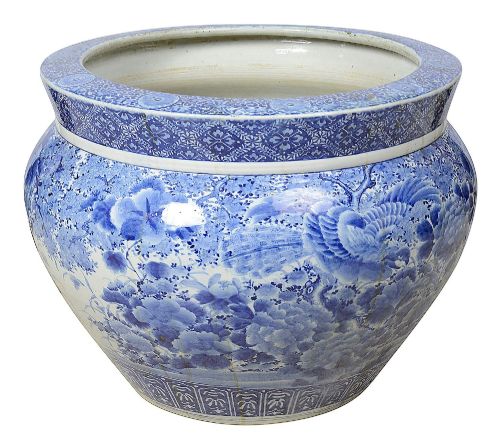
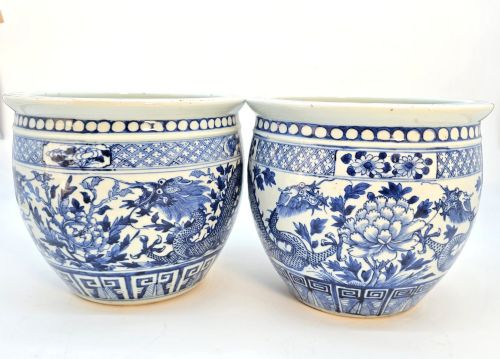
Makers utilised earthenware, stoneware, and porcelain as the primary body materials for these pots, shaped on the wheel or pressed into moulds. Cobalt underglaze was frequently applied to Chinese and Japanese porcelain before firing, creating enduring blue decoration beneath a clear glaze.
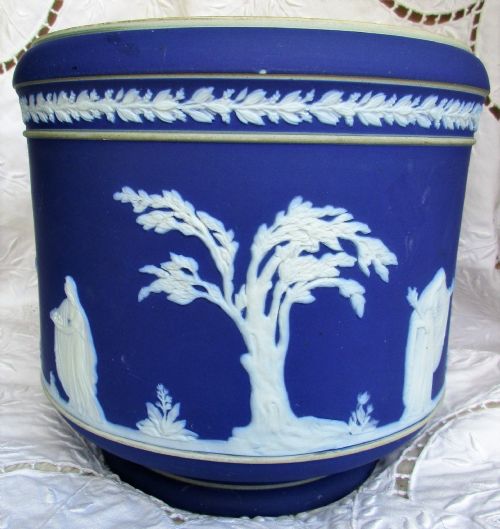
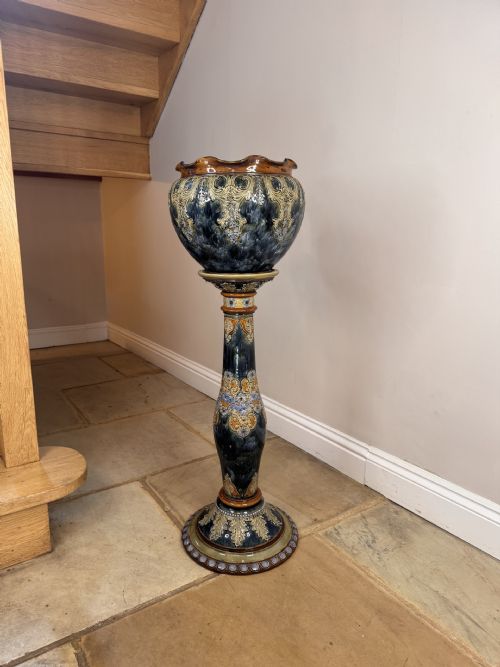
Majolica and jasperware techniques brought coloured glazes and applied white or contrasting reliefs to English bodies, notably from factories like Wedgwood and Minton. Stoneware pots from makers such as Doulton received salt glazing or detailed Slaterware texturing, combining durability with ornate surface pattern.
Blue Ceramic Plant Pot Retail Price Guide 2026
Typical asking prices for blue ceramic plant pot among the pieces listed under this phrase on Sellingantiques today, from the lower quarter to the upper quarter. They describe what is for sale here now, not the wider market.
Several nineteenth-century Japanese pots come paired with associated hardwood stands, ready to elevate foliage off the floor.
Assessing quality and execution
Quality rests in the crispness of the moulding, the depth and stability of the glaze, and the balance of the form. Finer pieces show careful hand-painting in cobalt or enamel, whereas lesser examples rely on simpler mechanical transfer printing.
The weight of the ceramic and the finish of the interior reveal the maker's intent, with high-end Victorian and Asian pieces possessing thick, resonant walls and stable bases. Rims and feet on superior pots display precise throwing or moulding without warping from the kiln.
Royal Doulton·William Adams And Sons·Doulton Burslem·Doulton Lambeth·Minton·Royal Worcester·Wedgwood·George Jones·Samson
The Blue Ceramic Plant Pot Glossary
- Jardiniere
- A large ornamental pot or stand for holding flowers or plants. They are typically glazed ceramic and sit on furniture or directly on the floor.
- Imari
- A style of Japanese porcelain decorated in underglaze blue, iron red, and gold. Originating from the Arita area, it heavily influenced European ceramics.
- Majolica
- earthenware pottery decorated with opaque coloured glazes on a white tin-glaze ground. It became popular in Victorian England for vibrant garden and interior vessels.
- Jasperware
- A type of stoneware developed by Wedgwood, characterised by a matte coloured body and applied white relief ornaments. Blue is the most iconic shade for this ceramic type.
- Slaterware
- A nineteenth-century ceramic technique involving textured lace or fabric pressed into damp clay before glazing. It created a distinctive rug-like pattern on Doulton pieces.
Blue Ceramic Plant Pot: Frequently Asked Questions
What is a jardiniere?
A jardiniere is a large decorative pot used to hold growing plants, designed to sit indoors without a saucer by containing water within its heavy ceramic walls.
Unlike standard flowerpots meant for potting soil in a greenhouse, these vessels are finished for display in reception rooms and hallways.
Can I plant directly into these pots?
Most antique ceramic pots lack drainage holes, meaning direct planting can lead to water retention and root rot over time.
Placing a smaller plastic nursery pot inside allows for easy watering while protecting the historic interior glaze.
How do I date an antique ceramic pot?
Dating relies on factory marks stamped or painted on the base, the style of the glaze, and the composition of the clay body.
Victorian pieces often carry registration diamonds or specific maker ciphers, whereas eighteenth-century Asian porcelain is judged by potting characteristics and cobalt tones.
Where were these pots placed historically?
Historically, large jardinieres stood on hardwood stands in Victorian bay windows, on entrance hall tables, or within bright conservatories.
They were positioned to catch natural light and frame large ferns, palms, or flowering indoor plants.