






Blue Ceramic Garniture
A blue ceramic garniture brings formal symmetry and vibrant cobalt colour to mantelpieces and side tables.
Blue Ceramic Garniture
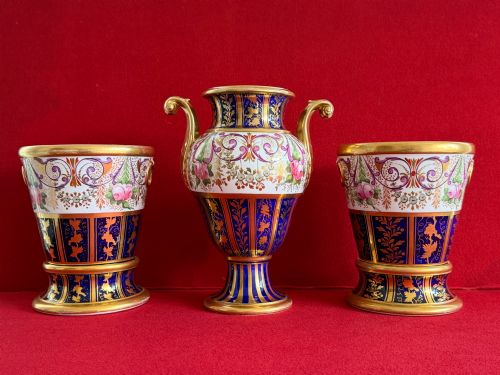
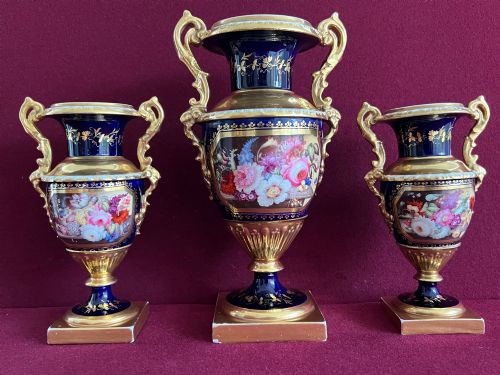
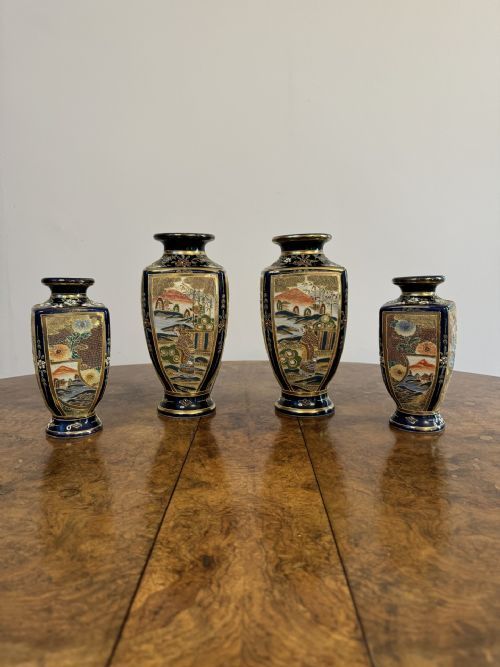
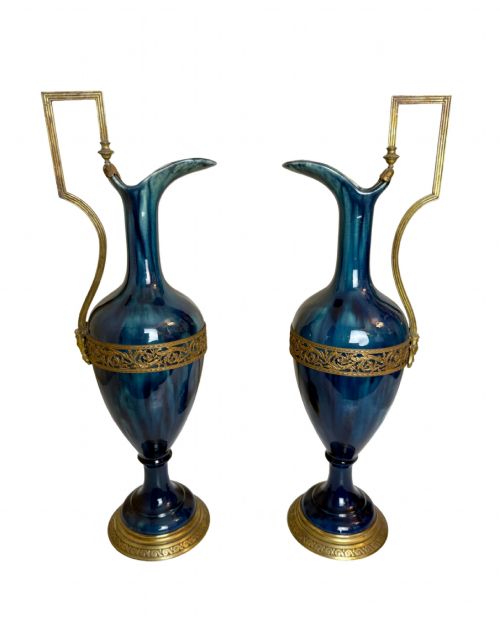
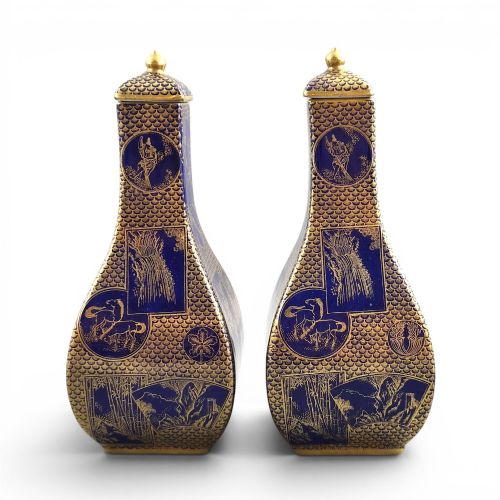
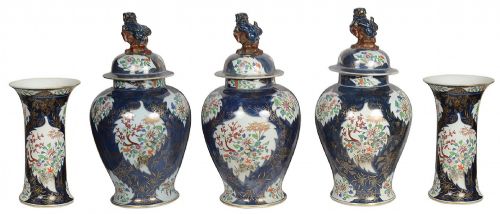
A blue ceramic garniture consists of matched sets of vases, urns, or candelabras designed to be displayed together as a decorative centrepiece. These groups typically feature two, three, or four coordinating vessels arranged on a mantel or sideboard to create formal visual balance.
On this page, you will most commonly encounter pieces originating from the nineteenth century, alongside Japanese export wares and English factory productions. Forms range from classical urns and lidded vases to clock sets flanked by matching candleholders.
Stylistic influences span French Sevres style, Regency elegance, Delftware, and Japanese Imari or Satsuma palettes. These sets demonstrate the historical desire for coordinated interior decoration across European and Asian traditions.
What varies in quality
The distinction between standard production and exhibition quality rests on the precision of the hand-painting and the weight of the bronze mounts. Finer sets display crisp enamel detailing, deep cobalt saturation, and substantial, well-chased ormolu fittings.
The integrity of the matching elements defines the garniture, as sets that retain all their original coordinating pieces command greater attention. The crispness of the porcelain moulding and the refinement of the glaze application separate ordinary vessels from exceptional works.
Blue Ceramic Garniture Retail Price Guide 2026
Typical asking prices for blue ceramic garniture among the pieces listed under this phrase on Sellingantiques today, from the lower quarter to the upper quarter. They describe what is for sale here now, not the wider market.
Elephants occasionally double as candelabras, holding golden branches aloft with surprising dignity.
Spode·Minton·Mason's·Royal Vienna
The Blue Ceramic Garniture Glossary
- Garniture
- A set of matching ceramic vessels or ornaments designed for symmetrical display. They usually comprise three or more pieces meant to be arranged together on a mantelpiece.
- Ormolu
- Gilt bronze mounts applied to furniture and ceramics. This decorative metalwork enhances the profile of nineteenth-century porcelain urns.
- Imari palette
- A traditional Japanese decorative scheme utilising underglaze blue, iron red, and gold. Pieces finished in this style display rich contrasting patterns.
- Bleu celeste
- A bright sky blue glaze colour popular on French porcelain. This distinct shade characterises many nineteenth-century decorative urns.
Blue Ceramic Garniture: Frequently Asked Questions
What is a blue ceramic garniture?
A blue ceramic garniture is a matching set of decorative vases or urns designed to be displayed together on a mantel or sideboard. These sets create formal visual symmetry in a room.
They appear in various forms, including lidded urns, vases, and clock sets flanked by matching candleholders.
How do you display a garniture?
Garnitures are traditionally arranged on mantelpieces, credenzas, or large side tables where their symmetry can be appreciated. The tallest piece typically sits in the centre, flanked by the matching smaller vessels.
Spacing the pieces evenly allows the eye to follow the coordinated decorative scheme across the surface.
What periods do these pieces come from?
The listings span the eighteenth, nineteenth, and early twentieth centuries, capturing major revival styles and export wares. Many examples date from the Regency and Victorian eras.
European porcelain factories and Japanese kilns contributed heavily to the styles seen across these periods.
What materials are used in these sets?
The bodies are formed from porcelain, earthenware, or ironstone, finished with cobalt blue glazes and hand-painted enamel details. Gold leaf and ormolu mounts frequently accent the ceramics.
Bronze fittings provide structural support and decorative framing for many of the French and English pieces.