



Blue Ceramic Dinnerware
Blue ceramic dinnerware brings together centuries of British earthenware, ironstone and porcelain decorated in rich blue transfer and hand-painted patterns for the table.
Blue Ceramic Dinnerware
Blue ceramic dinnerware encompasses plates, soup bowls, platters and complete dinner services spanning the Georgian, Victorian and Edwardian eras. Buyers searching for blue ceramic dinnerware frequently encounter robust ironstone plates and earthenware services decorated with transfer-printed scenes, botanical studies or oriental motifs.
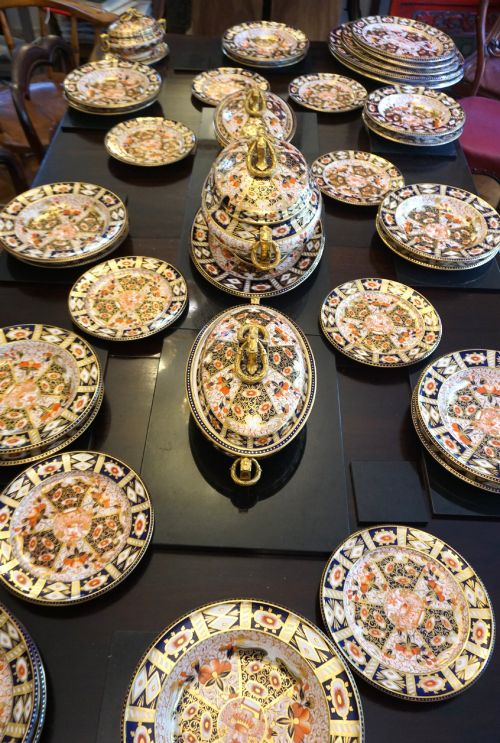
The selection ranges from cabinet porcelain armorial plates and child's miniature services to extensive dinner sets comprising over a hundred pieces. Forms include traditional round plates, decorative platters and specialised soup bowls produced by notable English potteries.
How they were made
Potters utilised earthenware, ironstone and porcelain bodies, applying intricate blue and white transfer printing or hand-painted enamel designs before firing. Many pieces received a clear glaze to protect the cobalt blue decoration and provide a durable surface for daily dining.
Selected wares incorporate gold leaf highlights over the glaze, adding decorative contrast to the blue transfer patterns on cabinet plates and formal dinner services.
Blue Ceramic Dinnerware Retail Price Guide 2026
Typical asking prices for blue ceramic dinnerware among the pieces listed under this phrase on Sellingantiques today, from the lower quarter to the upper quarter. They describe what is for sale here now, not the wider market.
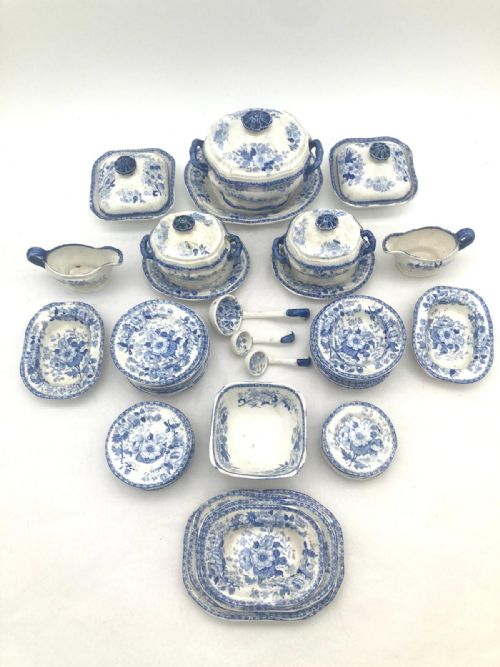
Miniature child's services let Regency infants practice dining etiquette with tiny blue transfer plates.
What varies in quality
Quality separates through the crispness of the blue transfer printing and the precision of any additional hand-painted enamel or gold leaf application. Earlier Regency and Georgian examples often display finer paste preparation and more detailed engraving on the transfer plates.
The completeness and preservation of an entire dinner service or matched set define higher tiers, alongside the complexity of patterns such as botanical studies, Imari palettes or pictorial scenes.
Davenport·Minton·Masons·Wedgwood·Elkin And Newbon·Spode·John Rogers And Son
The Blue Ceramic Dinnerware Glossary
- Transferware
- A pottery decoration technique where a design is engraved on a copper plate, inked in blue, transferred to paper, and then impressed onto the ceramic body before glazing. This method allowed for intricate and repeatable pictorial scenes across large dinner services.
- Ironstone
- A heavy, durable type of earthenware patented in the early nineteenth century that resists chipping and thermal shock. It served as a robust material for everyday dining sets and heavy plates.
- Pearlware
- A refined earthenware body developed in the late eighteenth century featuring a subtle bluish glaze that pooled in recesses to make the ceramic appear whiter. It formed the base for many early blue and white printed plates.
- Imari
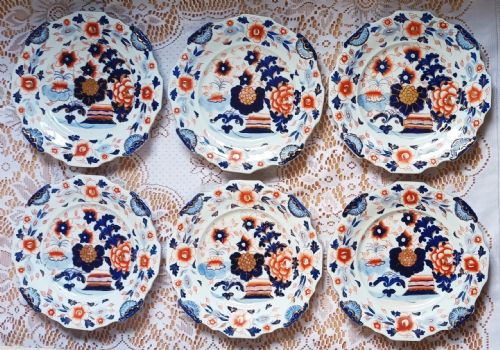
- A decorative style inspired by Japanese export porcelain utilising cobalt blue underglaze combined with iron red and gold enamel overglaze. English potteries adapted this palette for ironstone and porcelain dinnerware.
- Armorial
- A design incorporating a family crest or coat of arms, typically found hand-painted on porcelain cabinet plates made for specific aristocratic households.
Blue Ceramic Dinnerware: Frequently Asked Questions
How do I date antique blue and white plates?
Dating relies on maker marks, impressed registration diamonds, and stylistic clues within the blue transfer pattern. Examining the ceramic body, whether earthenware, pearlware or ironstone, also helps narrow the production period.
Changes in glaze formulation and the depth of the blue transfer print provide further context for distinguishing Georgian pieces from later Victorian examples.
Can I use antique ironstone dinnerware daily?
Ironstone plates and soup bowls were originally engineered for heavy domestic use and remain remarkably durable today. Many owners successfully incorporate antique dinner sets into regular modern dining.
Hand washing is generally recommended to preserve the integrity of the glaze and any delicate hand-painted enamel or gold leaf details over time.
What is the difference between earthenware and ironstone?
Earthenware provides a porous, lighter ceramic body often seen in early nineteenth-century plates and child's services. Ironstone is a denser, vitrified refinement designed to withstand rigorous service.
Ironstone offers greater weight and resistance to chipping, making it the dominant material for large nineteenth-century dinner services.
Why do transfer patterns vary in colour?
The shade of blue depends on the cobalt oxide mixture, the thickness of the glaze, and the firing temperature in the kiln. Variations in the copper engraving transfer can also alter the depth and clarity of the printed lines.
Slight tonal differences are typical in nineteenth-century ceramics due to the manual preparation of batches before industrial standardisation.