




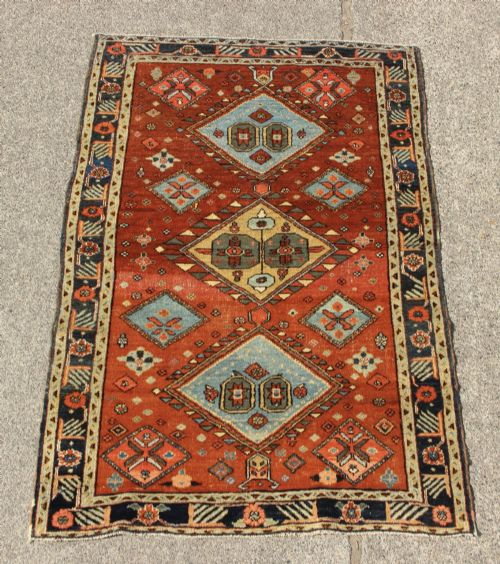
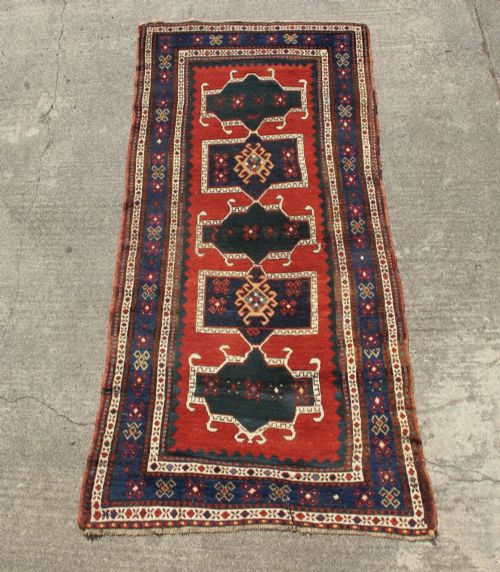
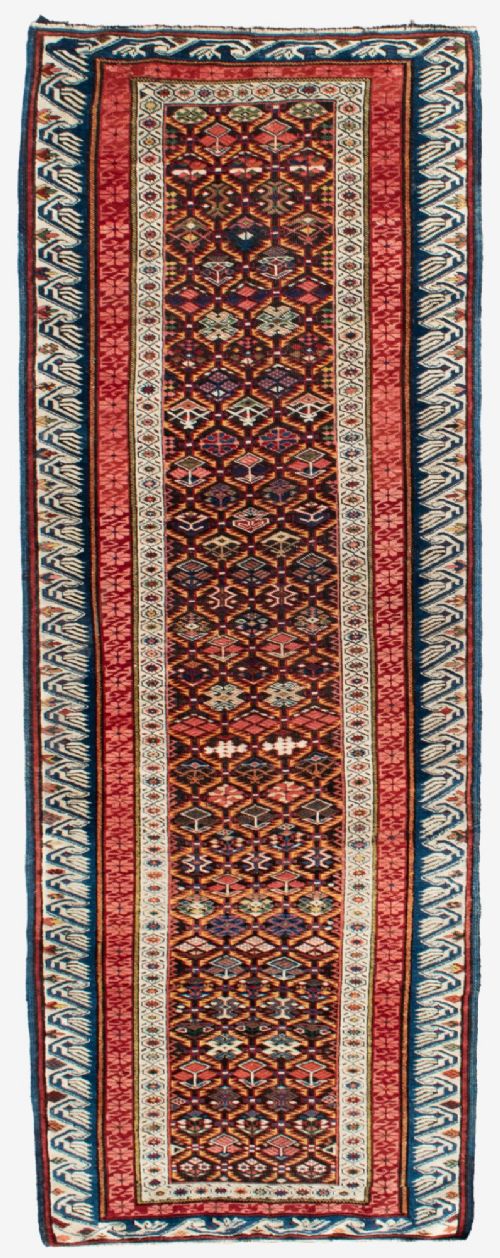
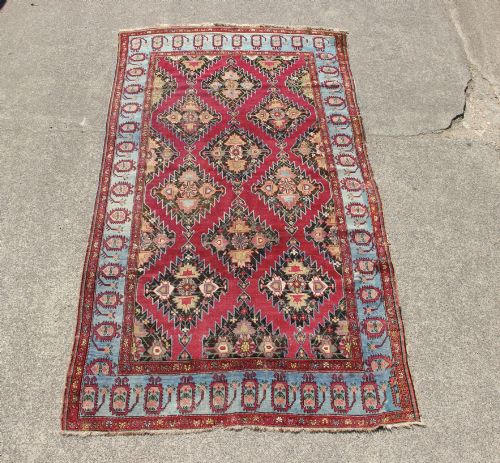
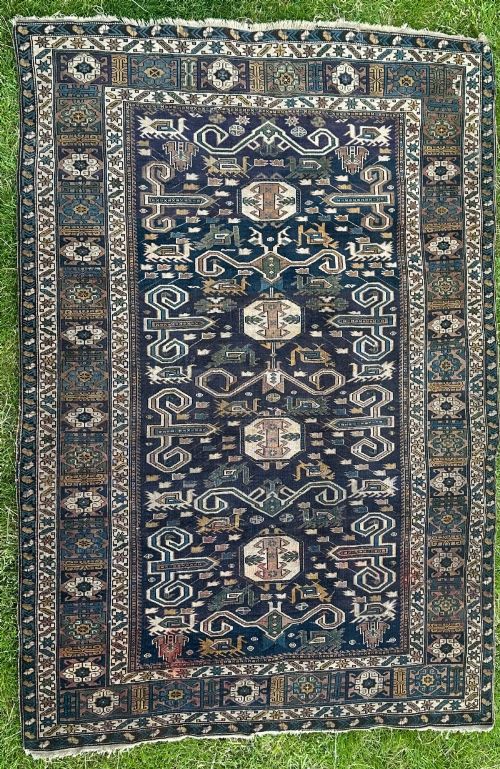
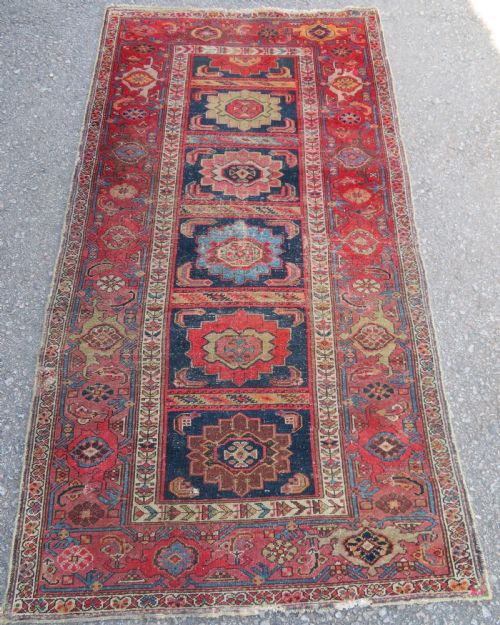
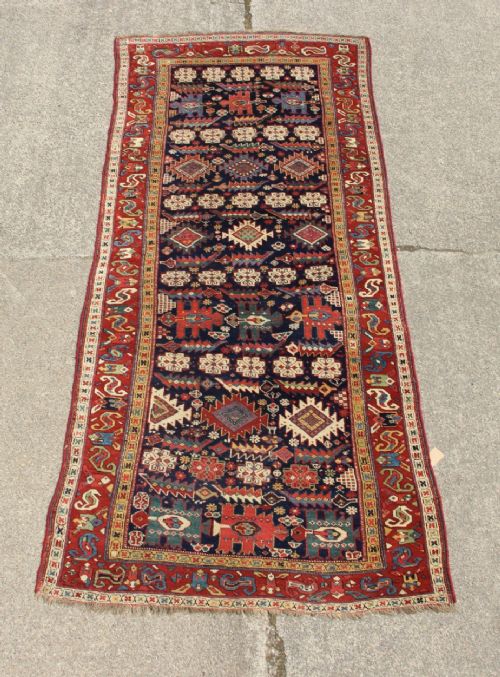
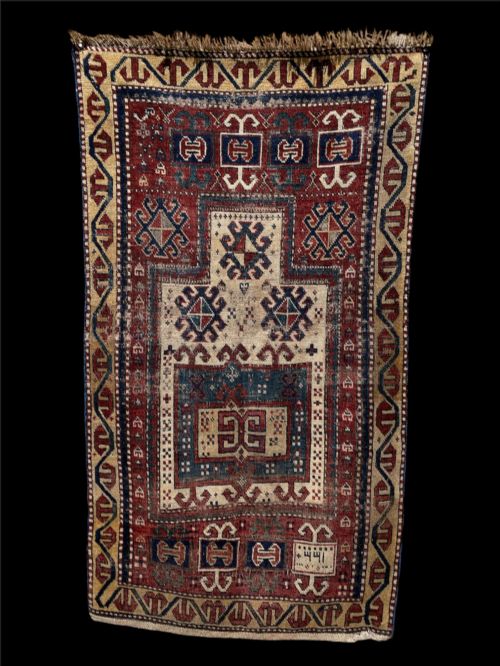
Blue Caucasian Runner Rug
A blue caucasian runner rug brings striking tribal geometry and rich dyed wool into narrow spaces.
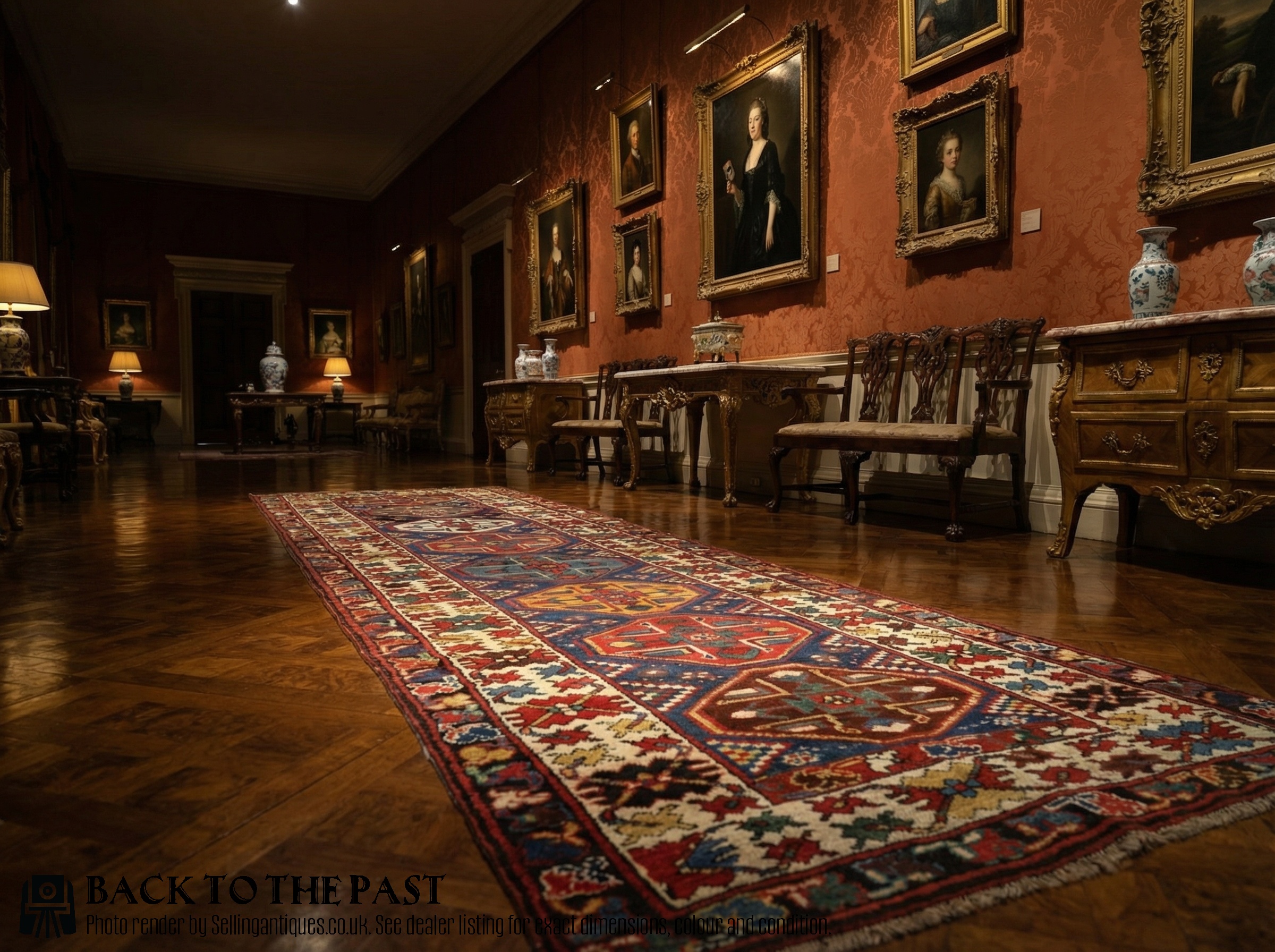
Blue Caucasian Runner Rug
A blue caucasian runner rug bridges utilitarian hallway flooring and textile art through elongated proportions. These pieces draw on weaving traditions from the Caucasus and nearby regions, spanning the nineteenth and early twentieth centuries.
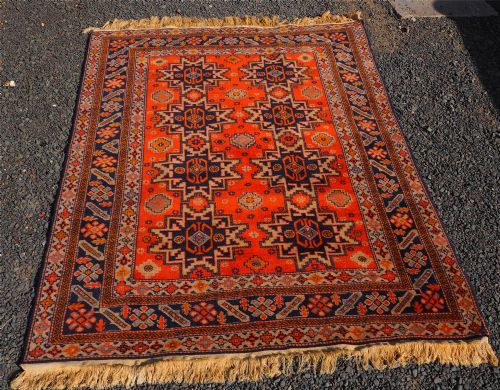
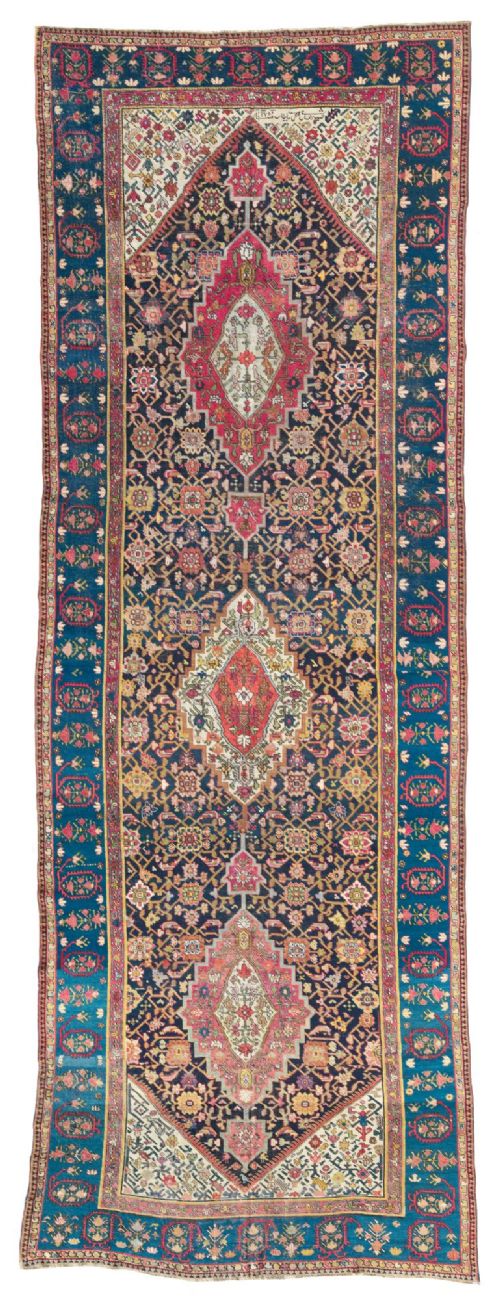
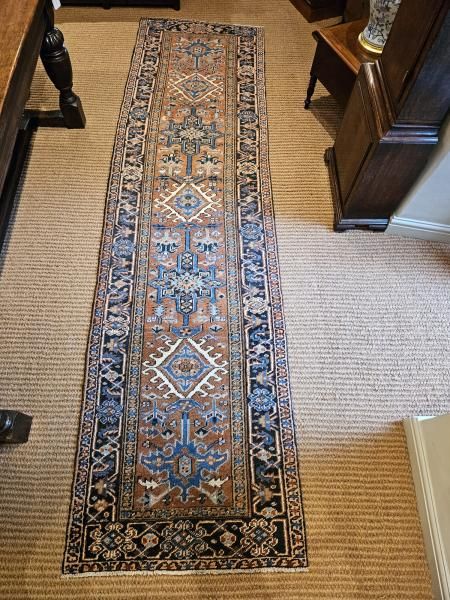
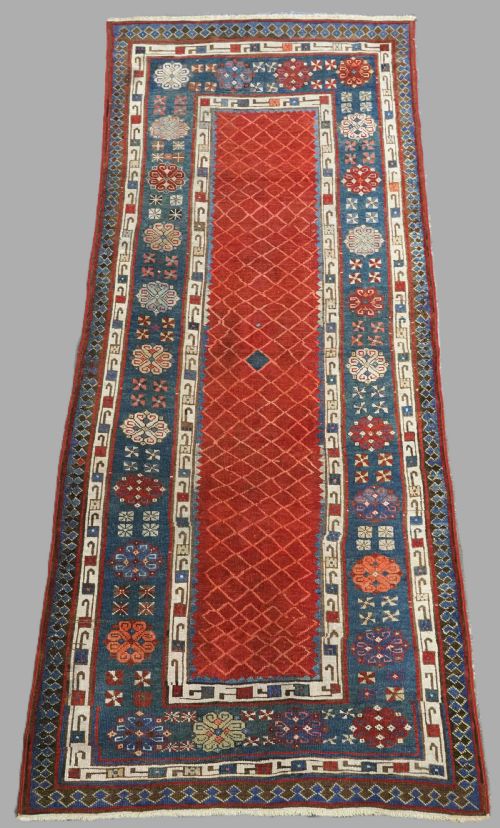
The format is narrow and long, designed for corridors or long rooms. Buyers encounter specific regional types such as Shirvan and Talish alongside Kazak and Karabagh examples.
Designs rely on geometric motifs, medallions, and lattice patterns rather than floral curves. The palette centres on indigo and lighter blues set against contrasting tones.
How they were made
Weavers utilised hand-spun wool for the pile, knotted onto robust cotton or wool foundation warps. This combination gives older runners a dense, supportive handle underfoot.
Natural dyes provide the characteristic colour palette, yielding deep indigos and nuanced secondary tones that age with subtlety. Variations in the dye lots create shifts across the field.
Listings span periods from the mid-nineteenth century through the early twentieth century, incorporating wool, cotton, and natural dyes.
What varies in quality
Quality rests in the crispness of the geometric drawing and the saturation of the natural dyes. Stronger pieces maintain sharp contrasts in their lattice and star motifs.
The integrity of the foundation and the retention of original side cords and ends determine structural survival. Finer knot density allows intricate designs to read clearly down the narrow format.
The Blue Caucasian Runner Rug Glossary
- Runner
- A long, narrow carpet format traditionally used in hallways and corridors. These pieces measure significantly longer than they are wide.
- Natural dyes
- Colourants derived from plants, insects, and minerals before the advent of synthetic alternatives. They produce complex, fading tones over decades of exposure.
- Knot density
- The number of individual knots per square unit, which dictates the clarity of geometric patterns. Higher counts support finer detail in tribal weaving.
- Pile
- The upright wool surface of the rug formed by knotted yarn ends. Its depth affects the weight and handle of the textile.
- Foundation
- The underlying grid of warp and weft threads that supports the wool knots. It forms the skeleton of the rug.
Blue Caucasian Runner Rug: Frequently Asked Questions
Where should I place a runner?
These long carpets suit hallways, corridors, and narrow gallery spaces where linear formats work best. Their proportions draw the eye down a passage while protecting high-traffic flooring.
They also function effectively beside beds or in galley kitchens where a narrow textile anchors the layout.
How do I care for antique wool?
Regular gentle vacuuming without a beater bar removes trapped grit from the wool pile. Professional cleaning suited to antique textiles preserves the natural dyes and foundation.
Keeping the rug out of direct, harsh sunlight prevents the indigo blues from uneven fading over time.
What defines regional styles?
Regional aesthetics depend on the specific tribal groups and weaving centres of the Caucasus. Shirvan and Talish pieces often employ crisp lattice structures and balanced borders.
Kazak and Karabagh examples tend toward bolder geometric medallions and heavier wool handles.
How do natural dyes age?
Natural colourants mellow gracefully with exposure to light and air over generations. This process softens the contrast between deep blues and secondary hues.
Subtle shifts in shade, known as abrash, occur naturally when dye batches change mid-weaving.