




Blue Button Back Chair
A blue button back chair brings deep upholstery and tufted detail to Victorian and Edwardian rooms.
Blue Button Back Chair
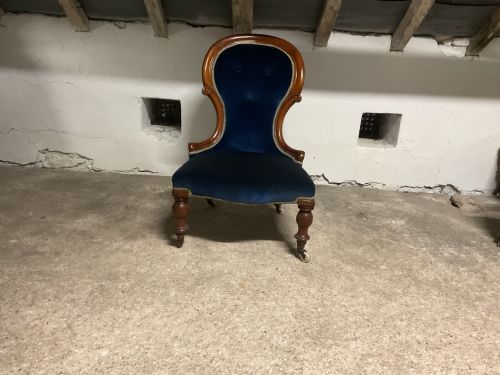
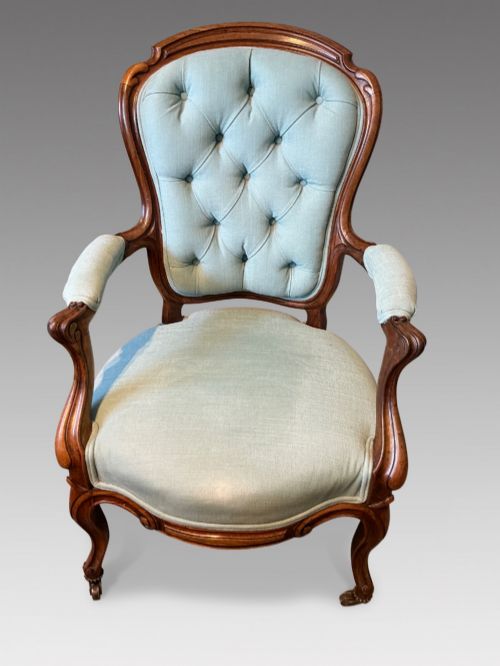
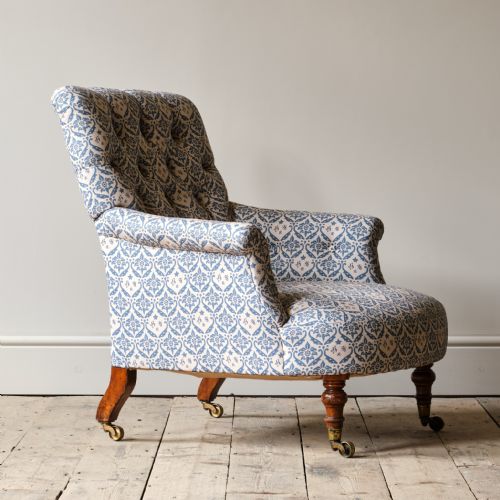
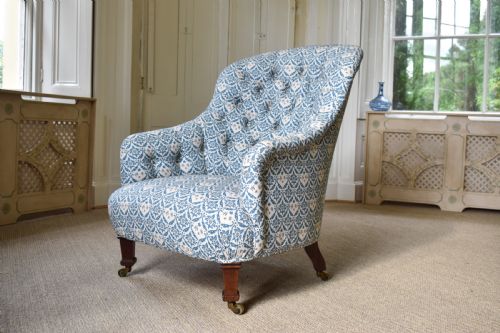
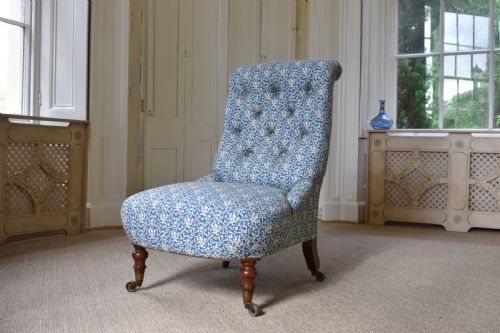
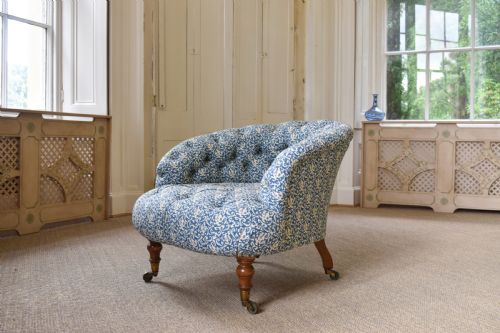
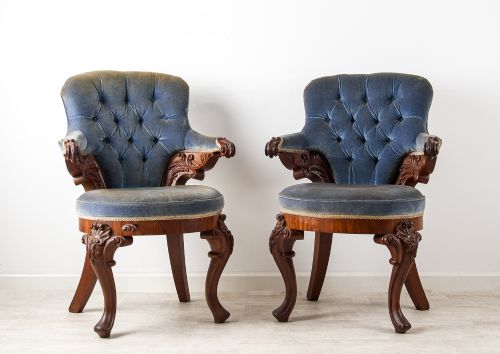
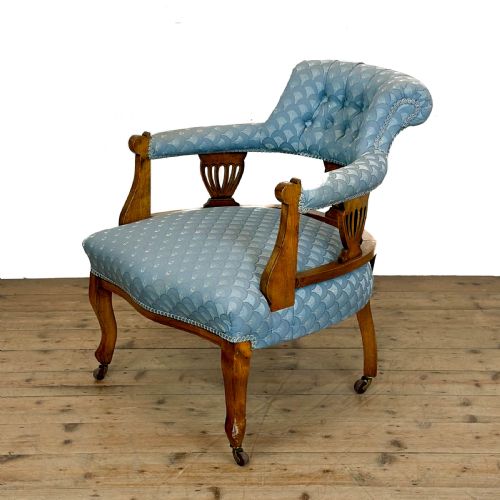
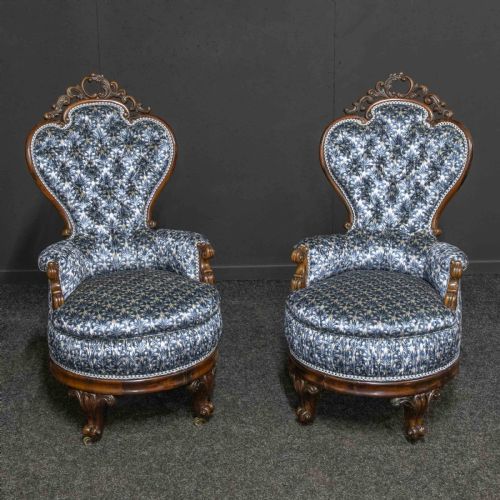
A blue button back chair is typically an armchair, slipper chair, or lounge fireside chair originating from the nineteenth century or the Edwardian period. The form relies on deep upholstery featuring fabric tufting secured by buttons across the backrest.
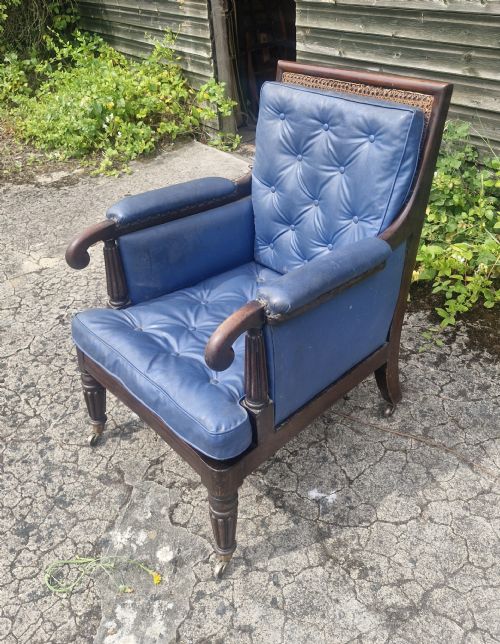
Victorian examples dominate the selection, often taking the form of low nursery seats, bedroom chairs, or substantial library armchairs. Makers such as Howard and Sons produced notable seating during these decades using similar upholstered designs.
The blue upholstery appears on these pieces through historic textiles, new velvet coverings, or cotton ticking. Buyers encounter everything from compact salon chairs to expansive country house armchairs.
Materials and construction
Frames rely on sturdy timbers such as mahogany, walnut, and rosewood, often shaped with carved details or supported by hidden iron back structures. Wood frames provide the rigid skeleton necessary to maintain the tension of deep buttoning.
Upholstery combines textile coverings like cotton, velvet, and various fabrics with brass fixings and traditional stuffing techniques. Buttoning requires skilled placement to pull the fabric deep into the interior padding, creating characteristic geometric indentations.
Listings feature mahogany, walnut, and rosewood frames paired with velvet, cotton, and textile upholstery across the nineteenth and twentieth centuries.
Quality and craftsmanship
The integrity of the underlying timber frame and the precision of the joinery set finer pieces apart from standard seating. Carved mahogany and walnut frames show crisp detail and solid weight.
Upholstery execution dictates the longevity and comfort of the piece. Even spacing in the button tufting and the use of quality velvet or cotton ticking indicate higher standards of manufacture.
Howard and Sons·Miles and Edwards
The Blue Button Back Chair Glossary
- Button back
- An upholstered seat back featuring indented tufts secured by buttons. This technique shapes the padding and tightens the fabric across the frame.
- Slipper chair
- A low-seated bedroom chair designed without arms to make dressing easier. These pieces often feature sprung upholstery and compact proportions.
- Bergere
- An enclosed upholstered armchair with wooden framing exposed around the sides and back. The style originates from French furniture traditions.
- Ticking
- A heavy, tightly woven cotton fabric traditionally used to cover mattress springs and upholstered furniture stuffing. Historic examples often display signature maker markings.
- Chaise longue
- An elongated chair form designed for reclining, combining the backrest of an armchair with an extended seat. These pieces appear in nineteenth-century drawing rooms.
Blue Button Back Chair: Frequently Asked Questions
What is a blue button back chair?
A blue button back chair is an upholstered antique seating form featuring tufted buttoning across the backrest, covered in blue fabric, velvet, or cotton ticking. These pieces span the nineteenth century and the Edwardian era.
They appear as armchairs, slipper chairs, and library seating, reflecting Victorian and revival styles.
How do I date a button back chair?
Dating relies on examining the timber frame, carving styles, and upholstery techniques. Victorian pieces often feature mahogany or walnut frames with distinct revival ornament.
Later Edwardian examples and mid-nineteenth-century pieces show subtle shifts in proportion and wood turning. Maker stamps on castors or frames provide precise attribution.
Were these chairs originally blue?
Many Victorian and Edwardian chairs received later reupholstery in various shades of blue velvet or cotton. Archive records show antique salon and lounge chairs upholstered in blue velvet.
Original fabrics occasionally survive, though most historic seating has undergone professional recovery over the decades.
Where should I place a slipper chair?
Slipper chairs suit bedrooms, dressing rooms, and low-ceilinged sitting spaces due to their compact height. Their low seat was originally designed to aid in putting on shoes.
They also function well as accent seating in larger living areas alongside traditional armchairs.