


Blue Brown Glazed Vases
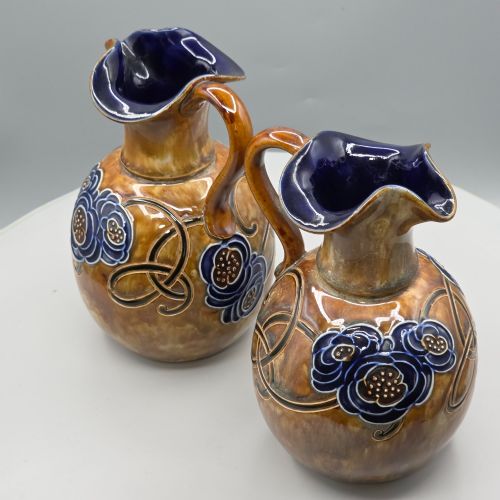
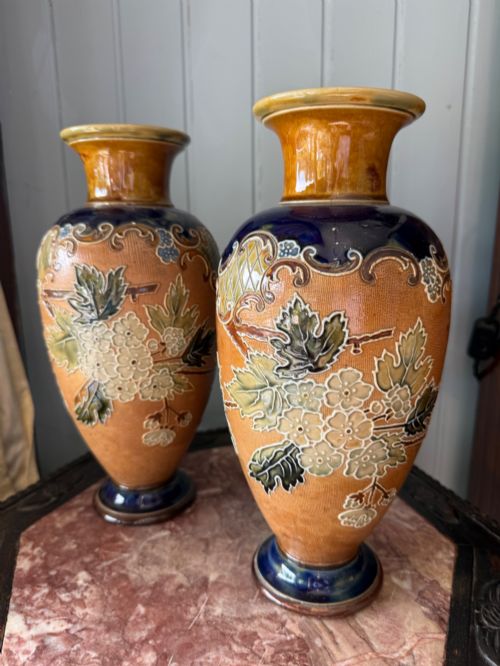
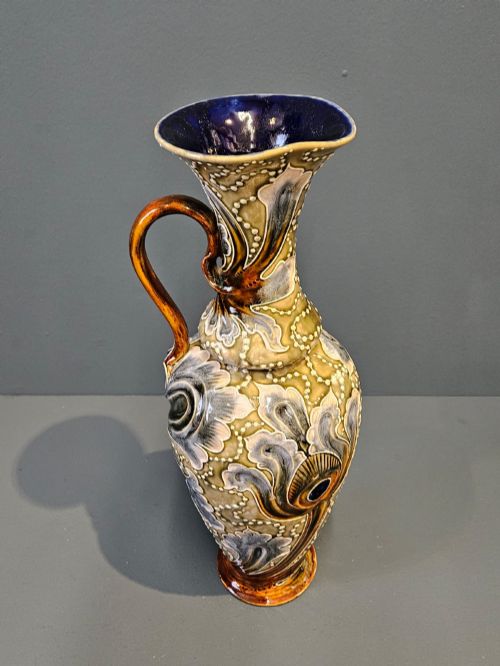
These blue brown glazed vases bring together Victorian and Arts and Crafts ceramic forms finished in rich salt-glaze and enamel.
Blue Brown Glazed Vases
When you search for blue brown glazed vases, you encounter decorative jugs, ewers, jars, and vases spanning the Victorian period through the Arts and Crafts and Art Nouveau movements. The most common examples on this page are stoneware and earthenware vessels originating from Doulton Lambeth and related potteries.
Makers utilised earthy tones and rich cobalt combinations to finish ceramic bodies, often decorating them with floral patterns or raised foliage. These pieces range in date from the mid-nineteenth century to the early twentieth century, reflecting shifting tastes in domestic ornamentation.
How they were made
Potters shaped these vessels from stoneware, terracotta, and earthenware, applying liquid glazes to the ceramic body before firing. Salt-glazing techniques produced textured, lustrous surfaces on robust stoneware.
Artists embellished forms using enamel colours, incised floral patterns, and pate-sur-pate details. Workshops employed specialists to paint, carve, and sign individual pieces.
Makers represented include Royal Doulton and Wileman Intarsio alongside signed works by individual decorators.
What varies in quality
The distinction between standard production vessels and finer pieces rests upon the artistry of the decoration and the reputation of the decorator. Duly signed works by known artists command greater interest than unsigned factory output.
The depth and consistency of the glaze application, alongside the crispness of incised floral motifs, separate ambitious studio output from simpler utilitarian wares.
Royal Doulton·Doulton Lambeth·Wileman Intarsio·Emma Shute·Emily Stormer·Florence Barlow
The Blue Brown Glazed Vases Glossary
- Stoneware
- A dense, vitreous ceramic fired at high temperatures until impervious to liquid. It forms the robust body for much nineteenth-century art pottery.
- Earthenware
- Porous pottery fired at lower temperatures, requiring a glazed surface to hold liquids. It provides a lighter base for delicate enamel painting.
- Terracotta
- Unglazed or glazed fired red-brown clay used for ornamental vessels and architectural plaques. This material shows warm earthy tones beneath the glaze.
- Enamel
- Opaque glass-like substance fused to the ceramic surface during firing. It adds bright surface colour and glossy detail to floral patterns.
Blue Brown Glazed Vases: Frequently Asked Questions
What periods do these pieces date from?
The pieces span the nineteenth and early twentieth centuries, covering Victorian, Arts and Crafts, and Art Nouveau eras. Most examples date between eighteen fifty and nineteen ten.
Production methods shifted during this period from utilitarian earthenware to highly decorated studio art pottery.
How do I identify a Doulton Lambeth piece?
Doulton Lambeth vessels typically feature impressed factory marks on the base alongside the signatures or monograms of individual artists. The heavy stoneware bodies often display characteristic blue and brown salt-glaze finishes.
Individual decorators like Florence Barlow applied distinct pate-sur-pate techniques that help identify their specific hand.
What is the difference between stoneware and earthenware?
Stoneware is fired at higher temperatures until the clay vitrifies completely, resulting in a durable, non-porous material. Earthenware remains more porous and requires a complete glaze to seal the body.
Stoneware tolerates salt-glazing methods well, producing the textured surfaces seen on many nineteenth-century jugs.
How should I display these ceramic vessels?
Place these decorative jars and vases on stable surfaces away from direct sunlight to preserve the enamel colours. Stoneware and earthenware require minimal maintenance beyond gentle dusting.
Grouping pairs together highlights matching floral patterns and symmetrical forms.